Cybersecurity Reference > Glossary
What is Detection Confidence?





Most systems express this as a percentage, a score out of 100, or categories like low, medium, and high. The idea is straightforward: not all alerts deserve the same urgency, and confidence scores help analysts figure out which ones to jump on first.
These scores emerge from analyzing several factors at once. The system looks at how strong the indicators of compromise are, how reliable the detection method has been historically, whether the data sources are trustworthy, and how closely what it's seeing matches known attack patterns. When multiple strong signals align, you get a high confidence score. When the signals are weaker or more ambiguous, the score drops accordingly.
For security teams drowning in alerts, these scores make a practical difference. High-confidence detections can trigger immediate response procedures or escalations. Lower-confidence alerts might get queued for review during business hours or handed off to automated investigation tools. Modern SIEM and EDR platforms increasingly use machine learning to refine these assessments over time, incorporating feedback from analysts and adjusting to new threat patterns. The result is a triage system that helps teams focus their effort where it's most likely to matter.
Origin
As security vendors started incorporating more sophisticated analytics in the early 2000s, they began experimenting with ways to quantify uncertainty. Rather than forcing a yes-or-no decision, systems could express how confident they were in their conclusions. This shift accelerated with the rise of machine learning in cybersecurity, which naturally produces probability scores as part of its classification process.
The evolution continued as security operations became more formalized. SOC teams needed systematic ways to prioritize thousands of daily alerts, and confidence scores provided a quantifiable basis for triage decisions. By the 2010s, most enterprise security tools included some form of confidence or severity scoring, though the exact methodologies varied widely between vendors. The push toward security orchestration and automated response made these scores even more important, since automated systems needed clear thresholds to decide when human intervention was necessary.
Why It Matters
Detection confidence scores provide a systematic approach to this problem, but they're not foolproof. A high confidence score doesn't guarantee malicious activity, and sophisticated attackers specifically craft their techniques to evade detection or generate ambiguous signals that produce lower confidence scores. Organizations that rely too heavily on automated confidence assessments risk missing novel attacks that don't match historical patterns.
The quality of confidence scoring varies significantly across tools and vendors. Some systems use rigorous statistical methods with clear reasoning, while others produce scores through opaque processes that analysts learn to distrust. When confidence scores don't align with real-world outcomes, teams stop relying on them, defeating their purpose. The challenge for security operations is finding the right balance—using confidence scores as one input among many, calibrating them against actual investigation results, and maintaining enough skepticism to catch the exceptions that scoring systems miss.
The Plurilock Advantage
We work with your existing security tools to improve their tuning and reduce false positives, while ensuring that low-confidence alerts hiding real threats don't slip through the cracks.
Our SOC operations and support services provide the experienced analysts and proven processes you need to turn detection confidence scores into effective security outcomes.
.
Need Greater Detection Confidence?
Plurilock's advanced behavioral analytics deliver unparalleled accuracy in threat detection.
Enhance Detection Now → Learn more →Downloadable References
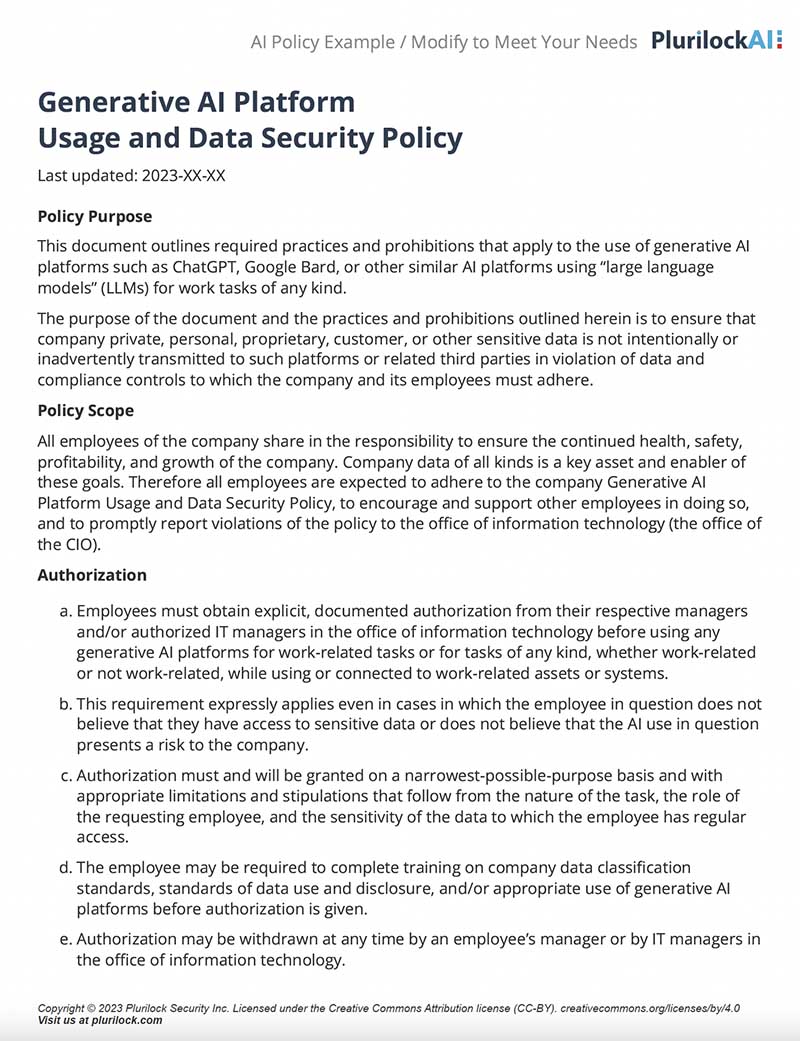
Sample Governance Policy for AI Use
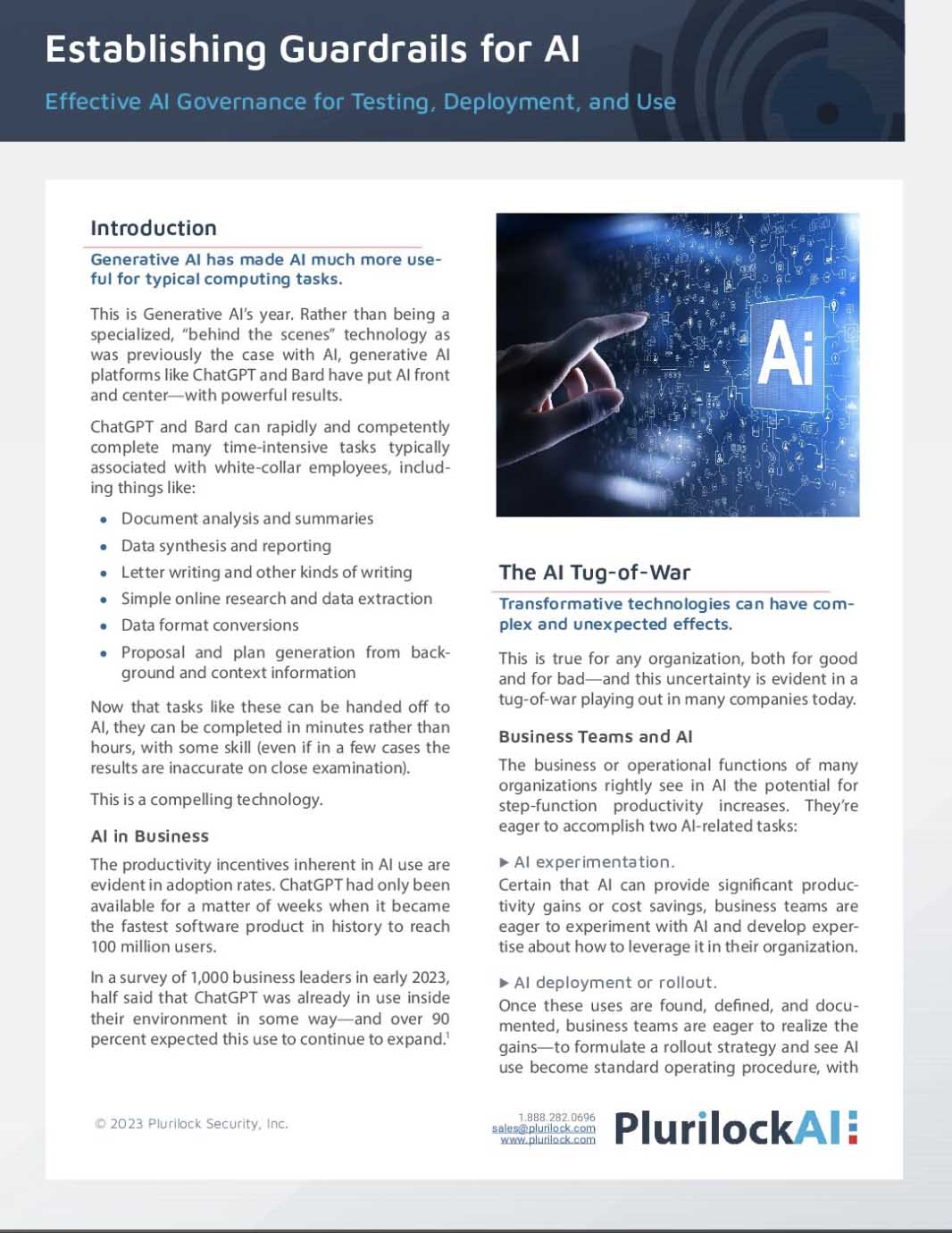
Establishing Guardrails for AI Whitepaper