Cybersecurity Reference > Glossary
What is Executive Cyber Fluency?





This goes well beyond basic awareness of cyber threats—it means grasping how security risks intersect with business operations, regulatory obligations, and competitive position. Cyber-fluent executives can assess the financial implications of security investments, communicate meaningfully with technical teams about risk priorities, and see how cybersecurity enables business objectives rather than just constraining them.
This fluency involves understanding concepts like risk appetite, threat modeling, and the business case for security controls without needing deep technical expertise. It's about knowing which questions to ask, recognizing when security issues demand board-level attention, and making trade-offs between security investments and other business priorities. A cyber-fluent executive can participate in substantive discussions about the organization's security posture and understands that cybersecurity decisions ripple through the entire business—affecting customer trust, operational resilience, and regulatory standing. Organizations led by cyber-fluent executives typically show better security outcomes, more effective resource allocation, and stronger incident response capabilities because security considerations are woven into strategic planning from the start.
Origin
These incidents forced boards and C-suites to confront cybersecurity as a business risk rather than a technical problem. Regulatory changes accelerated this shift—requirements like the EU's GDPR, which made executives personally liable for certain security failures, and the New York Department of Financial Services cybersecurity regulations, which mandated board-level oversight. The term "cyber fluency" itself gained traction around 2017-2018 as organizations recognized that basic awareness training for executives wasn't sufficient.
The shift reflected a broader realization: executives didn't need to become security engineers, but they did need enough understanding to make informed decisions about risk tolerance, budget allocation, and strategic priorities. This marked a fundamental change in how organizations thought about security governance.
Why It Matters
The regulatory landscape has made this fluency more urgent. Directors and officers now face personal liability for security failures in many jurisdictions. Shareholders increasingly view cybersecurity as a governance issue, and investors ask pointed questions about how boards oversee cyber risk. Insurance companies scrutinize leadership's security understanding when underwriting cyber policies.
The rise of ransomware has brought this into sharp relief. Decisions about whether to pay a ransom, how to communicate with customers, and when to involve law enforcement require executives who understand both the technical and business dimensions. Cyber-fluent leaders can weigh these trade-offs effectively. They also recognize when security investments create competitive advantages—enabling new business models, building customer trust, or allowing expansion into regulated markets. Without this fluency, organizations struggle to see security as anything beyond a cost center.
The Plurilock Advantage
Our team includes former intelligence officials, Fortune 500 CISOs, and defense leaders who've made high-stakes security decisions themselves. We don't deliver generic training decks—we facilitate substantive conversations about risk tolerance, resource allocation, and strategic security priorities tailored to your specific business context.
.
Ready to Elevate Your Executive Cyber Fluency?
Plurilock's executive cybersecurity training empowers leaders with essential cyber knowledge and decision-making capabilities.
Start Executive Training → Learn more →Downloadable References
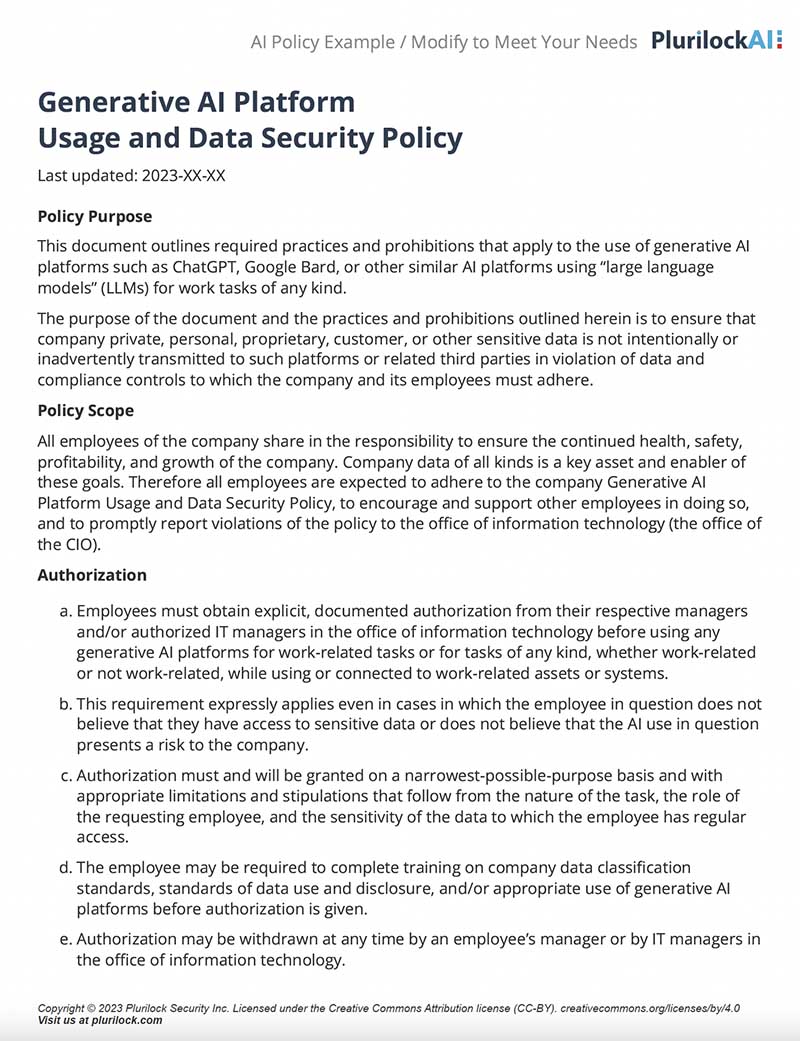
Sample Governance Policy for AI Use
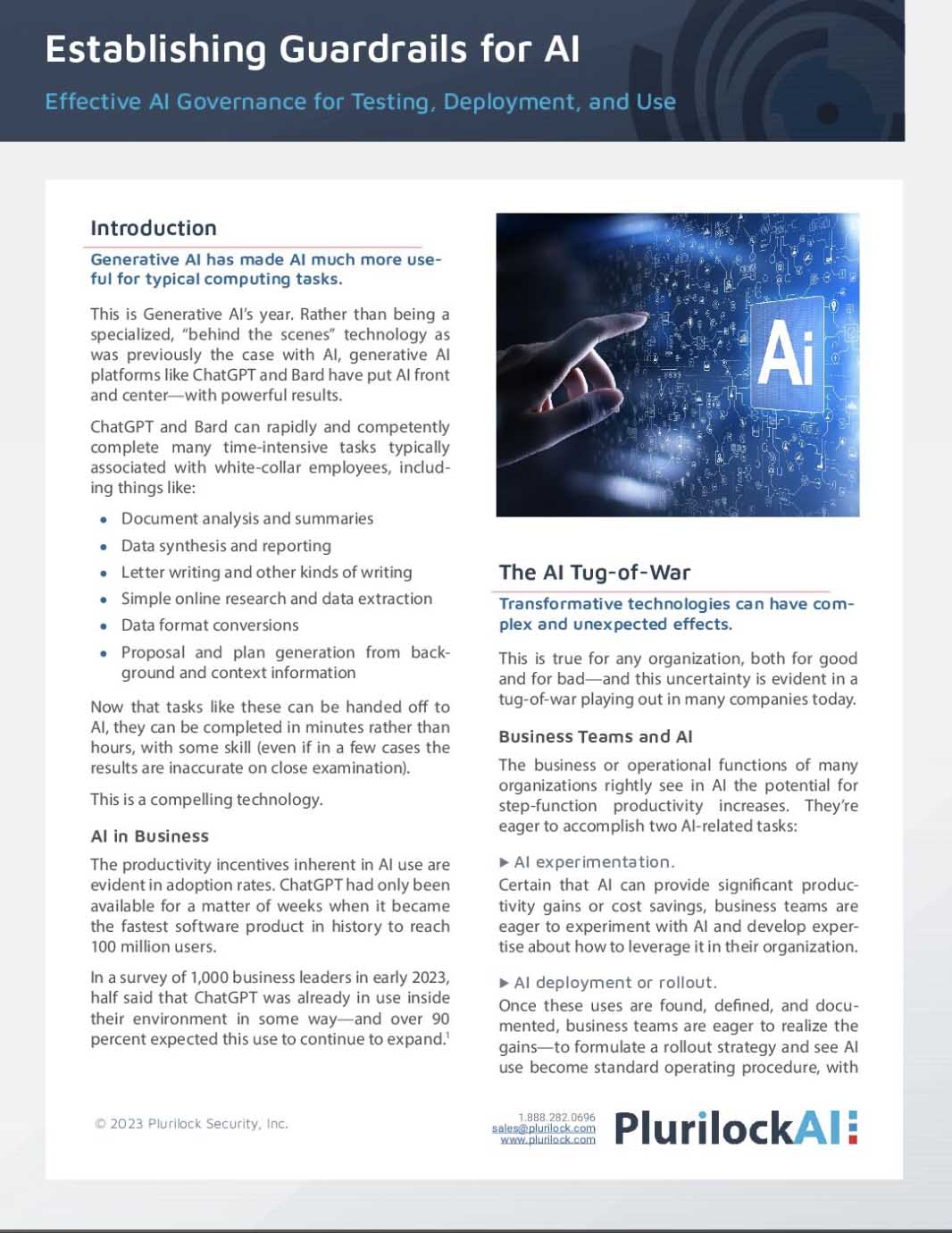
Establishing Guardrails for AI Whitepaper