Cybersecurity Reference > Glossary
What is Multi-Tenancy?

Think of it like an apartment building: everyone lives under the same roof and shares utilities, but each tenant has their own locked space with private belongings. In cloud computing and SaaS platforms, this model delivers significant cost savings and operational efficiency since providers can serve thousands of customers from shared infrastructure rather than deploying separate systems for each one.
The security implications are substantial. When tenants share resources, the boundary between them becomes a critical attack surface. A vulnerability that lets one tenant peek into another's data—or worse, modify it—can be catastrophic. Strong isolation mechanisms are essential: access controls that enforce strict boundaries, encryption that protects data at rest and in transit, and application logic that never confuses one tenant's context with another's. Network segmentation adds another layer of defense, keeping tenant traffic separated even when it flows through shared infrastructure. Monitoring becomes more complex too, since you need to track activities across all tenants while maintaining the ability to investigate incidents without compromising privacy or spilling over into unaffected environments.
Origin
The model roared back with the rise of web-based applications and cloud computing in the early 2000s. Salesforce, launched in 1999, pioneered the modern multi-tenant SaaS approach, demonstrating that you could serve thousands of customers from shared infrastructure while maintaining acceptable security and performance. This proved economically transformative since operating costs didn't scale linearly with customer count.
As adoption grew, so did sophistication around isolation techniques. Early implementations often used shared databases with tenant identifiers on every row. More mature architectures introduced schema-level separation, containerization, and microservices that could isolate workloads more granularly. The security community began developing frameworks specifically for multi-tenant environments, recognizing that traditional single-tenant security models didn't fully address the unique risks.
Why It Matters
The security challenges have grown more complex as multi-tenant systems have become more intricate. Modern cloud-native applications use dozens of shared services, each introducing potential isolation failures. Container orchestration platforms, serverless functions, and shared databases all require careful configuration to prevent tenant boundary violations. Misconfigurations are common, and attackers actively probe for them.
Regulatory pressure has intensified too. Data protection laws increasingly hold organizations accountable for how their vendors handle data, pushing companies to scrutinize the security posture of multi-tenant platforms more carefully. Questions about data residency, encryption key management, and the ability to audit tenant isolation have moved from technical concerns to compliance requirements. For security teams, understanding multi-tenant architectures isn't optional—it's essential for risk assessment, vendor evaluation, and incident response planning.
The Plurilock Advantage
Our team includes former intelligence professionals and experts who've secured some of the world's most sensitive systems—people who know how to identify subtle isolation failures that standard assessments miss.
We assess tenant boundary controls, test for cross-tenant data leakage, and verify that encryption and access mechanisms actually enforce separation under real-world conditions.
When you're trusting critical data to shared infrastructure, you need more than vendor assurances—you need independent verification that isolation works as promised.
.
Need Help Implementing Secure Multi-Tenancy?
Plurilock's experts can design and deploy robust multi-tenant security architectures.
Get Multi-Tenancy Guidance → Learn more →Downloadable References
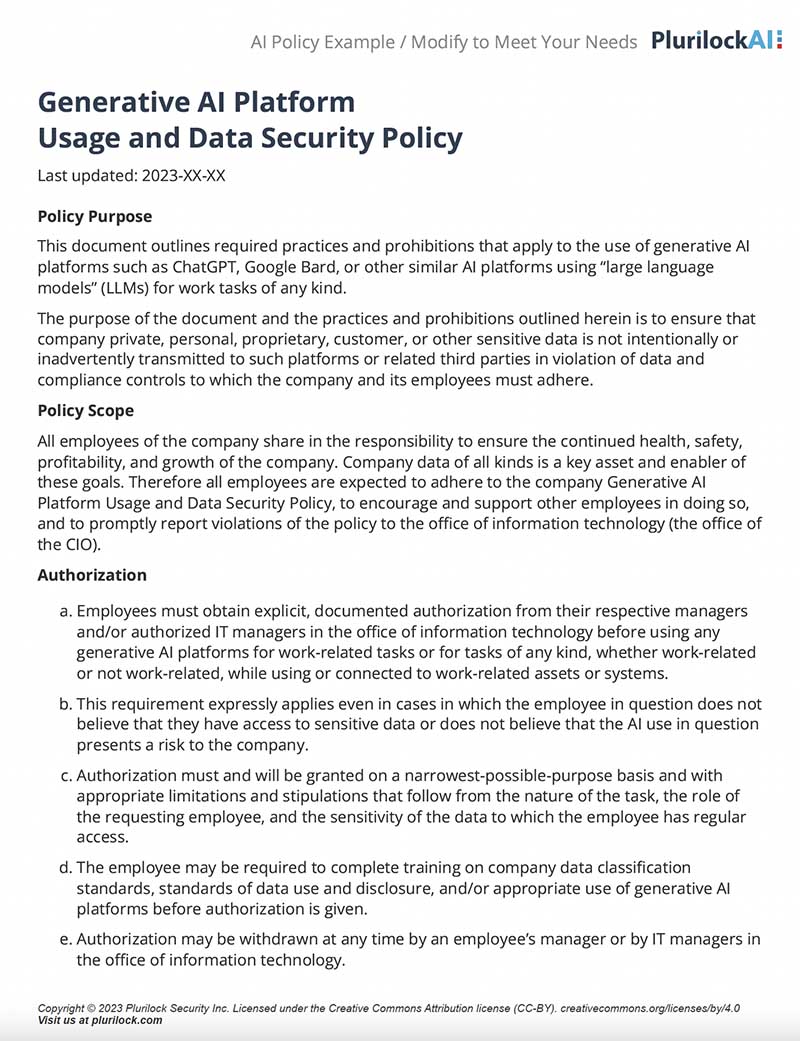
Sample Governance Policy for AI Use
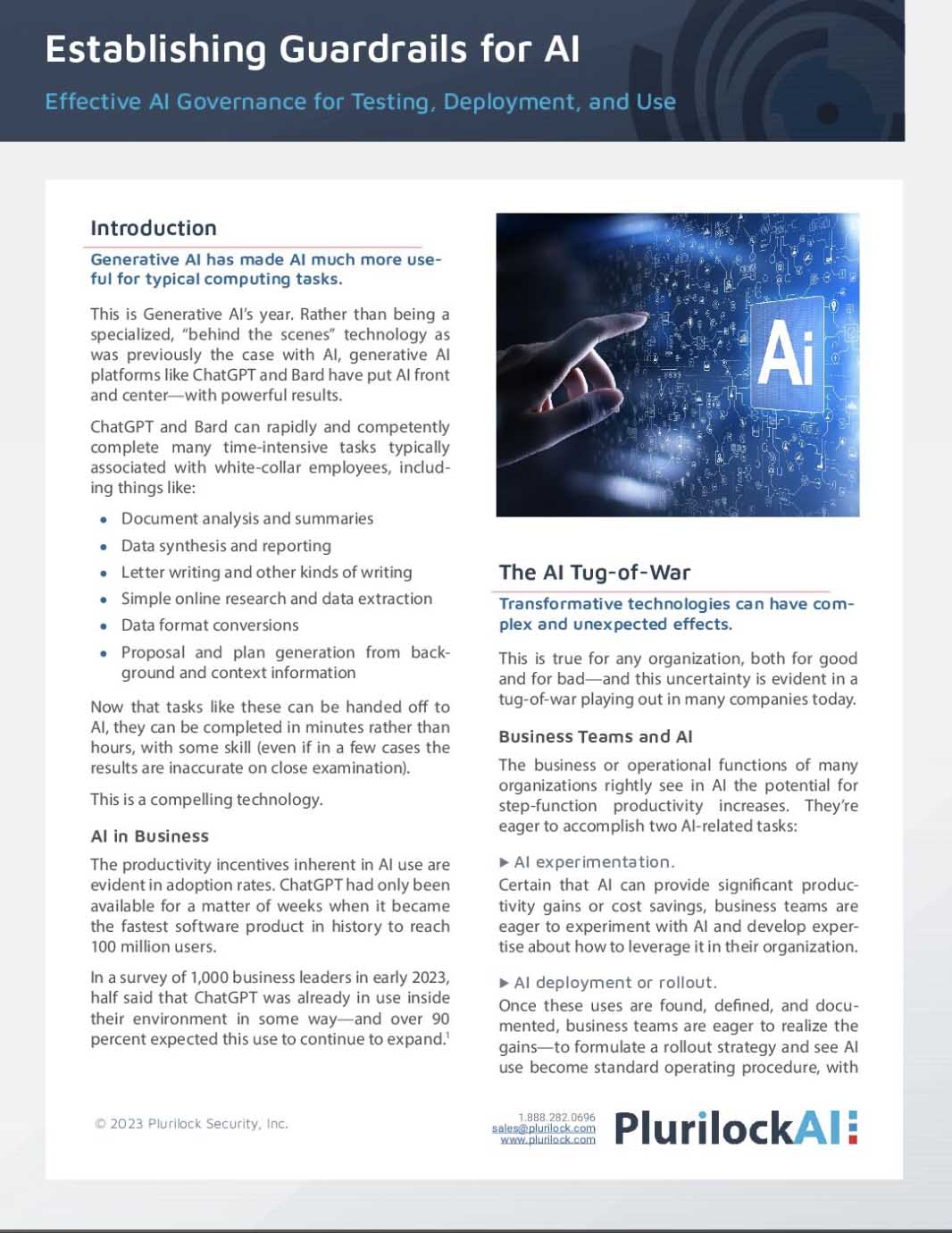
Establishing Guardrails for AI Whitepaper