Cybersecurity Reference > Glossary
What is Access Review?





This process involves examining who has access to what resources, whether that access is still appropriate for their current role, and if permissions align with the principle of least privilege. Access reviews are typically conducted on a regular schedule—quarterly, semi-annually, or annually—depending on organizational security policies and regulatory requirements.
During the review, administrators or data owners evaluate each user's access permissions against their job responsibilities, removing unnecessary privileges and ensuring compliance with security policies. The process helps organizations maintain security hygiene by identifying and remediating access creep, where users accumulate permissions over time that they no longer need. This is particularly important when employees change roles, transfer departments, or leave the organization entirely.
Many organizations automate portions of access reviews using identity governance tools that can flag unusual permissions, identify dormant accounts, and streamline the approval process for access changes. Regulatory frameworks like SOX, HIPAA, and PCI DSS often mandate regular access reviews as part of compliance requirements.
Origin
The concept gained significant momentum in the late 1990s and early 2000s with the passage of regulatory frameworks like the Sarbanes-Oxley Act, which imposed strict requirements on financial controls and audit trails. This forced organizations to document not just who had access to what, but also when permissions were granted, by whom, and why.
The rise of identity and access management systems in the mid-2000s brought some automation to the process, though early tools were often clunky and required substantial manual effort. Over time, the practice has shifted from simple yes-no permission checks to more nuanced evaluations that consider context, risk levels, and business justification. Modern access review programs now integrate with broader identity governance frameworks and increasingly leverage analytics to identify anomalous permissions before they become security incidents.
Why It Matters
The challenge has grown considerably as cloud adoption accelerates and the average employee now has access to dozens of applications and services. Each system may have its own permission model, making comprehensive reviews difficult without specialized tools. Access creep remains a stubborn problem—studies consistently show that users accumulate unnecessary permissions over time, often retaining access to systems they haven't used in months or years. This creates a growing attack surface that many organizations don't fully understand.
Regulatory pressure continues to increase as well, with frameworks like GDPR and CCPA holding organizations accountable for who can access personal data. A well-executed access review program doesn't just check a compliance box; it provides genuine visibility into an organization's security posture and helps prevent both accidental data exposure and deliberate abuse.
The Plurilock Advantage
We help automate the tedious parts while keeping human judgment where it matters, reducing the burden on data owners and ensuring reviews happen on schedule rather than getting perpetually delayed.
Whether you need to stand up a new access governance program or fix one that's become a checkbox exercise, we mobilize quickly and deliver outcomes.
.
Need Help with Access Reviews?
Plurilock's access governance solutions streamline user permissions and ensure compliance continuously.
Start Your Access Review → Learn more →Downloadable References
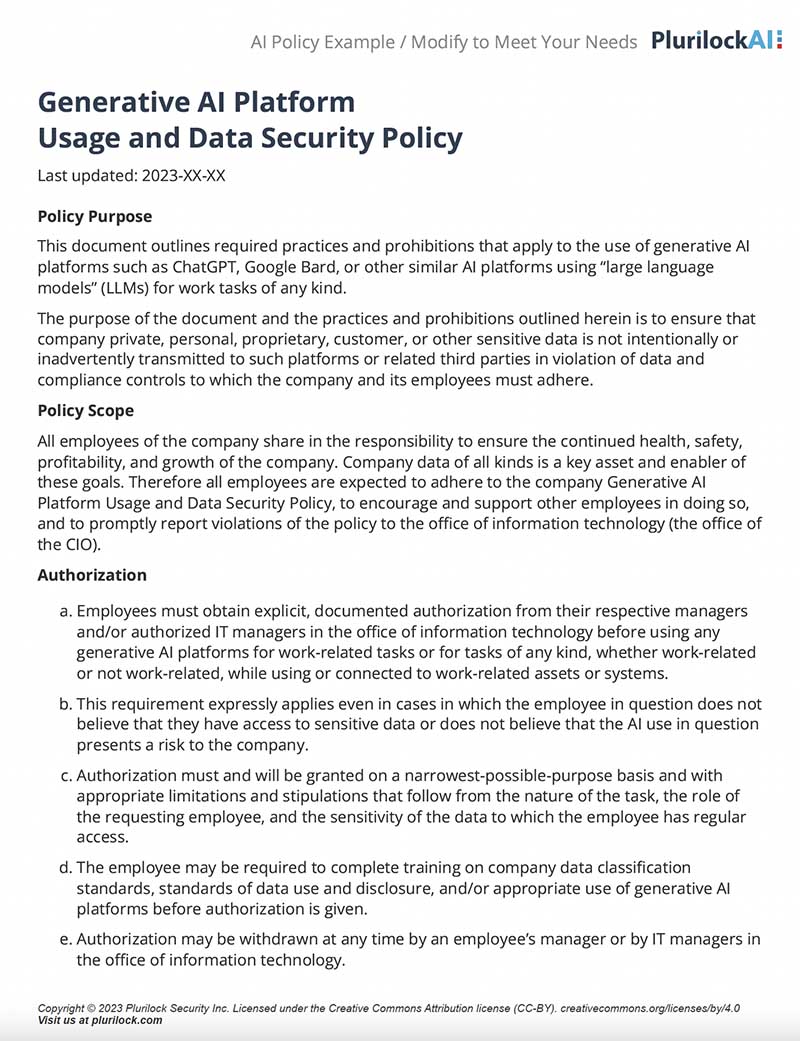
Sample Governance Policy for AI Use
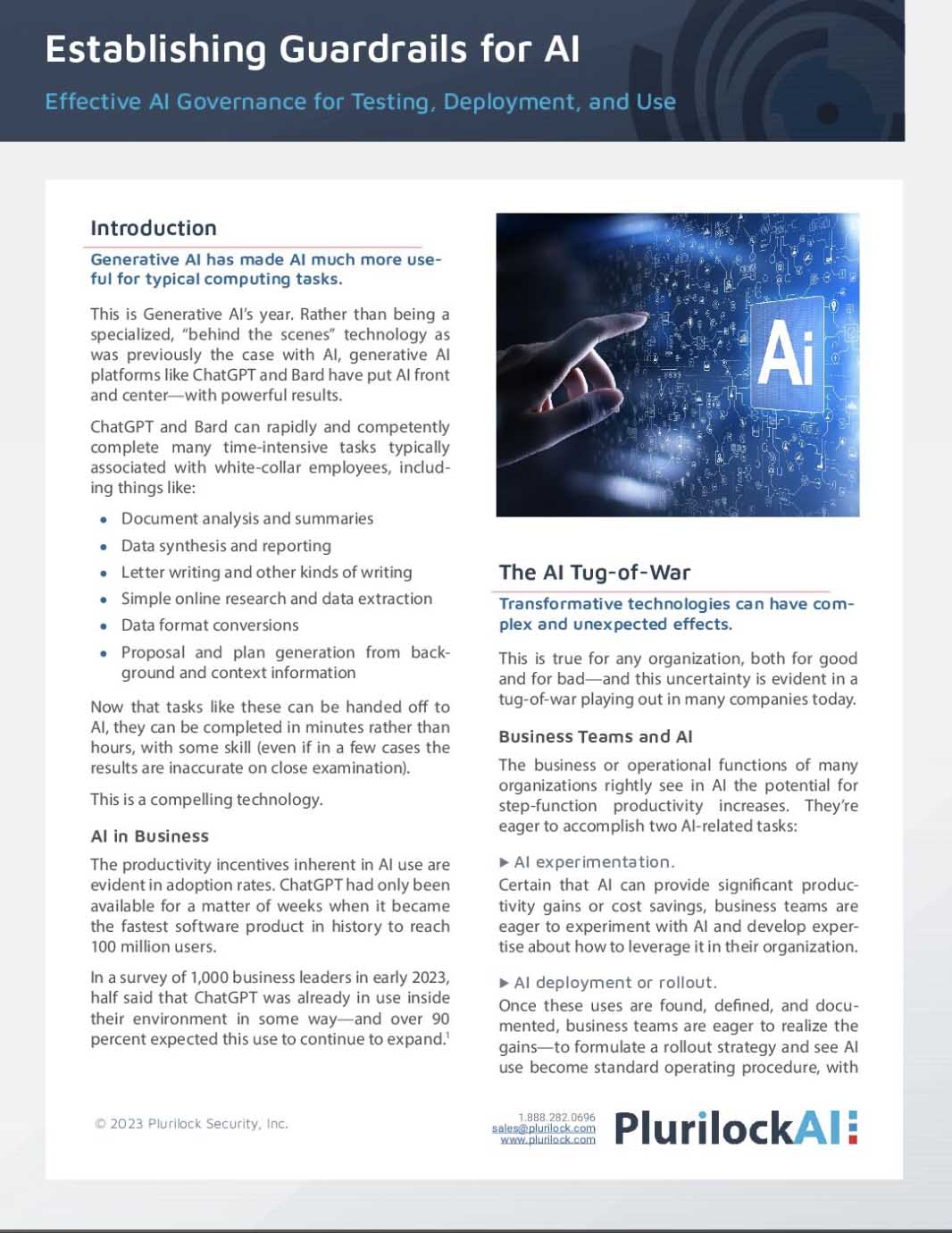
Establishing Guardrails for AI Whitepaper