Cybersecurity Reference > Glossary
What is Application Risk Profiling?





This process involves analyzing applications to identify potential security weaknesses, evaluate their exposure to various attack vectors, and determine the overall risk they pose to the organization's data and infrastructure.
The profiling process typically examines multiple factors including the application's architecture, data sensitivity levels, user access patterns, network connectivity, integration points with other systems, and compliance requirements. Security teams assess both technical vulnerabilities—such as coding flaws, authentication weaknesses, and configuration errors—and business-related risks like the criticality of the application to operations and the potential impact of a security breach.
Application Risk Profiling enables organizations to prioritize their security efforts and resources effectively. By understanding which applications present the highest risk, security teams can focus remediation efforts on the most critical vulnerabilities first. This approach also supports decision-making around security controls implementation, budget allocation, and risk acceptance or mitigation strategies. The profiling process is typically ongoing, as applications evolve through updates, patches, and configuration changes that can alter their risk posture over time.
Origin
The shift began as web applications proliferated and attackers discovered they could bypass network security by exploiting application vulnerabilities directly. High-profile breaches involving SQL injection and cross-site scripting made it clear that not all applications posed equal risk. Early approaches were largely manual, with security teams cataloging applications and assessing them through basic questionnaires about data types and user populations.
The discipline matured significantly after 2010 with the rise of DevOps and cloud computing. Organizations suddenly managed hundreds or thousands of applications across diverse environments, making manual tracking impossible. Automated tools emerged to scan applications, map dependencies, and score risks based on multiple factors. Regulatory frameworks like PCI DSS and GDPR accelerated adoption by requiring organizations to understand where sensitive data resided and how applications handled it. What started as simple inventory management evolved into sophisticated risk modeling that accounts for threat intelligence, business context, and real-time vulnerability data.
Why It Matters
The challenge has intensified with rapid development cycles and shadow IT. Applications get deployed faster than security teams can assess them, and business units often adopt cloud services without IT involvement. Without systematic profiling, critical vulnerabilities in high-value applications might go unaddressed while resources get spent hardening low-risk systems. A single overlooked application processing customer data or connecting to core systems can become the entry point for a major breach.
Compliance requirements add another dimension. Auditors expect organizations to demonstrate they understand their application landscape and have applied appropriate controls based on risk. Generic security policies applied uniformly across all applications don't satisfy this requirement. Effective profiling also supports business conversations about acceptable risk, providing concrete data to inform decisions about accepting, mitigating, or transferring specific application risks.
The Plurilock Advantage
Our application and API testing services go deeper than surface-level assessments, uncovering the vulnerabilities that standard tools miss and helping you focus remediation efforts where they'll have the greatest impact on your security posture.
.
Need Help With Application Risk Assessment?
Plurilock's application risk profiling identifies vulnerabilities and strengthens your security posture.
Get Risk Profile Analysis → Learn more →Downloadable References
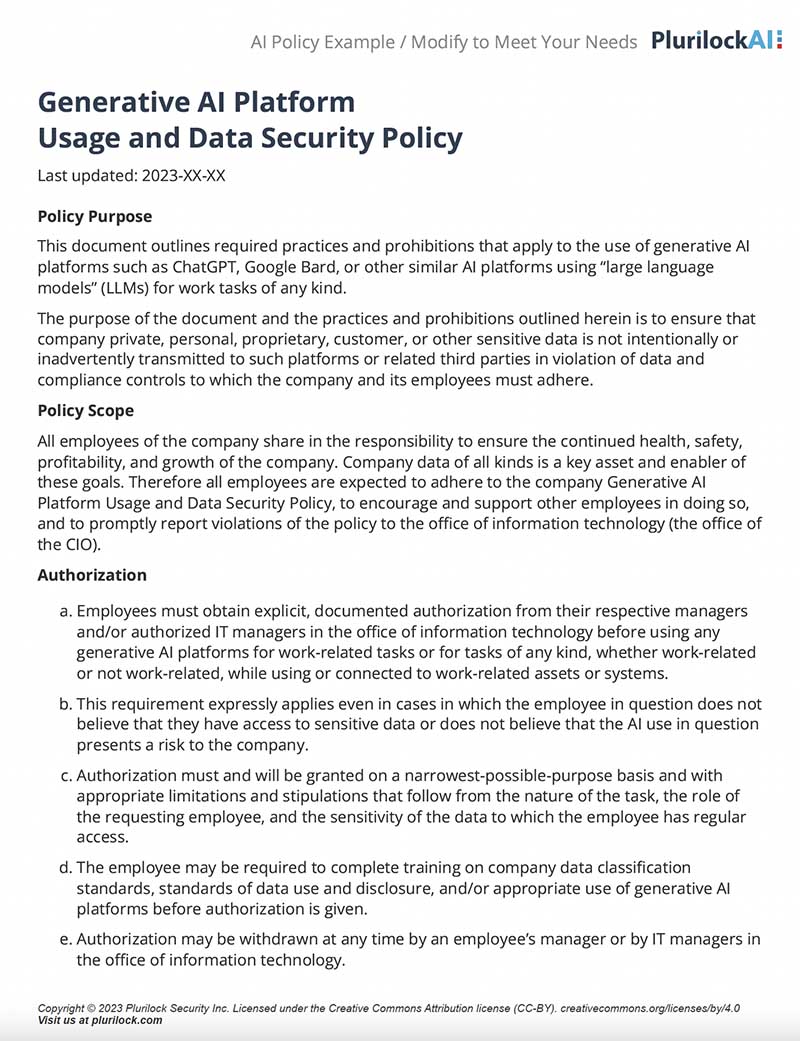
Sample Governance Policy for AI Use
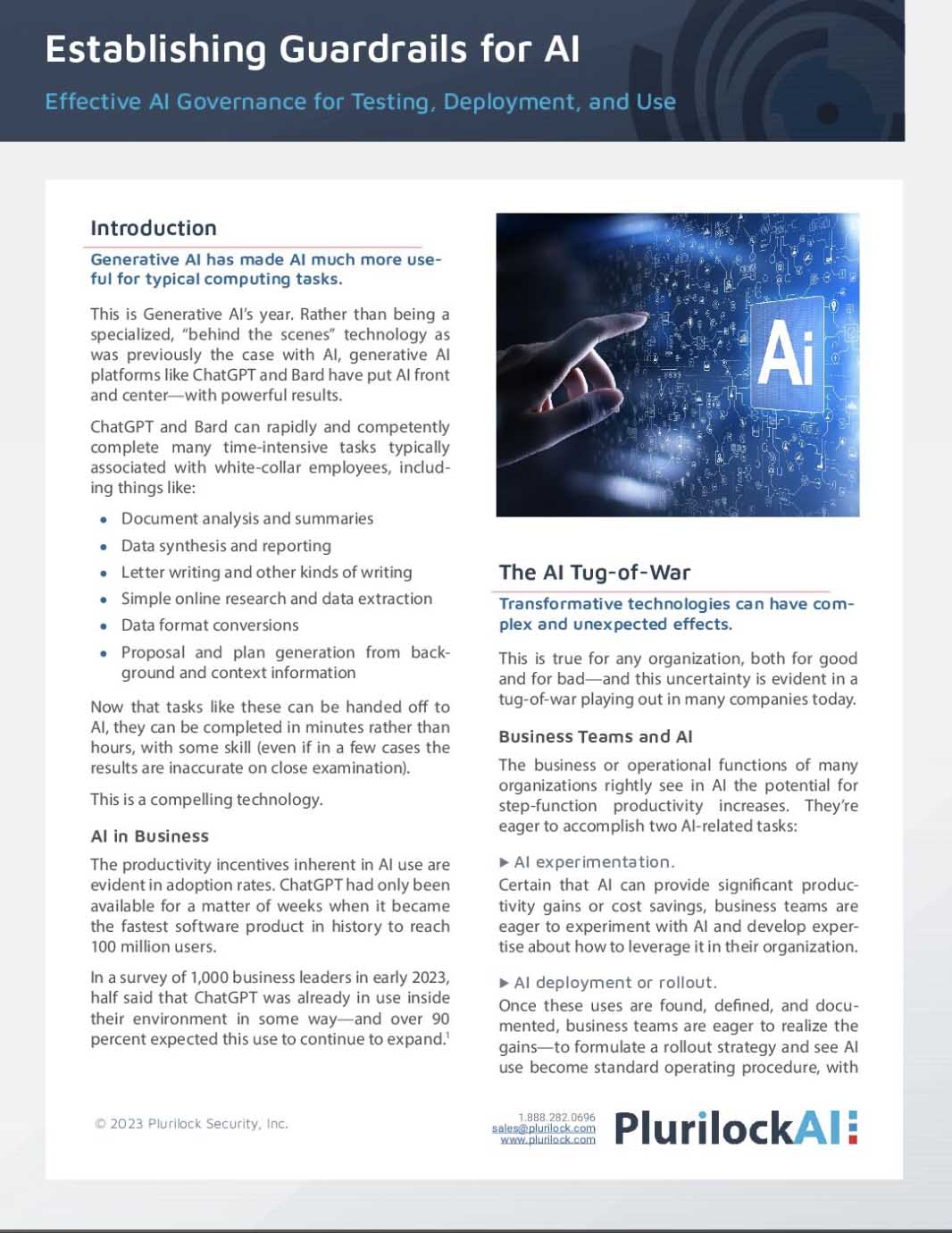
Establishing Guardrails for AI Whitepaper