
Cybersecurity Reference > Glossary
What is Attestation?





This security mechanism allows one party to prove to another that their hardware or software is in a known, trusted state and has not been tampered with or compromised.
Attestation typically involves generating cryptographic evidence that demonstrates the current configuration, firmware versions, boot sequence, and other critical system characteristics match expected baseline values. This process often relies on specialized hardware components like Trusted Platform Modules (TPMs) or Hardware Security Modules (HSMs) to create unforgeable measurements of system state.
Common use cases include remote attestation in cloud computing environments, where service providers must prove their infrastructure's security posture to customers, and device attestation in mobile computing, where applications verify that devices haven't been rooted or jailbroken. Attestation is also fundamental to secure boot processes and supply chain security, ensuring that only authorized software runs on critical systems. The attestation process generates signed statements or certificates that can be verified by relying parties, creating a chain of trust from hardware roots through the entire software stack.
Origin
Before TPM-based attestation, verifying system integrity relied primarily on software-only approaches that could be circumvented by sophisticated attackers with sufficient system access. The introduction of hardware attestation changed this dynamic by moving critical measurements and cryptographic operations into isolated components that remain protected even if the operating system is compromised.
Remote attestation protocols evolved alongside these hardware developments. Early implementations focused on simple boot-time measurements, but the scope expanded as cloud computing and mobile devices created new use cases. Intel's Trusted Execution Technology and ARM's TrustZone extended attestation concepts to processor architectures, while cloud providers developed their own attestation frameworks for virtual machines and containers. The rise of zero trust architectures in the 2010s further elevated attestation from a niche security feature to a core component of modern security strategies.
Why It Matters
The stakes are particularly high in supply chain security. Sophisticated attackers have repeatedly demonstrated their ability to inject malicious code into firmware, bootloaders, and operating system components. Traditional security tools running within the compromised system can't reliably detect these attacks because the malware controls the environment those tools rely on. Attestation provides an external verification mechanism that can detect tampering even when the system itself has been subverted.
Modern compliance frameworks increasingly require attestation capabilities. Regulations governing financial services, healthcare, and government contractors often mandate cryptographic verification of system integrity. Cloud service providers use attestation to demonstrate security posture to auditors and customers, while enterprises use it to enforce security policies across diverse device fleets. The emergence of confidential computing, which uses hardware enclaves to protect data during processing, relies heavily on attestation to prove that workloads are running in genuine secure environments rather than simulated ones.
The Plurilock Advantage
Our zero trust architecture services incorporate attestation as a foundational element of continuous verification, ensuring that trust decisions reflect real-time system state rather than static credentials. We cut through vendor complexity to build solutions that actually work in production environments.
.
Need Help with Security Attestation Requirements?
Plurilock provides comprehensive attestation services to verify your cybersecurity controls effectively.
Get Attestation Support → Learn more →Downloadable References
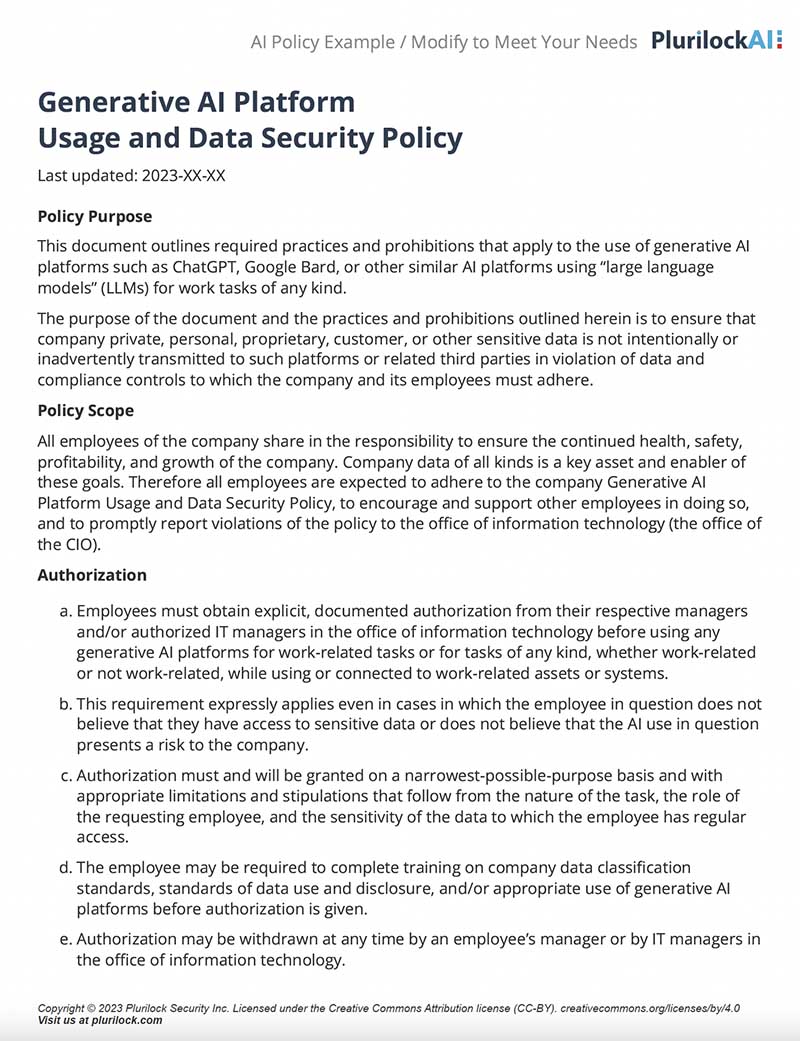
Sample Governance Policy for AI Use
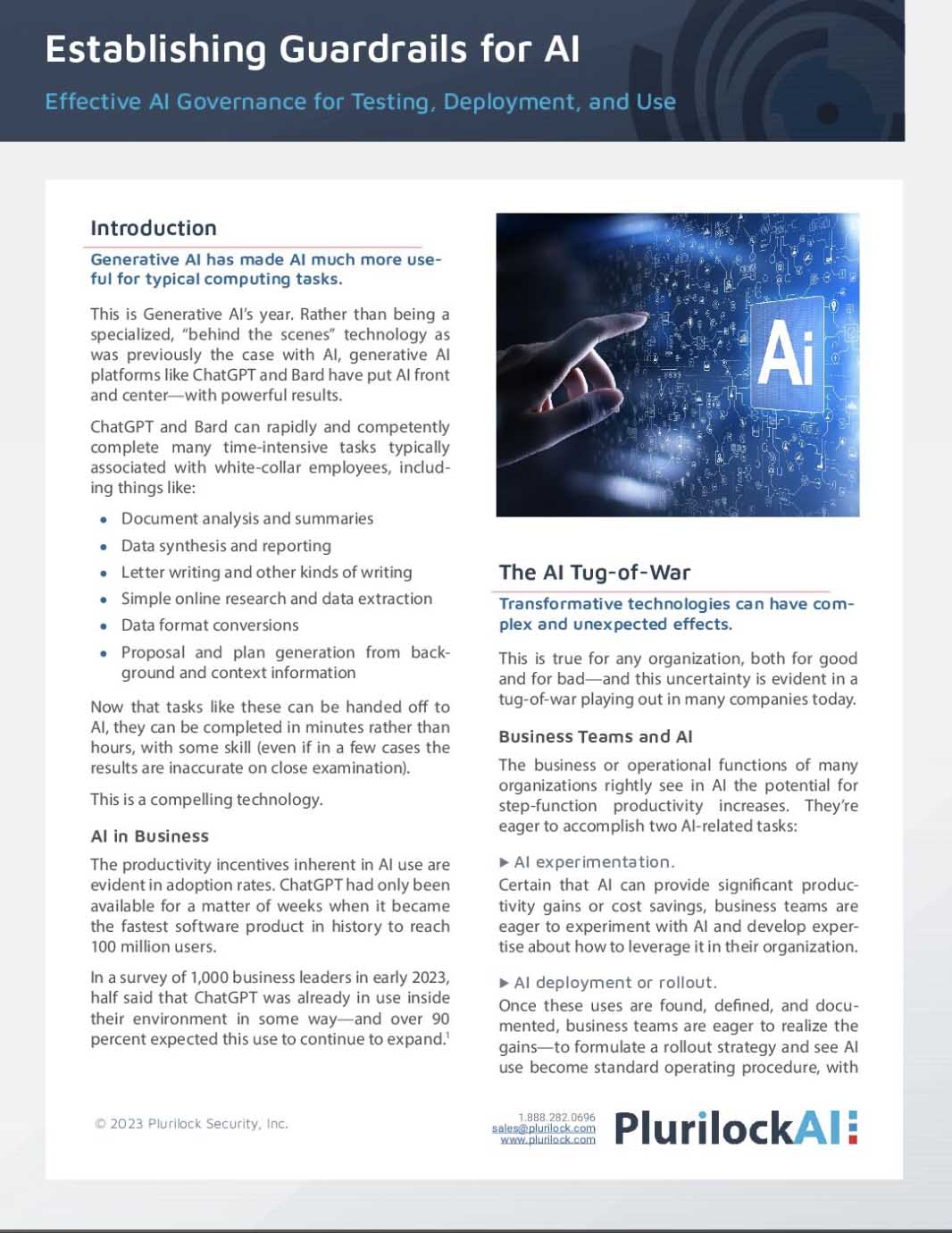
Establishing Guardrails for AI Whitepaper