Cybersecurity Reference > Glossary
What is an Audit Program?




Think of it as the blueprint that guides auditors through evaluating security measures, checking compliance, and identifying weaknesses. It specifies which systems get scrutinized, what testing methods auditors will use, and how deeply they'll dig into each area.
The program defines concrete procedures rather than vague intentions. It might specify that auditors will review access logs from the past six months, interview fifteen employees about security awareness, or test firewall configurations against specific benchmarks. This level of detail ensures consistency—if two different audit teams examine the same environment, they should follow similar steps and reach comparable conclusions.
A solid audit program aligns with relevant frameworks, whether that's ISO 27001, NIST standards, or sector-specific requirements like HIPAA for healthcare or PCI DSS for payment systems. It also accounts for the organization's risk profile, dedicating more resources to high-risk areas while applying lighter scrutiny to lower-concern zones.
The value extends beyond the audit itself. Organizations use these programs to demonstrate due diligence to regulators, boards, and customers. They also provide a repeatable structure that makes year-over-year comparisons meaningful, showing whether security posture is improving or deteriorating over time.
Origin
The shift toward security-focused audit programs accelerated in the 1980s and 1990s as networks expanded and cyber threats materialized. The introduction of standards like ISO 17799 (later becoming ISO 27001) in the late 1990s provided structured frameworks that audit programs could reference. Before these standards, organizations often conducted ad hoc security reviews without consistent methodology.
Regulatory pressures further formalized cybersecurity audit programs. Sarbanes-Oxley in 2002 required IT controls evaluation for financial reporting systems. HIPAA's Security Rule demanded regular security assessments for healthcare entities. The Payment Card Industry created PCI DSS, mandating structured audits for any organization handling card data.
Modern audit programs have evolved to address cloud environments, DevOps practices, and rapidly changing threat landscapes. They've become more risk-based rather than checklist-driven, focusing auditor attention where threats and impacts converge rather than applying uniform scrutiny everywhere. This evolution reflects the reality that comprehensive security requires ongoing assessment, not just periodic checkbox exercises.
Why It Matters
Regulatory and contractual obligations make audit programs essential for many organizations. Demonstrating compliance isn't optional when you're handling protected health information, payment card data, or federal systems. Third-party assessors follow these programs to verify controls, and gaps identified during audits can trigger regulatory penalties or contract violations.
The program itself creates accountability within security teams. When auditors announce they'll be examining specific controls next quarter, security staff have clear targets for remediation efforts. This forward visibility helps organizations prioritize improvements and allocate resources more effectively.
Perhaps most importantly, well-executed audit programs help organizations understand their actual risk exposure rather than their theoretical one. Documentation might describe robust incident response procedures, but audit testing reveals whether staff can actually execute those procedures under pressure. That gap between policy and practice often represents the difference between containing a breach quickly and suffering extended compromise.
The Plurilock Advantage
We help organizations prepare for external audits through readiness assessments that identify gaps before assessors arrive, and we can augment internal audit teams with experienced professionals who bring fresh perspective to security evaluations.
Learn more about our GRC services and how we help organizations move beyond checkbox compliance toward meaningful security assurance.
.
Need Help Building Your Audit Program?
Plurilock's compliance experts can design and implement comprehensive audit frameworks tailored to your organization.
Get Audit Program Support → Learn more →Downloadable References

Sample Governance Policy for AI Use
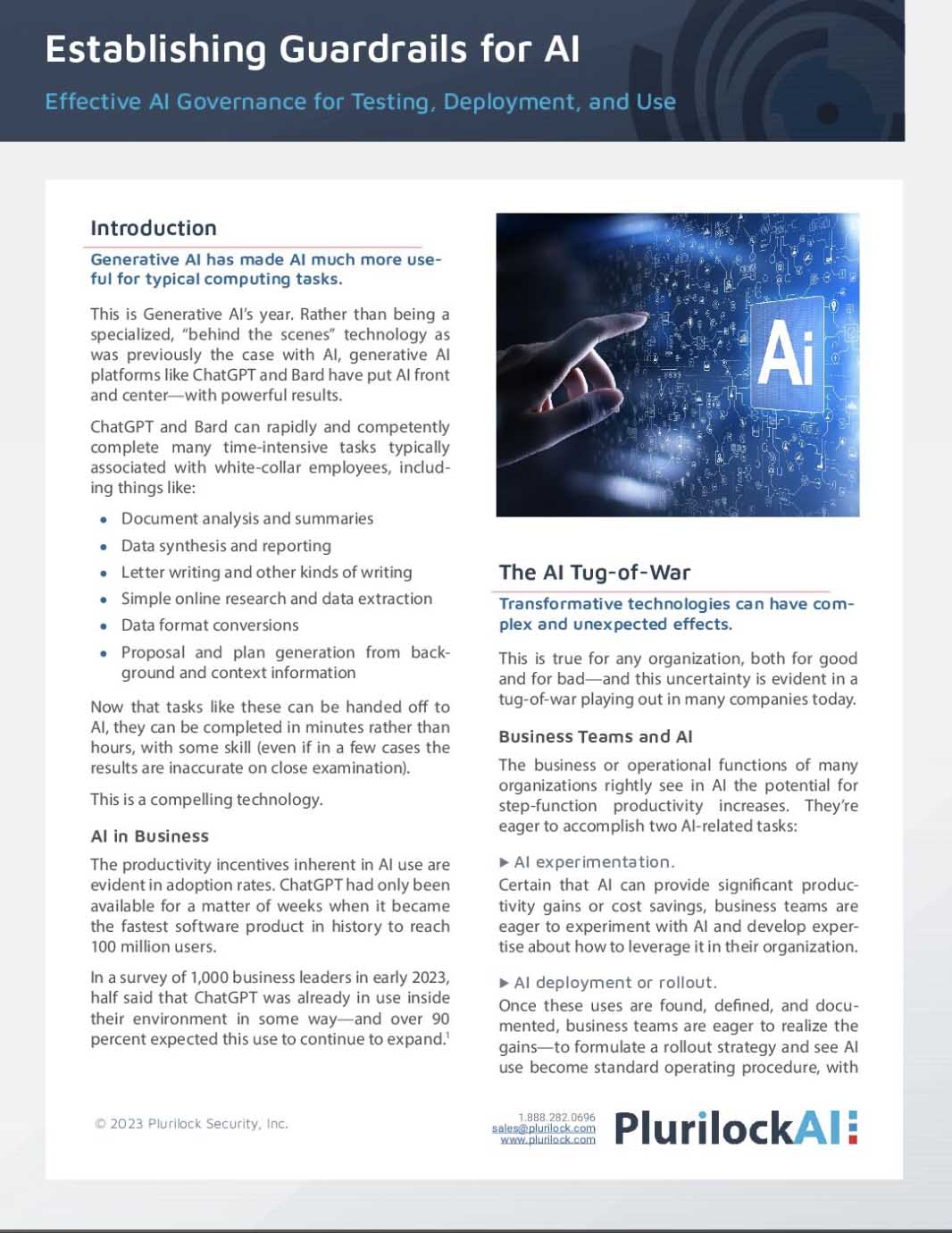
Establishing Guardrails for AI Whitepaper