Cybersecurity Reference > Glossary
What is Breach Containment?





This critical phase of incident response focuses on preventing attackers from accessing additional systems, data, or network segments while preserving evidence for forensic analysis.
Effective containment strategies typically involve isolating compromised systems from the network, disabling affected user accounts, blocking malicious IP addresses, and implementing temporary security controls. Organizations must balance the need for rapid containment against business continuity requirements, often requiring difficult decisions about taking systems offline or restricting user access.
There are generally two types of containment: short-term containment focuses on immediate threat mitigation, while long-term containment involves implementing more permanent fixes and system rebuilding. The containment strategy chosen depends on factors such as the type of attack, affected systems, potential data exposure, and organizational priorities. Successful breach containment requires pre-established incident response procedures, clear communication channels, and the ability to make quick decisions under pressure. The faster an organization can contain a breach, the less damage it typically suffers in terms of data loss, system compromise, and business disruption.
Origin
The Computer Emergency Response Team (CERT) at Carnegie Mellon helped formalize these practices in the mid-1990s, establishing structured methodologies for responding to security incidents. Their work emphasized that detection alone wasn't enough; organizations needed systematic ways to stop attacks from spreading once discovered.
As cyberattacks grew more sophisticated through the 2000s, containment strategies evolved. The rise of advanced persistent threats meant attackers could maintain access through multiple footholds, making containment significantly more complex than simply disconnecting a single infected machine. The WannaCry and NotPetya attacks of 2017 demonstrated how quickly modern threats could spread across networks, forcing organizations to develop faster, more comprehensive containment protocols. Today's containment strategies reflect lessons learned from decades of incidents, balancing technical controls with business impact considerations.
Why It Matters
Modern attack techniques make containment harder than ever. Attackers often compromise multiple systems before triggering alerts, and they've learned to disable security tools, clear logs, and establish persistent access mechanisms. Cloud environments add another layer of complexity, where traditional network segmentation approaches don't translate cleanly.
The business pressure to maintain operations creates real tension. Aggressive containment might mean shutting down critical systems or cutting off access for legitimate users. Many organizations hesitate, hoping to contain threats with minimal disruption, but this hesitation often allows breaches to worsen. The most effective containment strategies are planned in advance, with clear criteria for triggering different response levels and pre-approval for necessary disruptions. Organizations that practice containment scenarios through tabletop exercises and simulations respond measurably faster when real incidents occur.
The Plurilock Advantage
We deploy tested containment playbooks adapted to your specific environment, whether that's on-premises infrastructure, multi-cloud deployments, or hybrid systems.
When you're facing an active breach, our incident response services deliver the expertise and speed that containment demands, with clear communication to leadership throughout the process.
.
Need Help Containing a Security Breach?
Plurilock's incident response team can rapidly contain breaches and minimize damage.
Get Emergency Response Now → Learn more →Downloadable References
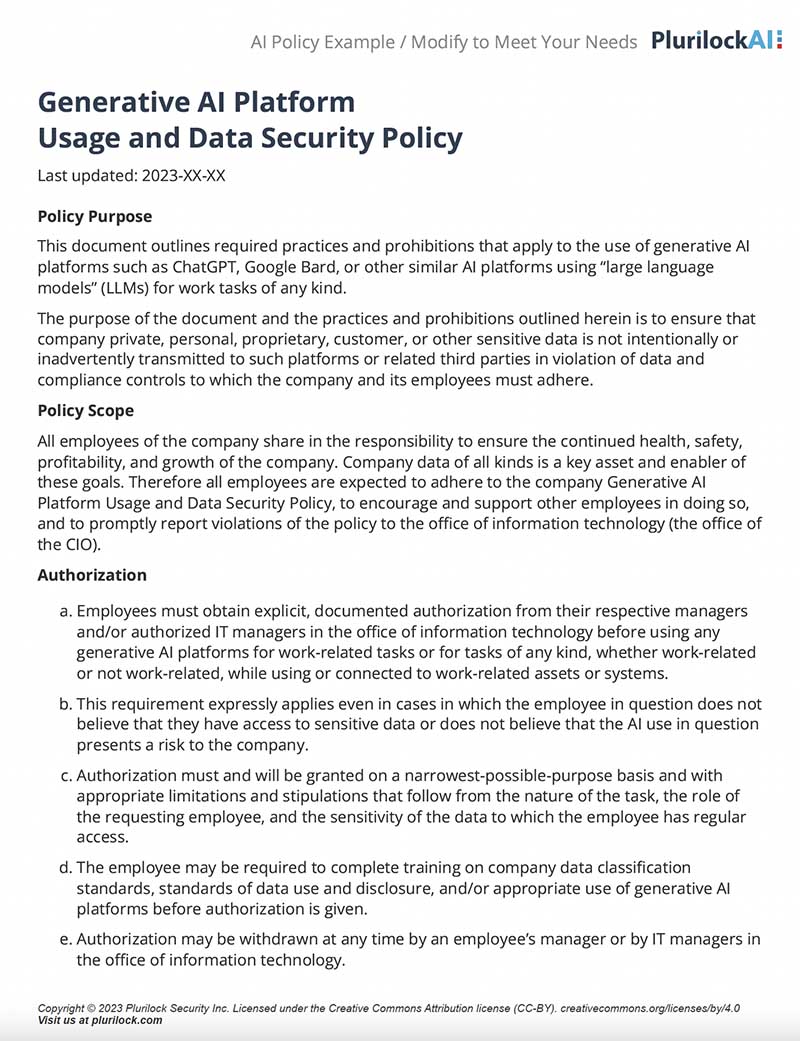
Sample Governance Policy for AI Use
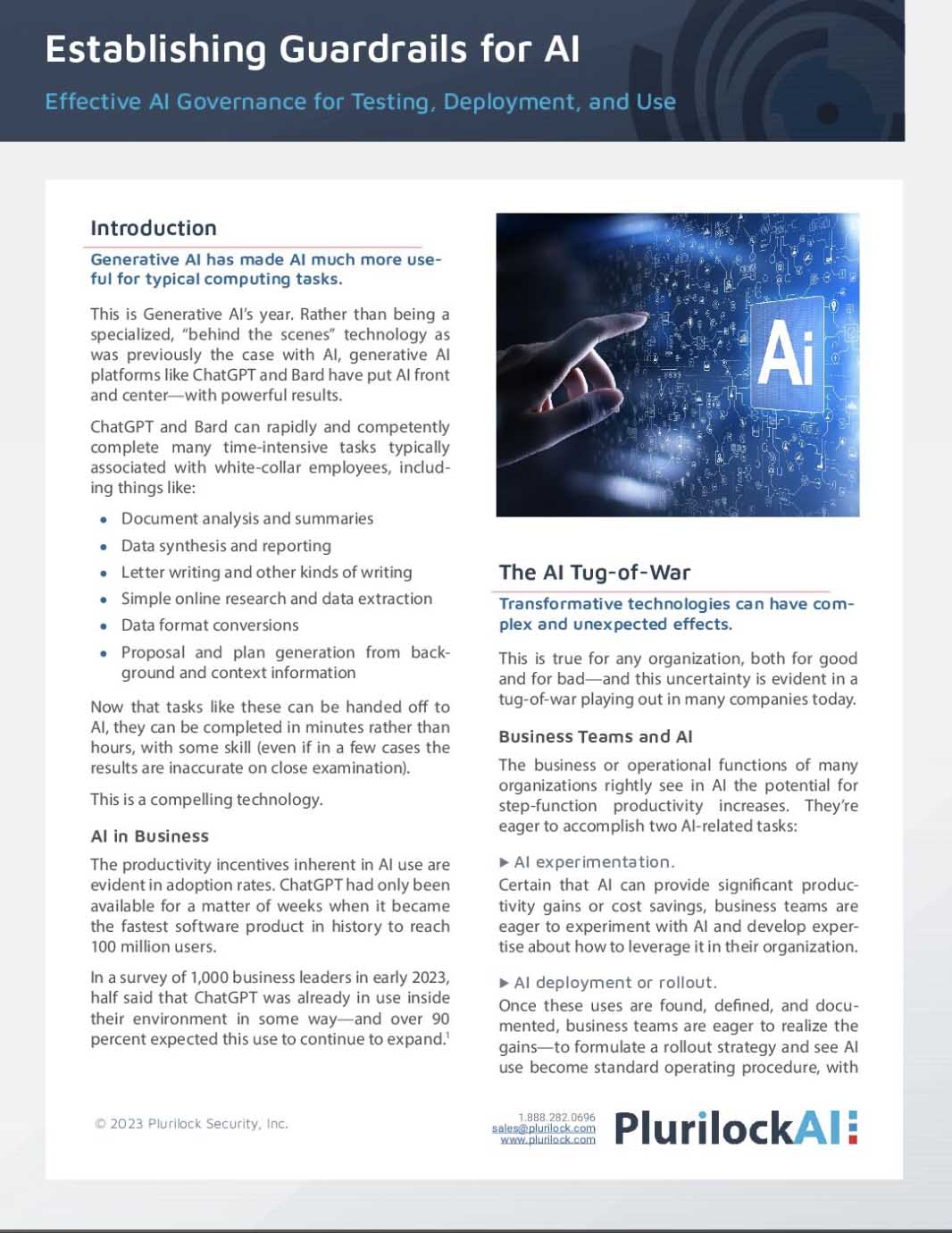
Establishing Guardrails for AI Whitepaper