Cybersecurity Reference > Glossary
What is Cloud Misconfiguration?





These misconfigurations happen when cloud resources—storage buckets, databases, virtual machines, access controls—are set up improperly, leaving sensitive data exposed or systems vulnerable to unauthorized access. Common examples include publicly accessible storage buckets containing confidential information, overly permissive identity and access management policies that grant excessive privileges, unencrypted data stores, or security groups with network access rules so broad they might as well be open doors.
These mistakes frequently stem from the complexity of cloud platforms, where default settings aren't always secure and the sheer number of configuration options can overwhelm even experienced teams. Human error during deployment, inadequate understanding of cloud security models, and lack of proper governance all contribute to the problem.
Cloud misconfigurations have been responsible for numerous high-profile data breaches, making them one of the leading causes of cloud security incidents. The challenge compounds when organizations struggle with visibility across their cloud environments, making it difficult to spot and fix these issues before attackers do.
Origin
The first major incidents involving misconfigured cloud storage became public around 2013-2014, as security researchers began systematically scanning for exposed Amazon S3 buckets and finding alarming amounts of sensitive data freely accessible on the internet. By the mid-2010s, as cloud adoption accelerated, the problem had become epidemic. High-profile breaches affecting major enterprises, government agencies, and healthcare organizations repeatedly traced back to simple configuration errors: a storage bucket left public, a database exposed without authentication, or access keys accidentally committed to public code repositories.
The issue persisted not because the technology was inherently flawed, but because cloud platforms offered unprecedented flexibility and complexity. What once required purchasing and racking physical servers now happened with a few API calls, and security teams struggled to keep pace with development velocity.
Why It Matters
Modern cloud environments can contain thousands of resources that change constantly as development teams deploy new services, scale infrastructure, and experiment with new technologies. A single misconfigured parameter—a storage bucket set to public instead of private, an overly broad IAM role, a forgotten test database lacking encryption—can expose an entire organization to data theft, ransomware, or regulatory penalties. The financial and reputational costs can be devastating.
What makes this particularly frustrating is that these vulnerabilities are entirely preventable. They're not zero-day exploits or sophisticated attack techniques; they're configuration errors that scanning tools can detect. Yet organizations continue to struggle with visibility, governance, and the cultural challenge of balancing security with development speed in environments that change by the minute.
The Plurilock Advantage
We don't just generate reports—we work alongside your teams to implement automated guardrails, establish governance frameworks that actually work, and build continuous monitoring that catches misconfigurations as they happen.
With decades of experience across commercial and government cloud deployments, we understand both the technical challenges and the organizational dynamics that allow these vulnerabilities to persist. When you need cloud security expertise that delivers outcomes rather than presentations, we mobilize in days, not months.
.
Need Help Securing Your Cloud Infrastructure?
Plurilock's cloud security experts can identify and remediate dangerous misconfigurations.
Get Cloud Security Assessment → Learn more →Downloadable References
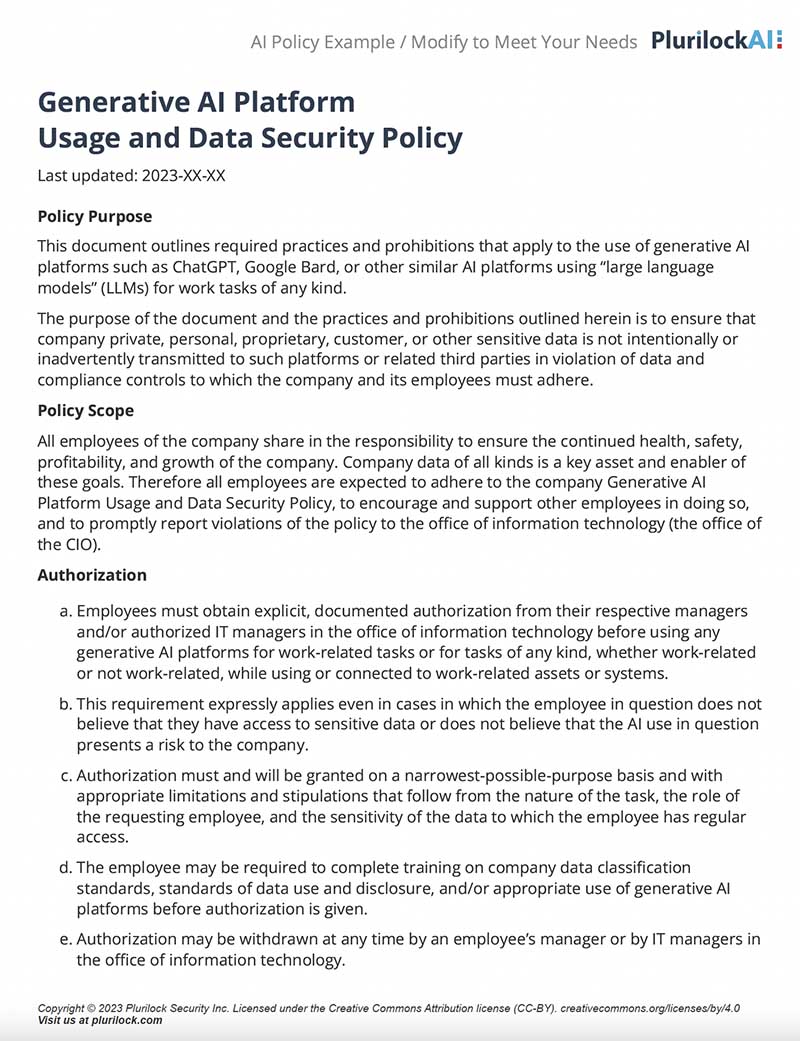
Sample Governance Policy for AI Use
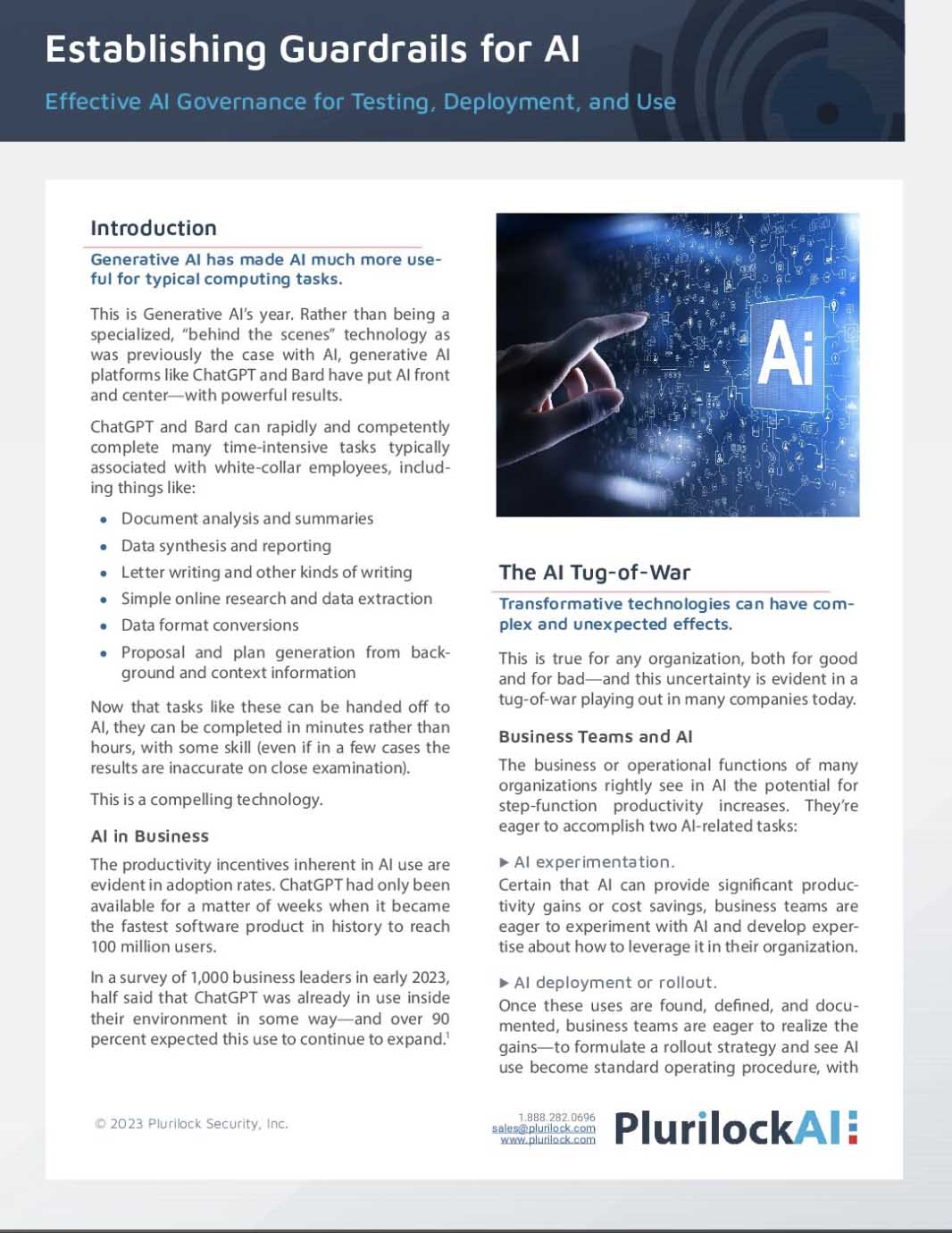
Establishing Guardrails for AI Whitepaper