
Cybersecurity Reference > Glossary
What is Control Cost Efficiency?





The concept is straightforward: does this firewall, endpoint detection tool, or encryption system reduce risk enough to justify what it costs to buy, run, and maintain? Organizations calculate this by weighing implementation and operational expenses against potential losses the control prevents—breaches, downtime, fines, reputation damage.
The calculation gets complicated quickly. A $50,000 intrusion detection system might look expensive until you consider it could prevent a $2 million breach. But you also need to factor in the three security analysts required to monitor it, the integration work with existing tools, ongoing licensing fees, and whether it actually catches threats or just generates alerts that go nowhere. Some controls deliver massive risk reduction for modest investment. Others drain budgets while barely moving the security needle.
This metric becomes critical when security teams face budget constraints, which is essentially always. It helps answer hard questions: Should we replace this legacy system or keep patching it? Is this new security tool worth the cost? Where do we cut when budgets get slashed? The goal isn't finding the cheapest option—it's identifying where security spending creates genuine protection versus where it just creates the appearance of doing something.
Origin
The shift toward efficiency metrics accelerated after high-profile breaches demonstrated that spending more didn't automatically mean better protection. Organizations that had invested heavily in security still got compromised, raising uncomfortable questions about where money was going and what it was accomplishing. The 2008 financial crisis intensified scrutiny—suddenly every department needed to prove its value, security included.
The framework borrowed from established business metrics like return on investment and cost-benefit analysis, but adapted them for cybersecurity's probabilistic nature. Unlike manufacturing efficiency, where you can count widgets produced per dollar, security deals with prevented events that never happen. This makes measurement inherently tricky. Early approaches used annual loss expectancy calculations, but these relied on actuarial data that barely existed for cyber threats. Modern methods incorporate threat modeling, control effectiveness ratings, and comparative analysis across similar organizations, though perfect measurement remains elusive.
Why It Matters
The metric matters more as threats evolve faster than budgets grow. Ransomware, supply chain attacks, and cloud vulnerabilities demand new defenses, but adding tools without removing ineffective ones just compounds the problem. Organizations need ways to make hard choices: which controls deliver protection and which just consume resources? A vulnerability scanner that finds thousands of issues but lacks integration with patching systems might cost less than alternatives, but it's not efficient if nothing gets fixed.
Regulatory pressure adds another dimension. Compliance frameworks require specific controls, but checking boxes doesn't equal security. An organization might spend heavily on controls that satisfy auditors while leaving actual attack paths undefended. Cost efficiency analysis helps identify where compliance spending also delivers genuine risk reduction versus where it's purely overhead. The question isn't whether to spend on security—it's whether current spending actually makes the organization harder to compromise or just harder to audit.
The Plurilock Advantage
We've seen organizations cut their security tool count in half while improving their security posture, because fewer well-integrated controls work better than dozens of disconnected products.
Our governance, risk, and compliance services help organizations measure control effectiveness and make evidence-based decisions about security spending. We focus on solving problems, not selling solutions you don't need—our team includes former CISOs and practitioners who've managed real security budgets and understand the pressure to justify every dollar while maintaining robust defenses.
.
Need Help Optimizing Your Security Spend?
Plurilock's cost efficiency analysis identifies opportunities to maximize your cybersecurity ROI.
Request Cost Analysis → Learn more →Downloadable References
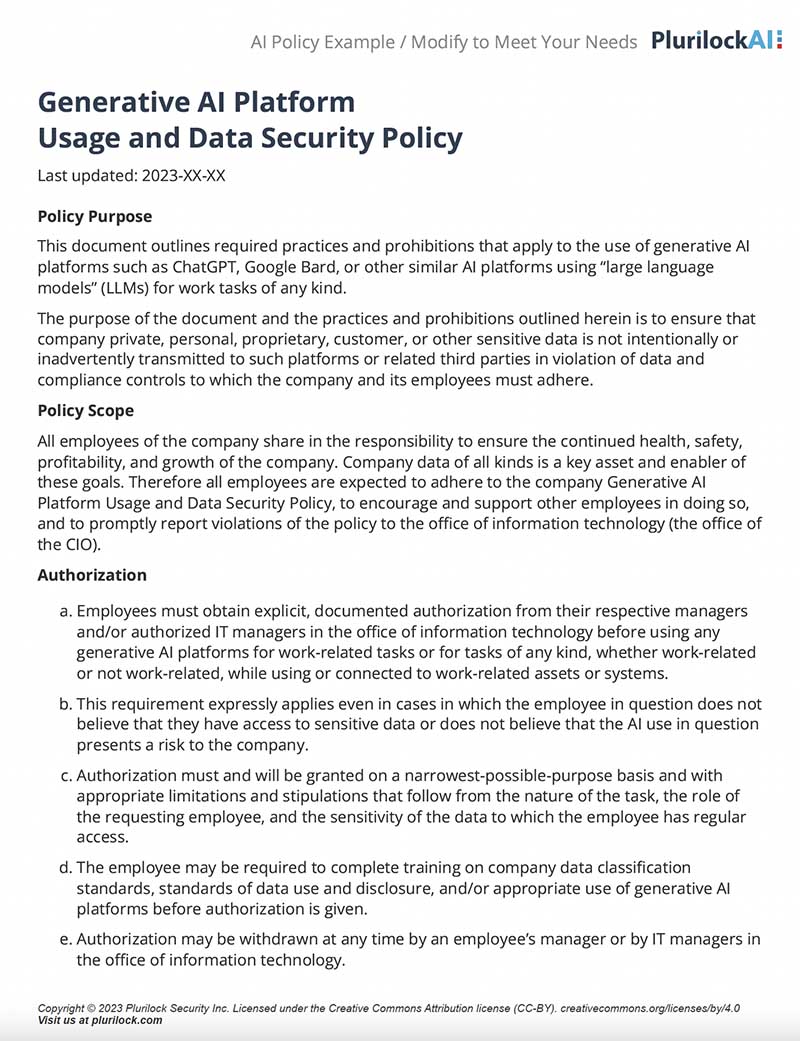
Sample Governance Policy for AI Use
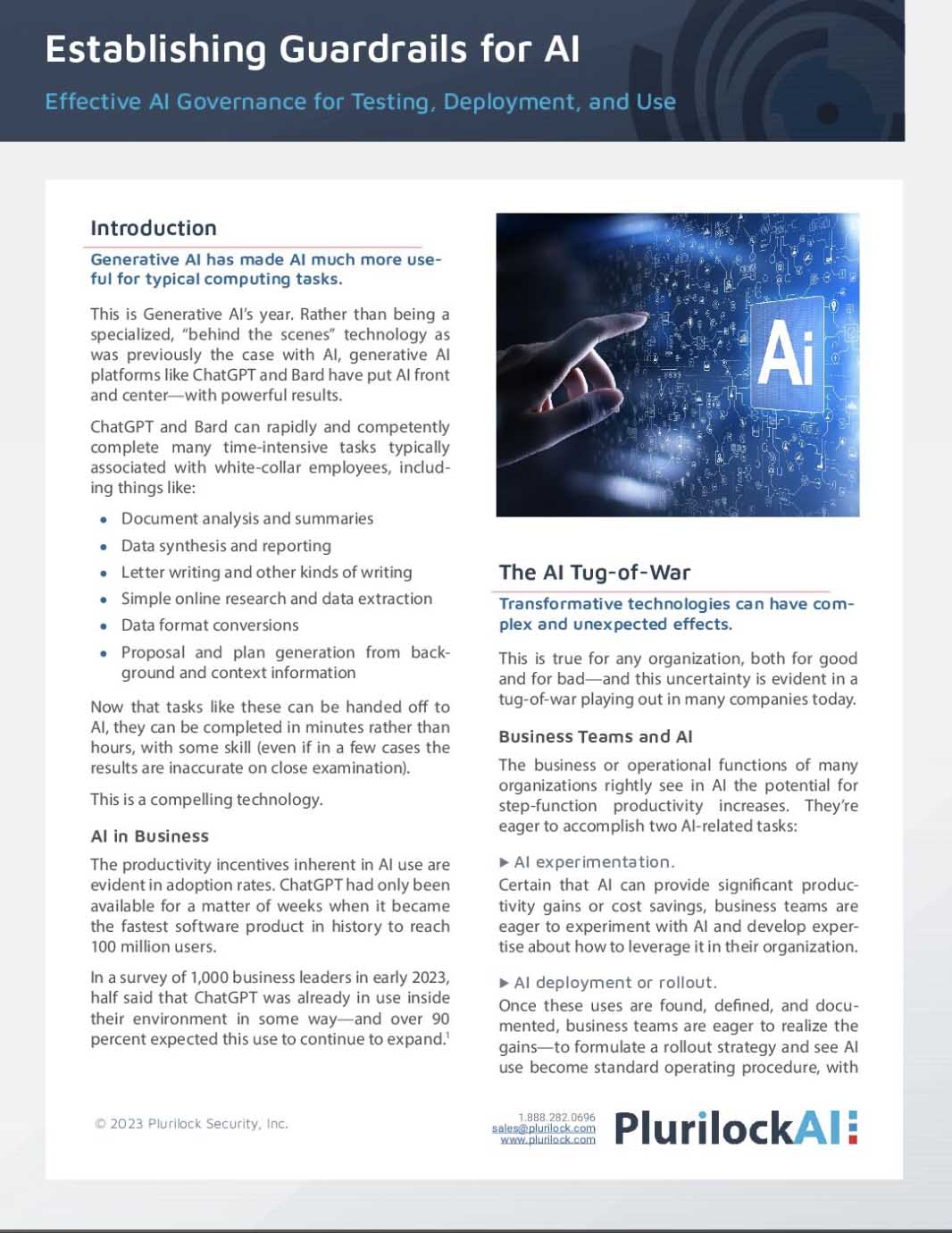
Establishing Guardrails for AI Whitepaper