Cybersecurity Reference > Glossary
What is Egress Filtering?





This technique involves examining outbound traffic at network boundaries—such as firewalls, routers, or proxy servers—to ensure that only authorized data and communications are permitted to exit the internal network.
Egress filtering serves multiple critical security functions. It helps prevent data exfiltration by blocking unauthorized attempts to send sensitive information outside the organization. It also stops malware from communicating with external command-and-control servers, effectively disrupting botnet operations and preventing attackers from maintaining persistent access to compromised systems.
Common egress filtering implementations include blocking traffic to known malicious IP addresses, restricting access to certain ports or protocols, preventing the transmission of files containing sensitive data patterns, and monitoring for unusual outbound traffic volumes or destinations. Organizations typically configure egress filters to allow only necessary business communications while blocking everything else by default.
While egress filtering is essential for comprehensive network security, it must be carefully balanced with business needs to avoid disrupting legitimate operations. Overly restrictive egress policies can interfere with cloud services, software updates, and other necessary outbound communications that modern businesses rely upon.
Origin
The rise of sophisticated malware changed this perspective. As attackers developed techniques to establish persistent access and exfiltrate data over extended periods, security teams needed ways to detect and block these outbound communications. The Morris Worm of 1988 demonstrated how compromised systems could spread threats outward, but it took years for egress filtering to become standard practice.
RFC 2827, published in 2000, formalized best practices for egress filtering at the network edge, particularly addressing IP spoofing attacks. This document encouraged Internet Service Providers and organizations to verify that outbound traffic originated from legitimate source addresses within their networks.
The concept gained broader adoption throughout the 2000s as data breach incidents became more common and costly. Organizations recognized that preventing data from leaving the network was just as important as keeping threats out. Today, egress filtering is a fundamental component of defense-in-depth strategies and zero-trust architectures.
Why It Matters
The explosion of cloud services and remote work has complicated egress filtering significantly. Legitimate business traffic now flows to thousands of external destinations, making it harder to distinguish normal activity from malicious behavior. Attackers exploit this complexity by tunneling data through approved channels like DNS queries, HTTPS connections, or cloud storage services.
Compliance frameworks increasingly require egress filtering as evidence of due diligence in protecting sensitive data. Regulations like GDPR, HIPAA, and PCI DSS implicitly expect organizations to monitor and control data leaving their networks. Following a breach, investigators often discover that stolen data passed through network boundaries without detection—a failure of egress controls.
Effective egress filtering requires continuous tuning and monitoring. Static rules quickly become outdated as business needs evolve and attackers develop new evasion techniques. Organizations need solutions that can identify anomalous outbound behavior, not just block known threats.
The Plurilock Advantage
We don't just deploy rules—we help you understand what's leaving your network and why. Our team includes former intelligence professionals and senior practitioners who know how attackers abuse outbound channels. We find the gaps in your current egress controls that others miss, then fix them without disrupting operations.
Whether you need firewall modernization, zero-trust implementation, or comprehensive data protection services, Plurilock delivers practical solutions that work in your environment.
.
Ready to Implement Advanced Egress Filtering?
Plurilock's network security experts can deploy comprehensive egress filtering solutions.
Configure My Egress Filtering → Learn more →Downloadable References
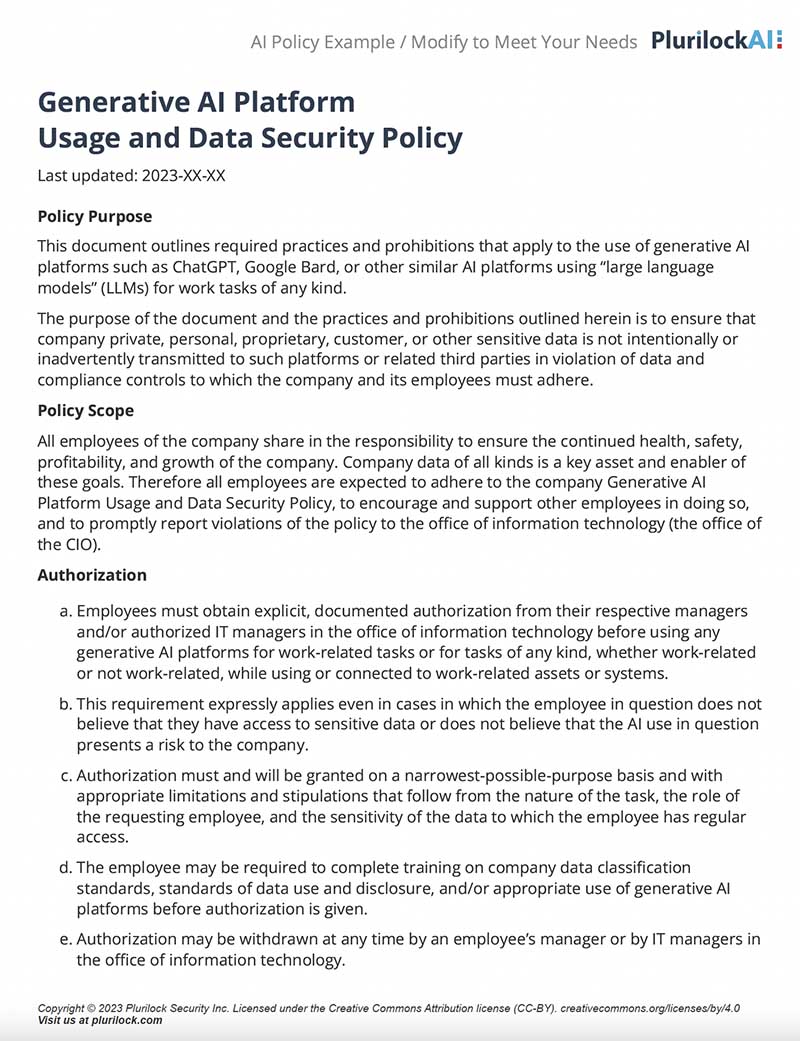
Sample Governance Policy for AI Use

Establishing Guardrails for AI Whitepaper