Cybersecurity Reference > Glossary
What is an Endpoint?





These are the devices where people actually do their work, which makes them both essential and vulnerable.
While headlines often focus on cloud breaches or server compromises, attackers typically need to start somewhere, and that somewhere is usually an endpoint. A phished employee opens a malicious attachment on their laptop. A contractor plugs an infected USB drive into a workstation. A mobile device gets lost with cached credentials still active. The endpoint is where the human element meets the network, and that intersection creates risk.
Good endpoint security means more than just antivirus software—it requires visibility into what's happening on these devices, controls over what they can access, and the ability to respond when something goes wrong. Because no matter how hardened your servers are, if an attacker can compromise the laptop of someone with legitimate access, they're already inside your defenses.
Origin
The concept gained particular traction in security circles as threats evolved. Early network security focused on the perimeter—firewalls keeping bad actors out. But as attacks grew more sophisticated and insider threats became harder to ignore, security teams realized they needed to protect devices inside the network too. Endpoint security became its own discipline, spawning dedicated tools and strategies.
The explosion of mobile devices and bring-your-own-device policies in the 2010s made endpoint security even more critical, since the traditional network perimeter had effectively dissolved.
Why It Matters
Modern work amplifies this challenge. Remote work means endpoints operate outside your physical control, often on home networks with weak security. Cloud services mean sensitive data flows directly to personal devices. The sheer number of endpoints in most organizations creates an enormous attack surface—a mid-sized company might have thousands of devices to monitor and protect.
Ransomware typically enters through endpoints. Business email compromise targets users at their workstations. Credential theft happens when someone's device gets infected with a keylogger. And once attackers establish persistence on an endpoint, they can use it as a launching point for lateral movement through your network.
Endpoint security isn't just about protecting individual devices; it's about preventing those devices from becoming the weak link that undermines everything else you've built. When endpoint security fails, everything downstream is at risk.
The Plurilock Advantage
We deploy and configure EDR and XDR solutions that actually work together, providing visibility across your entire environment rather than generating alerts in silos.
When you need to understand your exposure, our adversary simulation services test whether your endpoints would withstand real-world attacks. And if something goes wrong, our incident response team can contain threats before they spread.
Learn more about our zero trust architecture and deployment services.
.
Downloadable References
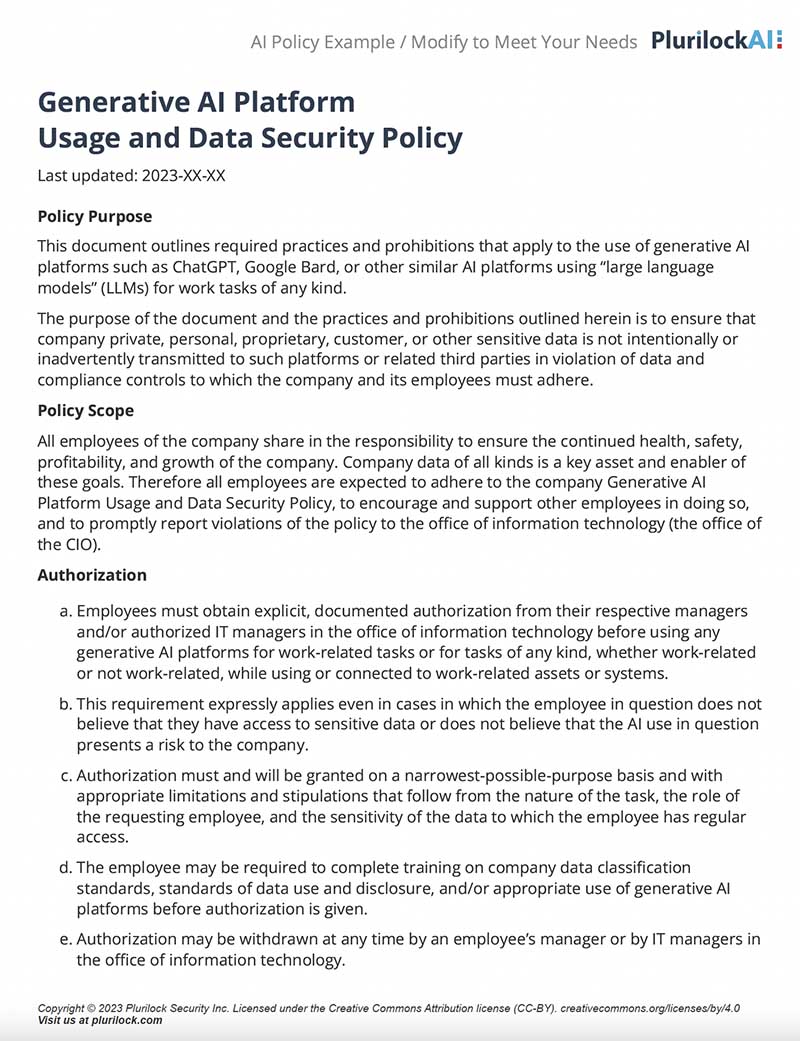
Sample Governance Policy for AI Use
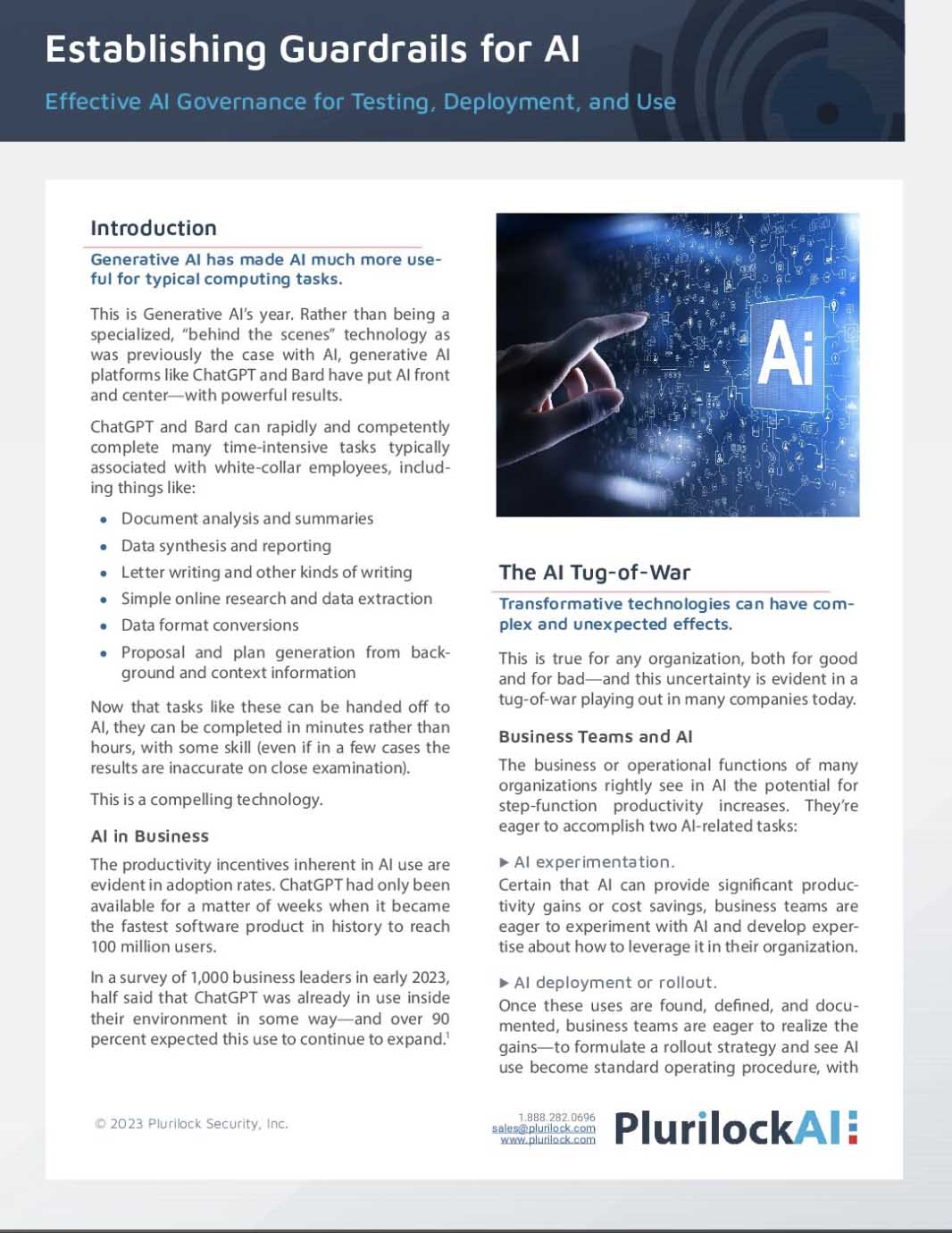
Establishing Guardrails for AI Whitepaper