Cybersecurity Reference > Glossary
What is a High-Value Asset (HVA)?





This includes customer databases, intellectual property repositories, financial systems, and operational technology that keeps critical processes running. The label matters because these assets draw attention from attackers who want maximum impact from their efforts, whether that means stealing trade secrets, disrupting operations, or holding data for ransom.
Organizations identify high-value assets through risk assessments that consider both the sensitivity of information and the operational impact if something goes wrong. A database containing millions of customer records qualifies, as does the control system for a manufacturing line or the codebase for a flagship product. Protection strategies typically involve multiple layers: strict access controls, encryption, continuous monitoring, network segmentation, and robust backup systems. The goal is making these assets hard to reach and resilient against both technical attacks and insider threats.
Regulatory frameworks often mandate specific protections for certain asset types. Healthcare organizations must secure patient records under HIPAA, financial institutions face requirements around transaction data, and critical infrastructure operators answer to sector-specific standards. These mandates reflect the broader principle that some things matter more than others when planning defenses.
Origin
As networks grew more complex and attacks more sophisticated, security teams realized they couldn't protect everything equally well. The idea of asset classification gained traction, influenced by military and intelligence practices where information got labeled by sensitivity level. Commercial risk management frameworks began incorporating asset valuation, asking organizations to identify their crown jewels before designing defenses.
The shift accelerated after major breaches demonstrated how attackers moved laterally through networks, bypassing perimeter defenses to reach valuable targets. Security architects started designing around the assumption that networks would be compromised, which meant identifying and isolating the most important systems became essential. Zero trust principles reinforced this thinking by requiring explicit protection for critical resources rather than relying on network boundaries.
Regulatory requirements sharpened the focus further. When laws started imposing serious penalties for data breaches, organizations needed clear inventories of regulated data and systems. High-value asset identification became a compliance requirement, not just a security best practice.
Why It Matters
The challenge lies in actually knowing what matters most. Many organizations discover their high-value assets only after an incident exposes gaps in understanding. A system might seem mundane until its failure cascades through dependent processes. Data that looks routine might contain sensitive information when aggregated. Shadow IT creates assets that security teams don't even know exist.
Resource constraints make prioritization necessary. Security budgets can't cover everything equally, so identifying what matters most guides where to invest in advanced monitoring, where to implement stricter controls, and what deserves redundancy. This becomes more complex in cloud environments where assets spread across multiple platforms and boundaries blur.
Insider threats complicate the picture because authorized users legitimately access high-value assets while potentially posing risks. Balancing security with operational needs requires understanding not just what's valuable but who needs it, when, and why. Getting this wrong either creates security gaps or frustrates legitimate work.
The Plurilock Advantage
We implement zero trust architectures that explicitly secure high-value systems rather than relying on perimeter controls, integrate monitoring tools that detect suspicious access patterns, and design data protection strategies that balance security with usability.
Whether you need data protection services or broader security architecture work, we mobilize quickly with practitioners who solve problems rather than just documenting them.
.
Need to Secure Your High-Value Assets?
Plurilock's asset protection solutions safeguard your organization's most critical digital resources.
Protect Critical Assets → Learn more →Downloadable References
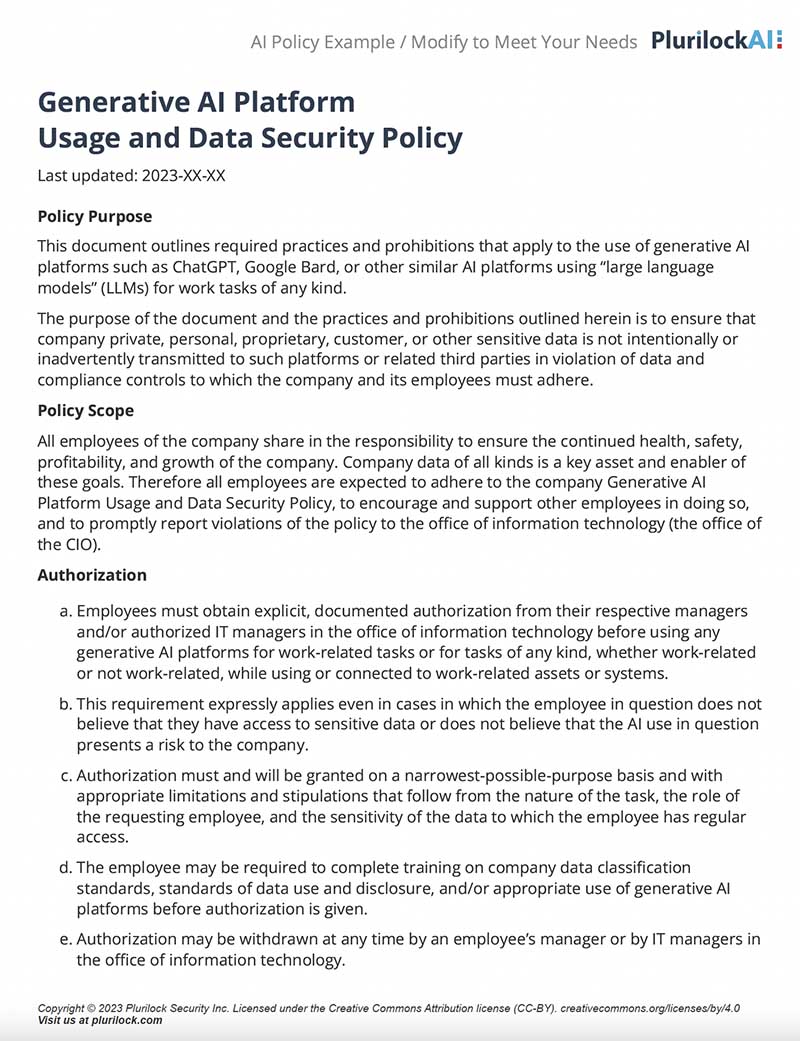
Sample Governance Policy for AI Use
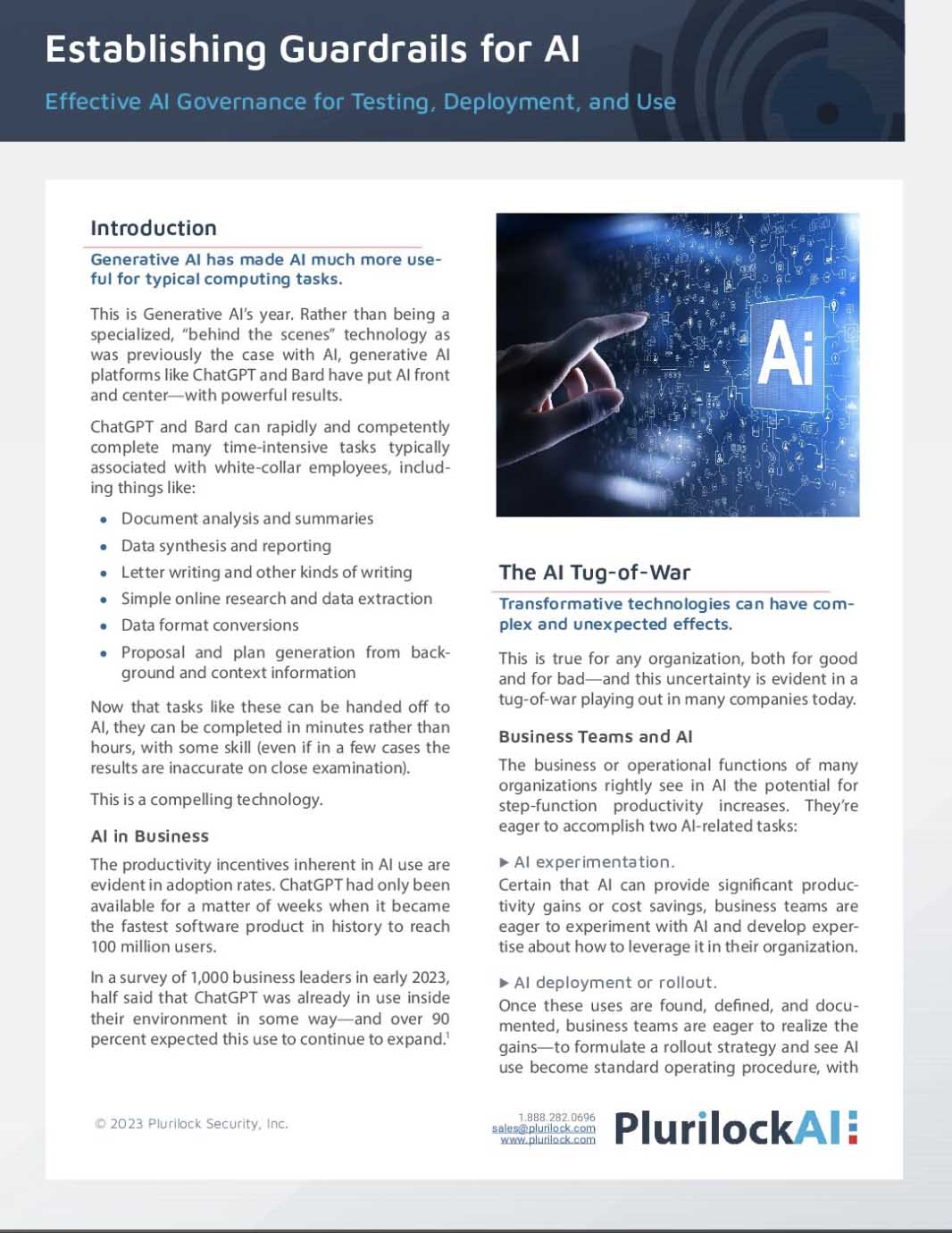
Establishing Guardrails for AI Whitepaper