Cybersecurity Reference > Glossary
What is an Identity-Aware Proxy (IAP)?

This cloud-based security model moves beyond traditional perimeter-based security by evaluating each access request individually, considering factors such as user credentials, device security posture, location, and behavior patterns before granting or denying access to protected resources.
Identity-aware proxies operate by intercepting all traffic to protected applications and performing real-time authentication and authorization checks. They typically integrate with identity providers like Active Directory, LDAP, or SAML-based systems to verify user identities, while also assessing risk factors such as whether the user is connecting from a managed device, their geographic location, and the sensitivity of the requested resource.
This approach is particularly valuable for organizations adopting zero-trust security models, as it enables secure remote access to internal applications without requiring traditional VPNs. By centralizing access control decisions and providing granular visibility into application access patterns, identity-aware proxies help organizations maintain security while enabling flexible, location-independent access to critical business applications.
Origin
Google was among the first to publicly detail this approach through its BeyondCorp initiative, announced in 2014. The company essentially eliminated its corporate VPN, instead building a system where every request to internal applications was authenticated and authorized based on identity and context. This wasn't just about convenience—Google had experienced sophisticated attacks that made clear the traditional network perimeter couldn't be trusted.
Other technology companies followed with their own implementations, recognizing that remote work and cloud adoption demanded a fundamental shift in access control. The approach gained broader acceptance around 2017-2019 as more vendors offered commercial solutions and the zero-trust security model became widely discussed. The COVID-19 pandemic accelerated adoption dramatically, as organizations suddenly needed secure remote access for entire workforces without the bottleneck and complexity of traditional VPN infrastructure.
Why It Matters
These proxies provide security that travels with the user rather than being tied to network location. If someone's credentials are compromised, an identity-aware proxy can still block access based on unusual device signatures, geographic anomalies, or suspicious behavior patterns. This layered approach catches threats that would sail through traditional VPN connections.
The practical benefits extend beyond security. Identity-aware proxies eliminate many of the performance bottlenecks and user friction associated with VPNs. Users get faster access to applications, IT teams get better visibility into who's accessing what, and security teams can enforce granular policies without creating maze-like network architectures. For organizations embracing zero-trust principles, these proxies provide the authentication and authorization backbone that makes the model work in practice rather than just theory.
The Plurilock Advantage
We design systems that integrate smoothly with your existing identity infrastructure while providing the granular visibility and control that modern security demands. Rather than layering on complexity, we find ways to make access both more secure and more seamless.
Our zero trust architecture services deliver practical implementations that protect your applications without frustrating your users.
.
Need Help Implementing Identity-Aware Proxy?
Plurilock can deploy and configure IAP solutions tailored to your infrastructure.
Get IAP Implementation Support → Learn more →Downloadable References
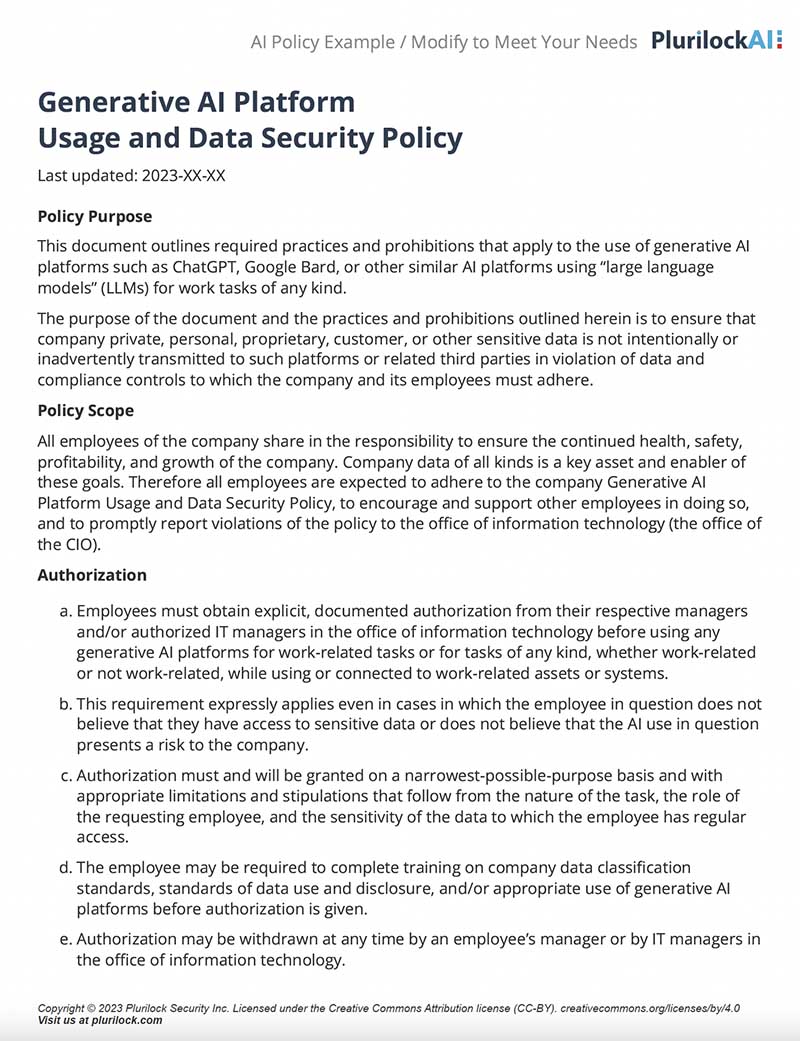
Sample Governance Policy for AI Use
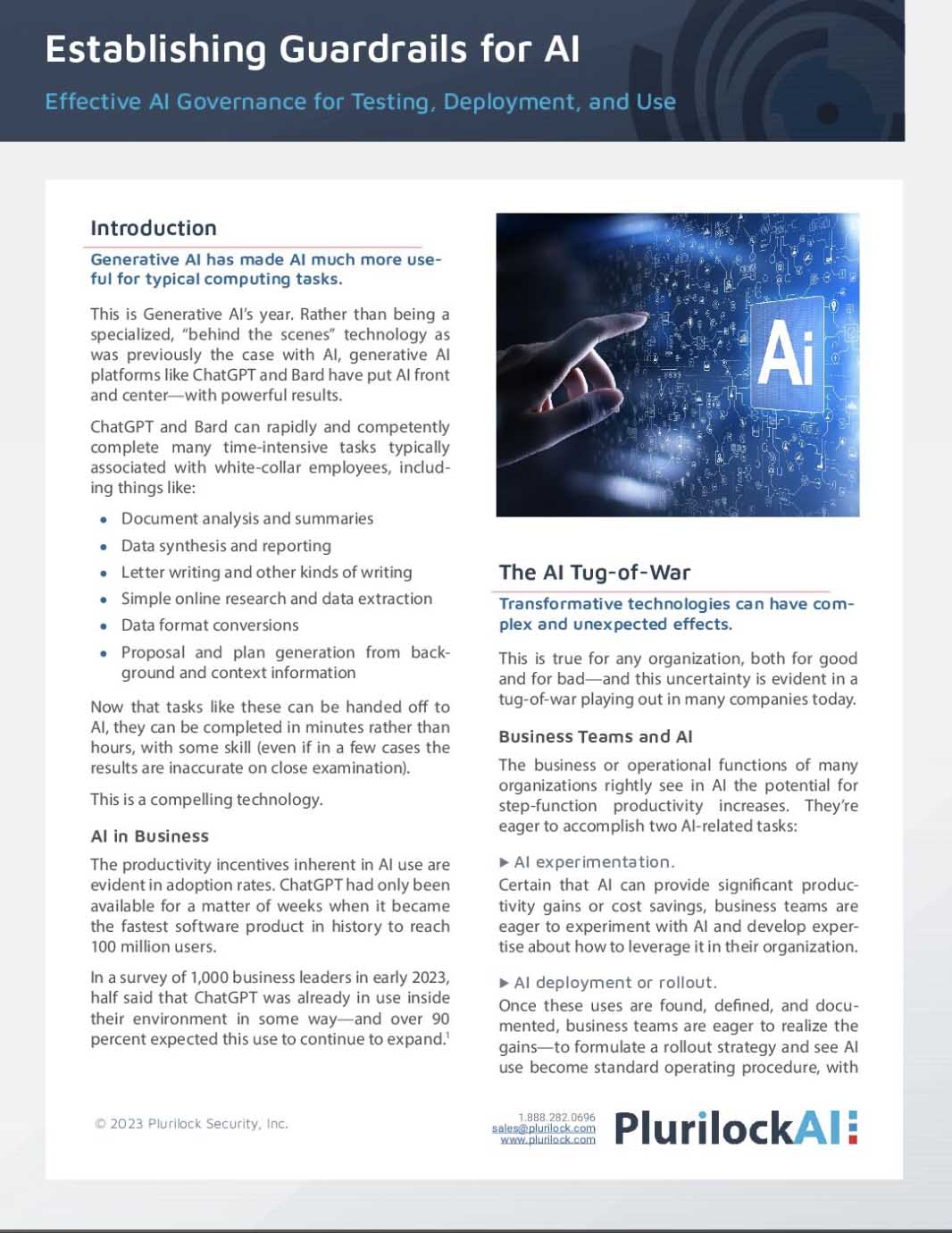
Establishing Guardrails for AI Whitepaper