Cybersecurity Reference > Glossary
What is Information Security?


While the term encompasses physical documents and analog systems, it's become largely synonymous with protecting digital data—everything from customer records and intellectual property to operational data and employee information. The field involves both technical controls like encryption and access management, and organizational measures like security policies and user training.
What separates information security from broader IT management is its explicit focus on confidentiality, integrity, and availability—often called the CIA triad. These three principles guide decisions about who can access what information, how that information stays accurate and trustworthy, and when legitimate users can actually get to it.
Information security professionals work to balance these sometimes competing concerns while navigating an environment where threats constantly evolve and business needs shift. The discipline has grown from a niche technical concern into a board-level priority, touching nearly every aspect of how organizations operate.
Origin
As computers entered the picture in the 1960s and 70s, the challenge shifted from protecting paper to protecting data stored and transmitted electronically. The Department of Defense's "Orange Book," published in 1983, established some of the first criteria for evaluating computer security.
Through the 1990s, as businesses adopted networked systems and the internet became commercial, information security moved beyond government and defense contractors into the broader private sector. The field absorbed concepts from physical security, cryptography, and systems administration while developing its own frameworks and methodologies. Early practitioners often came from military or intelligence backgrounds, bringing a mindset shaped by classified environments. Over time, the discipline matured into a recognized profession with certifications, academic programs, and established career paths, though it retained its roots in protecting valuable information from adversaries.
Why It Matters
The regulatory environment has caught up with these risks. Laws like GDPR, CCPA, and HIPAA impose real penalties for failing to protect information, and breach disclosure requirements mean failures become public. Beyond compliance, poor information security damages reputation, erodes customer trust, and in some cases threatens business survival.
Yet the challenge isn't just about stopping bad actors. Information needs to flow for businesses to function. Employees need access to data to do their jobs. Partners and suppliers need to exchange information. Effective information security enables this flow while managing risk—it's not about building fortress walls but about making smart decisions in complex environments. As work becomes more distributed and data more central to competitive advantage, how organizations approach information security increasingly determines their resilience and success.
The Plurilock Advantage
Our team includes former intelligence professionals and leaders from major cyber organizations who know how adversaries think and operate. We can assess your current posture, identify gaps that matter, and implement solutions that fit your environment rather than forcing you into cookie-cutter frameworks.
Whether you need data protection services or broader security modernization, we mobilize quickly and focus on outcomes, not process theater.
.
Downloadable References
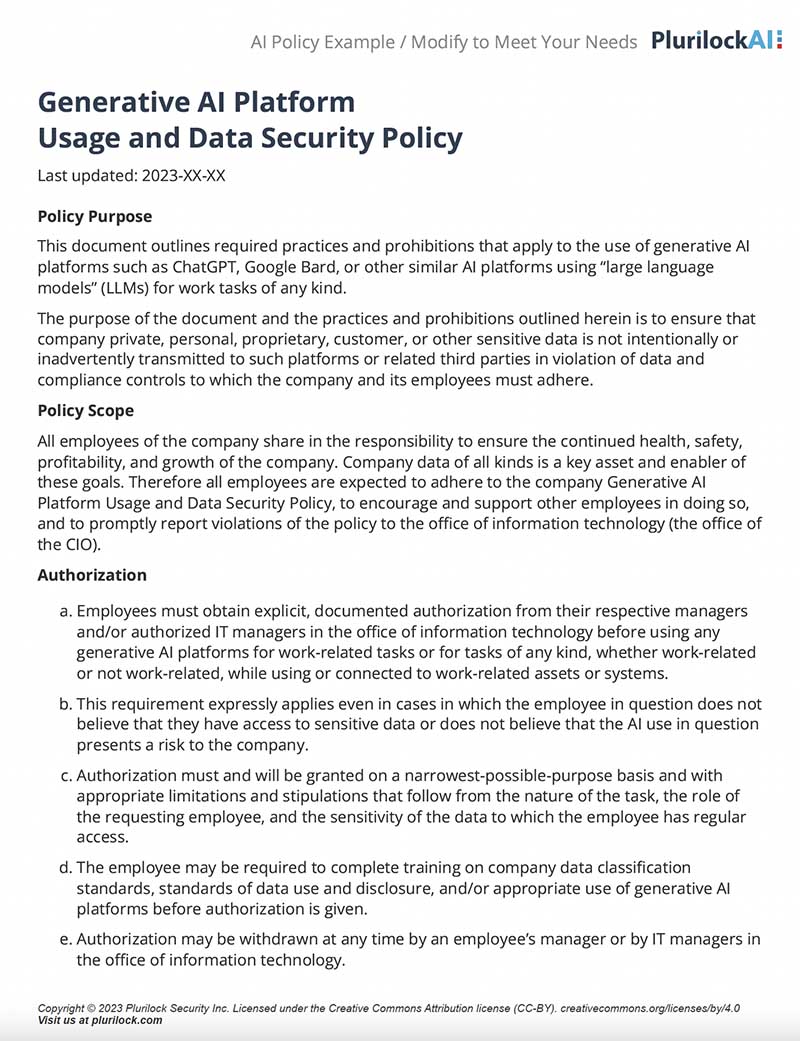
Sample Governance Policy for AI Use
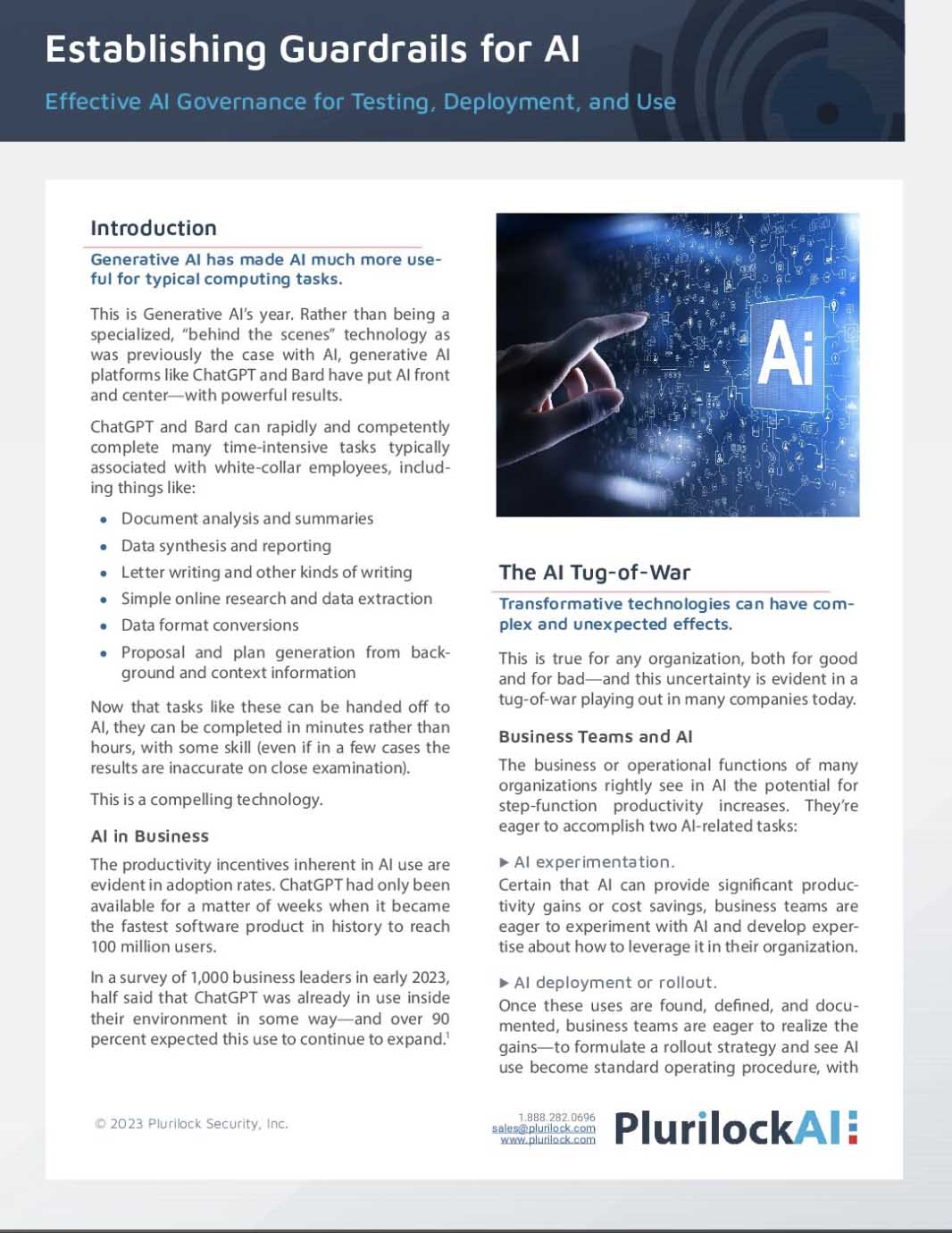
Establishing Guardrails for AI Whitepaper