Cybersecurity Reference > Glossary
What is an Integrated GRC Platform?

Instead of jumping between systems to track policies, assess risks, and document compliance activities, teams work from a single source of truth that connects these overlapping disciplines.
The governance side establishes the framework—policies, procedures, decision rights, and oversight structures. Risk management capabilities help identify threats, analyze their potential impact, and track mitigation efforts. Compliance features map regulatory requirements to controls, monitor adherence, and generate evidence for auditors. What makes these platforms "integrated" isn't just housing everything under one roof—it's the way data flows between functions. A newly identified risk automatically triggers compliance checks. A policy change ripples through risk assessments. A control failure surfaces in governance dashboards.
Modern platforms typically include workflow automation, real-time monitoring, and reporting that spans all three domains. You might find policy management, incident tracking, vendor risk assessment, and regulatory change tracking built in. Organizations adopt these systems to reduce complexity, eliminate duplicate work, and gain visibility into how their GRC activities actually connect. When done well, integration means fewer gaps, faster responses, and compliance that's embedded in operations rather than bolted on afterward.
Origin
Early GRC efforts were reactive. Companies used separate tools for each function, often built in-house or cobbled together from basic software. The term "GRC" itself gained traction around 2002-2004, promoted by industry analysts who observed that organizations were drowning in overlapping requirements and disconnected processes. The 2008 financial crisis accelerated adoption, as regulatory scrutiny intensified and boards demanded better visibility into organizational risks.
The first generation of commercial GRC platforms focused mainly on documentation and evidence collection. They were essentially sophisticated databases for tracking policies and controls. Over time, vendors added analytics, workflow automation, and integration capabilities that connected GRC functions to actual business operations. Cloud deployment made these systems more accessible to mid-sized organizations. Today's platforms increasingly incorporate machine learning for risk prediction and automated control testing, reflecting how far the technology has evolved from its spreadsheet origins.
Why It Matters
Integrated GRC platforms matter because they make these connections visible and actionable. Security teams can see how technical vulnerabilities relate to compliance obligations and business risks. Executives get a consolidated view of the organization's risk posture without piecing together reports from multiple systems. Auditors can trace controls from policy through implementation to testing results.
The shift toward continuous compliance monitoring—driven by regulations that demand near-real-time controls—makes integration even more critical. Organizations can't afford the lag time that comes from manual data transfers between systems. They need automated workflows that connect risk assessments to remediation tracking, compliance monitoring to incident response, and policy updates to control testing. For cybersecurity specifically, an integrated approach means security risks aren't isolated from operational and financial risks, and security controls map directly to the regulations and frameworks that require them.
The Plurilock Advantage
We help organizations select the right platform for their environment, integrate it with existing security tools and business systems, and build workflows that people actually use.
Rather than lengthy implementation cycles, we mobilize quickly to get your GRC capabilities operational. Learn more about our governance, risk, and compliance services.
.
Need Help Streamlining Your GRC Strategy?
Plurilock's integrated GRC platform unifies governance, risk, and compliance management.
Get Platform Demo → Learn more →Downloadable References
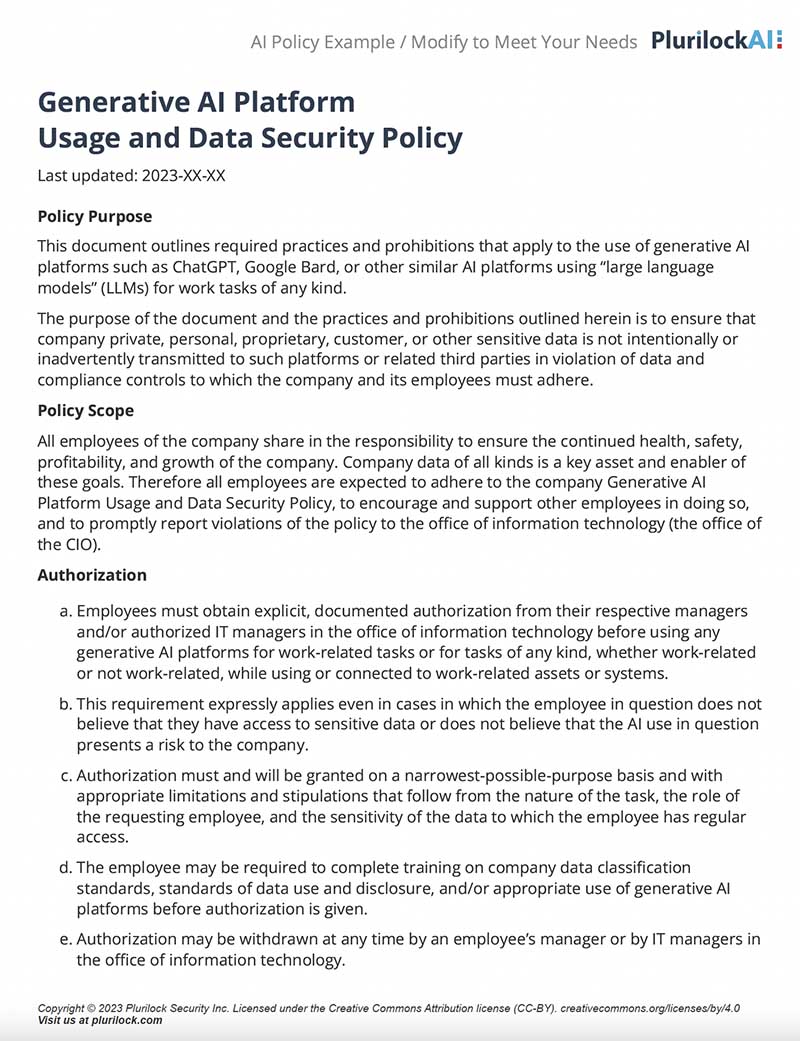
Sample Governance Policy for AI Use
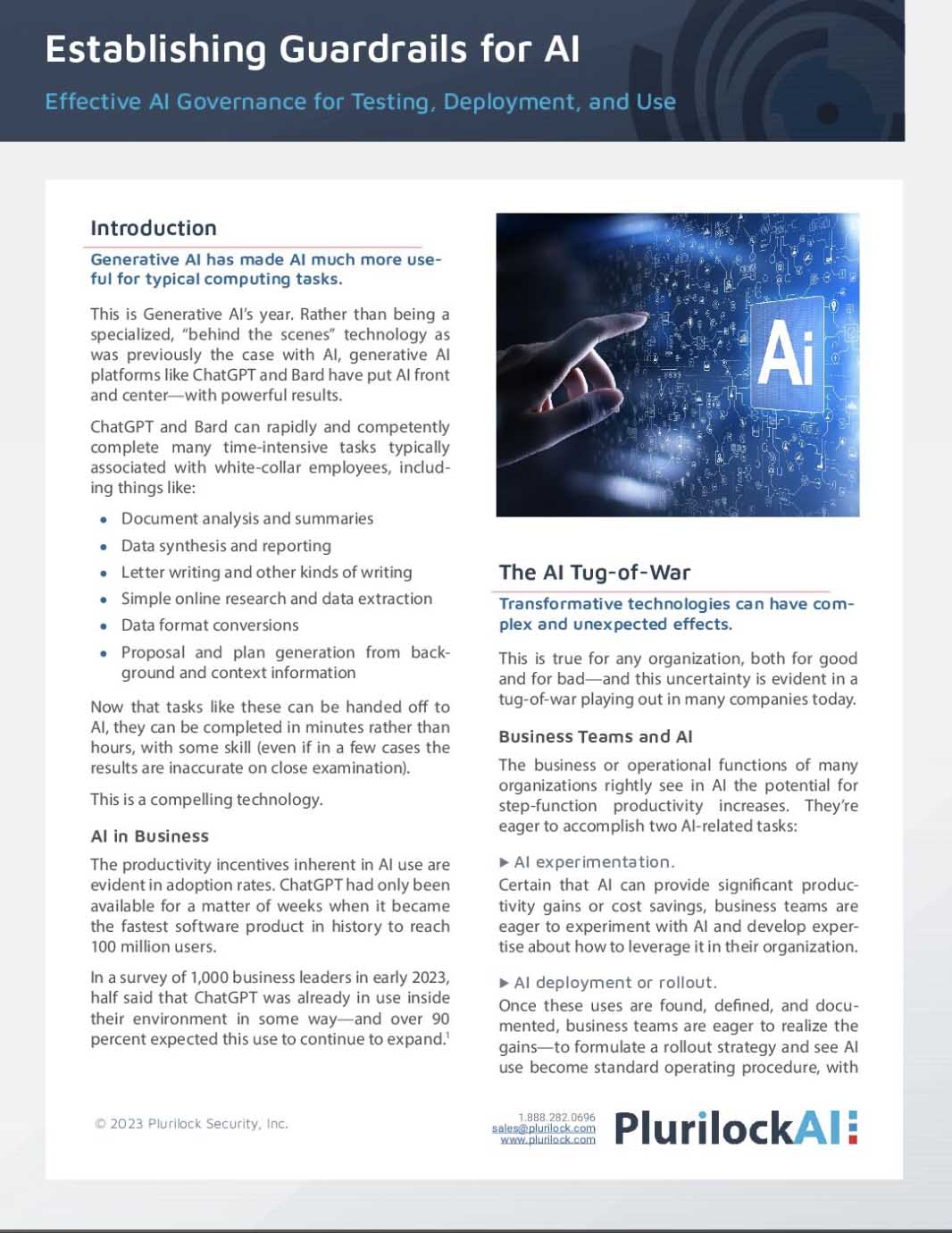
Establishing Guardrails for AI Whitepaper