Cybersecurity Reference > Glossary
What is a Managed Security Service Provider (MSSP)?





These providers run the day-to-day security work—monitoring networks, investigating alerts, responding to incidents, and managing security tools. Most MSSPs operate Security Operations Centers where analysts watch client systems around the clock, hunting for threats and coordinating responses when something goes wrong.
Organizations turn to MSSPs for different reasons. Some need help filling gaps in their security teams. Others want access to specialized expertise they can't afford to hire full-time. Smaller companies often use MSSPs to get enterprise-level security capabilities without building entire security departments from scratch. The services typically include managed firewall administration, intrusion detection, SIEM platform management, endpoint monitoring, vulnerability scanning, and incident response.
The MSSP model shifts security operations from a capital expense to an operational one. Instead of buying tools, hiring specialists, and maintaining infrastructure, organizations pay a subscription fee for ongoing security services. This arrangement works particularly well when threats require constant vigilance but the organization lacks the budget or scale to justify a full internal security team. The quality of MSSPs varies considerably, though—from firms that simply forward alerts to sophisticated operations that actively hunt threats and integrate deeply with client environments.
Origin
The model evolved significantly after high-profile breaches in the mid-2000s demonstrated that detection alone wasn't enough. MSSPs began offering response capabilities, not just monitoring. The rise of advanced persistent threats and targeted attacks pushed providers to develop threat hunting services and deeper integration with client networks. By the 2010s, managed detection and response became the standard expectation rather than basic log monitoring.
The MSSP market grew rapidly as cyber threats outpaced most organizations' ability to respond. Compliance requirements added fuel—regulations increasingly demanded 24/7 monitoring and documented incident response, which many companies couldn't provide internally. The cybersecurity skills shortage pushed even large organizations toward MSSPs for specialized capabilities. Today's MSSPs bear little resemblance to their monitoring-focused predecessors, functioning more like outsourced security departments with active threat hunting, forensics capabilities, and strategic advisory services.
Why It Matters
The explosion in security tools has made MSSP relationships more complex. Many organizations now run a dozen or more security products, each generating alerts and requiring specialized knowledge. No single person can master them all, which makes the MSSP's breadth of expertise genuinely valuable. But this same complexity creates integration challenges—a mediocre MSSP might monitor your tools without truly connecting the dots across them.
The rise of cloud infrastructure and remote work has complicated the MSSP value proposition. Traditional network perimeter monitoring matters less when your infrastructure spans multiple cloud providers and your workforce connects from anywhere. Modern MSSPs need cloud expertise, not just network security skills. Organizations evaluating MSSPs should look for providers who can operate across hybrid environments and bring actual expertise rather than just forwarding vendor alerts. The difference between a sophisticated MSSP and a basic monitoring service becomes especially apparent during an actual incident, when deep knowledge and rapid response matter most.
The Plurilock Advantage
We integrate deeply with your existing tools rather than adding yet another layer of complexity, and we mobilize in days instead of the weeks or months typical providers require.
Our team includes veterans from NSA, US Cyber Command, and Fortune 500 security leadership roles—people who've defended against sophisticated adversaries and know the difference between a genuine threat and noise. You get elite practitioners solving problems, not consultants delivering decks about them.
.
Need a Trusted Managed Security Partner?
Plurilock's comprehensive MSSP solutions provide 24/7 monitoring and expert threat response.
Get MSSP Services Now → Learn more →Downloadable References
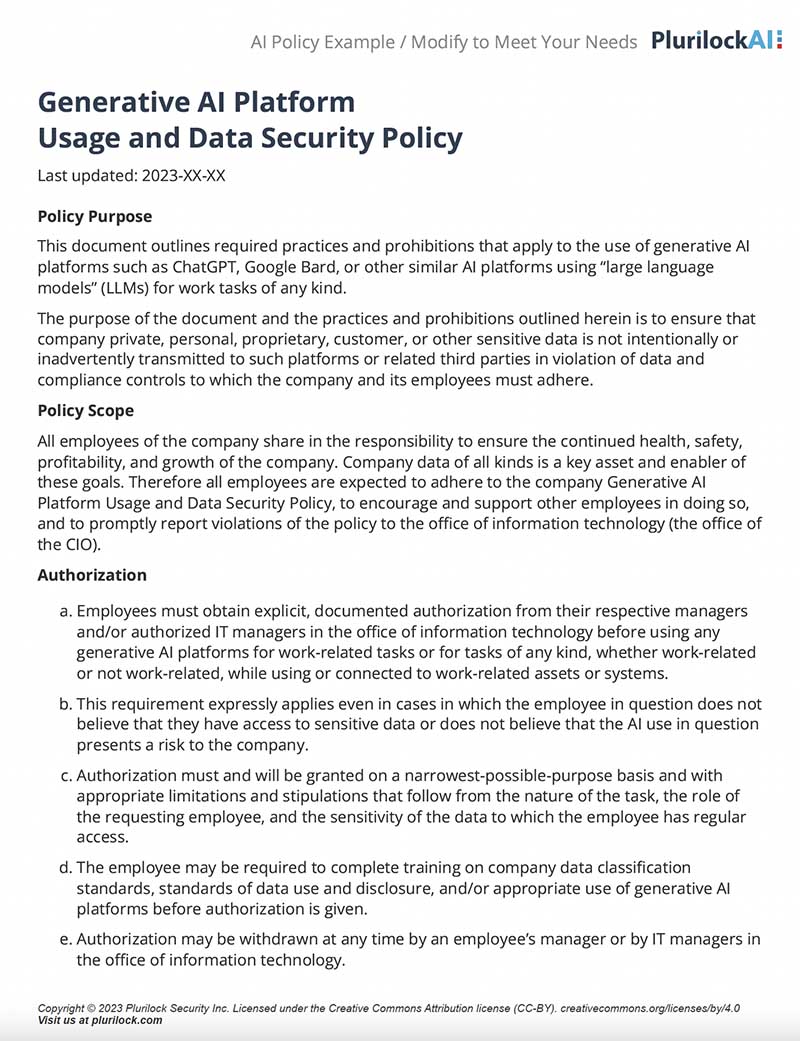
Sample Governance Policy for AI Use
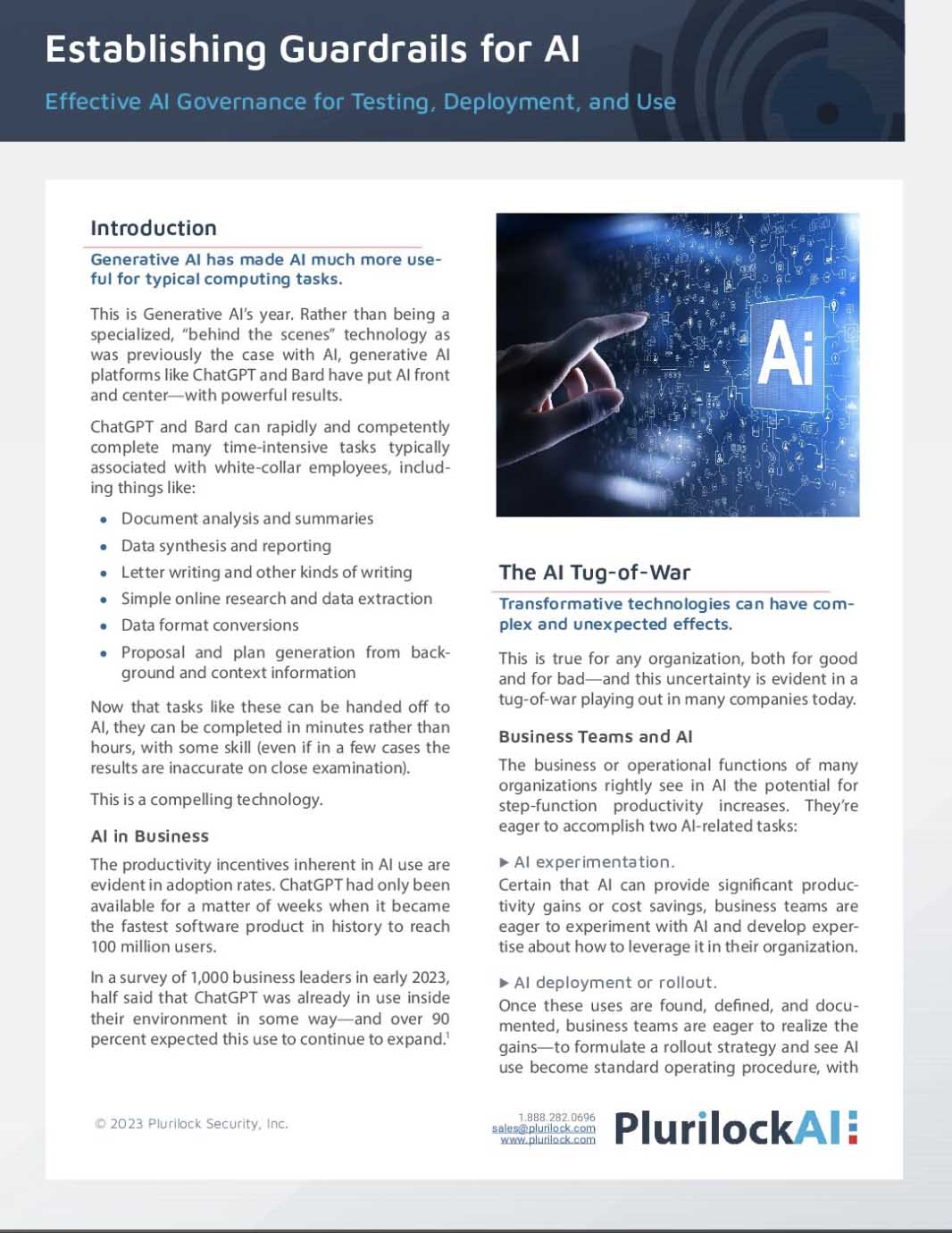
Establishing Guardrails for AI Whitepaper