Cybersecurity Reference > Glossary
What is Operational Resilience?




This capability encompasses not just surviving incidents, but maintaining essential operations while recovering from disruptions with minimal impact to stakeholders.
Unlike traditional business continuity planning that focuses primarily on disaster recovery, operational resilience takes a more comprehensive approach. It integrates cybersecurity, risk management, and business continuity into a unified framework that anticipates, prepares for, responds to, and recovers from a wide range of potential disruptions.
Key components include identifying critical business services, mapping dependencies and vulnerabilities, establishing tolerance levels for disruption, and implementing robust governance structures. Organizations must also conduct regular testing through scenario planning and stress testing to validate their resilience capabilities.
In the cybersecurity context, operational resilience ensures that even during significant security incidents like ransomware attacks or data breaches, essential functions continue operating. This might involve maintaining customer services through backup systems, preserving critical data through secure redundancies, or continuing operations from alternate locations. Effective operational resilience requires ongoing investment in people, processes, and technology, along with a culture that prioritizes adaptability and continuous improvement in the face of evolving threats.
Origin
The shift toward operational resilience as a distinct concept began in earnest after the 2008 financial crisis, when regulators recognized that traditional approaches weren't adequate for increasingly complex, interconnected systems. Financial institutions faced not just isolated disasters but cascading failures across multiple dependencies.
The rise of sophisticated cyberattacks accelerated this evolution. As organizations became more digital, the distinction between IT incidents and business disruptions blurred. A ransomware attack wasn't just a technology problem—it could halt manufacturing, disable customer services, or compromise supply chains. The term "operational resilience" gained traction because it captured something broader than disaster recovery: the ability to absorb shocks, adapt to changing conditions, and maintain critical functions even when systems were compromised.
By the mid-2010s, regulatory bodies in banking and critical infrastructure sectors began mandating operational resilience frameworks, recognizing that in an interconnected world, one organization's failure could trigger systemic effects.
Why It Matters
The shift to remote work, cloud infrastructure, and digital-first business models means that operational resilience has become a competitive differentiator. Customers and partners expect continuous service even during disruptions. A company that can maintain operations during a cyberattack while competitors go dark gains market advantage and trust.
Regulators are paying attention too. Financial services, healthcare, energy, and other critical sectors face increasing requirements to demonstrate operational resilience capabilities. Organizations must prove they've mapped critical services, identified dependencies, established acceptable disruption tolerances, and tested their ability to maintain operations under stress.
Perhaps most significantly, operational resilience changes how organizations think about security. Instead of asking "How do we prevent every attack?" the question becomes "How do we maintain critical functions even when something gets through?" This mindset shift acknowledges the reality that perfect prevention is impossible and that preparation for inevitable disruptions is what separates resilient organizations from fragile ones.
The Plurilock Advantage
We conduct comprehensive adversary simulation and readiness testing that reveals how your systems actually perform under pressure—not how you hope they'll perform. Our multimodal adversary simulation services stress-test your environment against realistic attack scenarios, exposing vulnerabilities before real attackers do.
We focus on practical outcomes: ensuring your critical services stay operational when it matters most. That means fewer tools, better integration, and clear plans that your team can actually execute during an incident.
.
Need to Strengthen Your Operational Resilience?
Plurilock's resilience consulting helps organizations maintain critical operations during disruptions.
Build Resilience Today → Learn more →Downloadable References
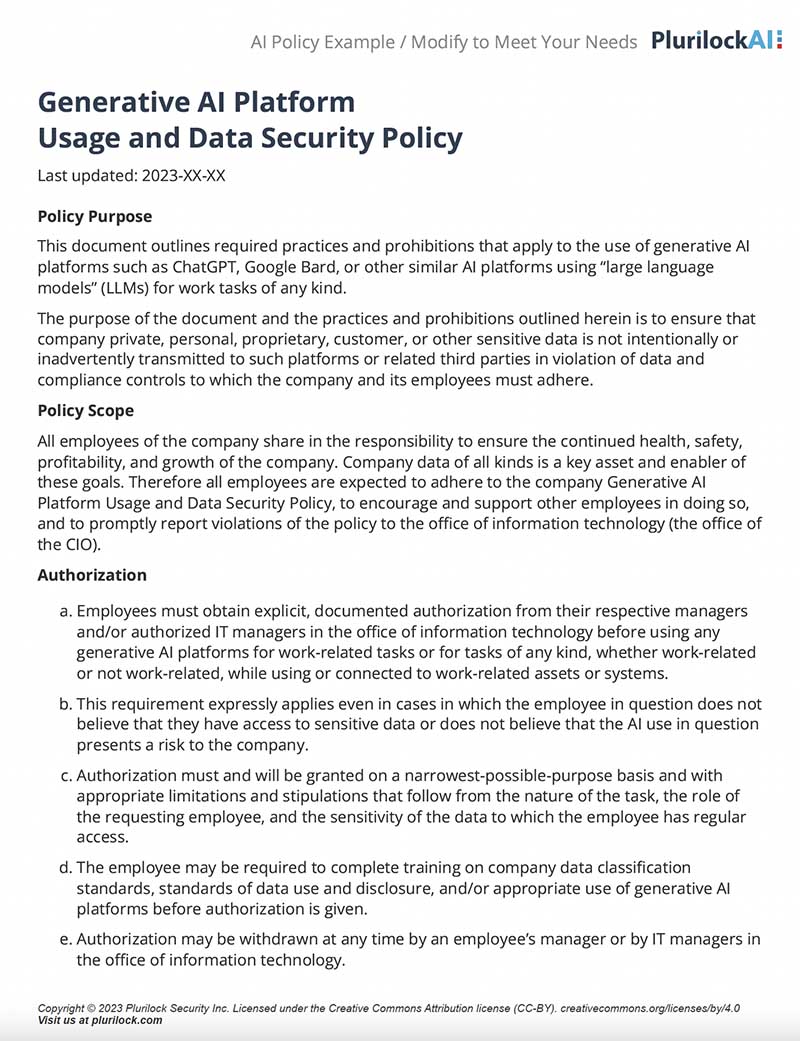
Sample Governance Policy for AI Use
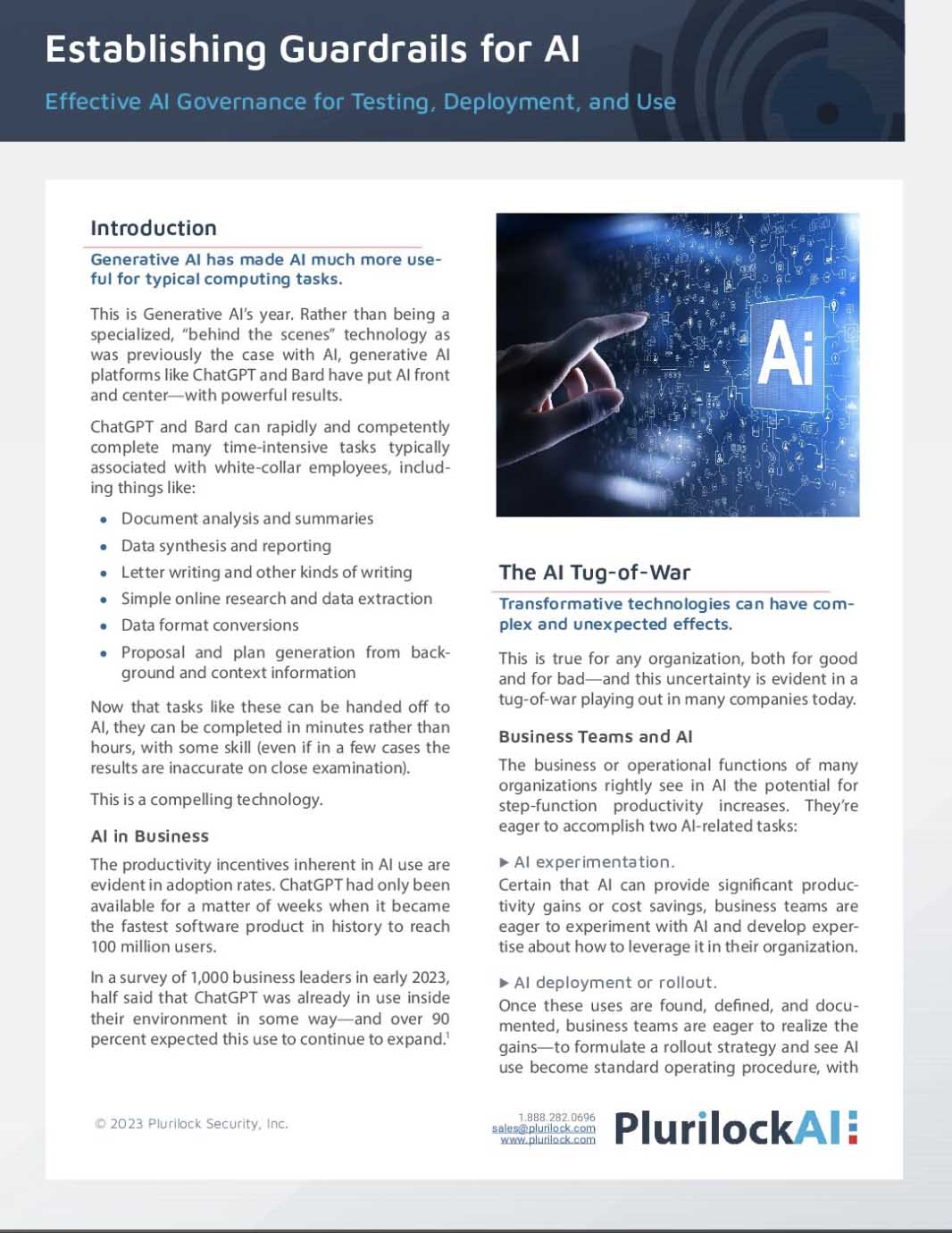
Establishing Guardrails for AI Whitepaper