Cybersecurity Reference > Glossary
What is Risk Signal Quality?





When a detection system flags something suspicious, the quality of that signal determines whether security teams can trust it enough to investigate or respond. High-quality signals accurately identify real threats, arrive with enough context to understand what's happening, and show up when responders still have time to act. Low-quality signals do the opposite—they either miss genuine threats entirely or flood teams with false alarms that waste time and attention.
Several characteristics define signal quality. Accuracy matters most: does the alert actually correspond to malicious activity? Precision follows close behind: how often does this type of alert turn out to be a false positive? Timing plays a crucial role too, since a perfectly accurate alert that arrives three days late helps nobody. Context separates useful signals from cryptic ones—knowing that "unusual network traffic detected" happened on port 443 from a cloud provider's IP range tells you something very different than the same alert from an unknown host on an obscure port. Organizations constantly tune their detection systems, correlate multiple data sources, and apply machine learning to improve signal quality, trying to catch real threats without drowning their security teams in noise.
Origin
The explosion in data volume and threat variety changed everything. As organizations deployed more sensors, collected more logs, and faced more sophisticated adversaries, alert volumes skyrocketed. Security information and event management systems promised to help by aggregating everything, but often just centralized the noise problem. By the 2010s, "alert fatigue" had become a recognized challenge, and practitioners started seriously discussing how to measure and improve signal quality rather than just generating more alerts.
Machine learning and behavioral analytics introduced new dimensions to the problem. These technologies could detect anomalies that signature-based systems missed, but they also generated alerts based on statistical deviations that might or might not indicate actual threats. The conversation shifted from "did we detect the attack" to "can we trust this detection enough to act on it."
Why It Matters
The economic impact compounds the problem. Security teams spend enormous time triaging alerts that turn out to be benign, time they could have spent hunting threats or hardening systems. Organizations often respond by hiring more analysts or buying more tools, which can actually make signal quality worse by adding more sources of alerts without improving their reliability. The real solution involves improving the quality of existing signals rather than generating more of them.
Modern threats exploit poor signal quality deliberately. Sophisticated attackers know that most environments are noisy, so they move slowly, use legitimate credentials when possible, and avoid triggering the alerts that security teams have learned to take seriously. When every other alert is a false positive, attackers can sometimes trigger real alerts and still go uninvestigated.
The Plurilock Advantage
We've seen alert volumes drop by 70% or more while detection rates for real threats improve, because we prioritize signal quality over quantity.
Our practitioners include former intelligence professionals who built their careers distinguishing meaningful indicators from background noise in high-stakes environments, and we apply that discipline to help your security team focus on threats that matter.
.
Need Better Risk Signal Accuracy?
Plurilock's advanced analytics can enhance your risk detection and reduce false positives.
Improve Risk Detection → Learn more →Downloadable References
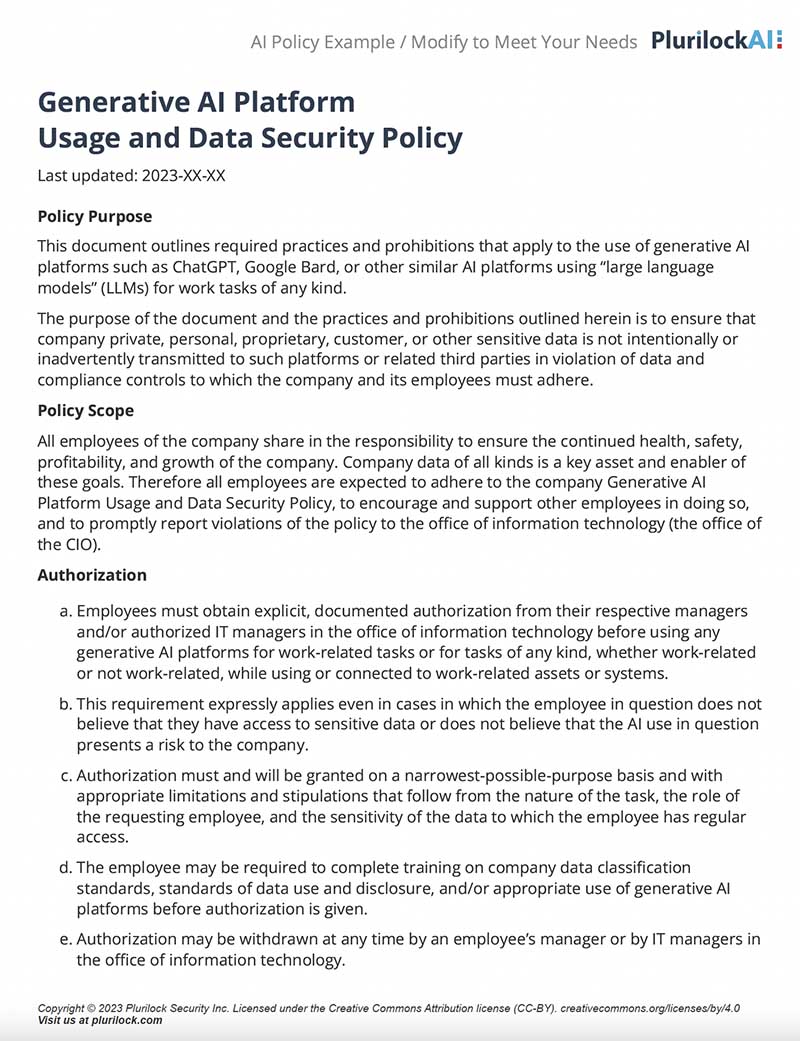
Sample Governance Policy for AI Use
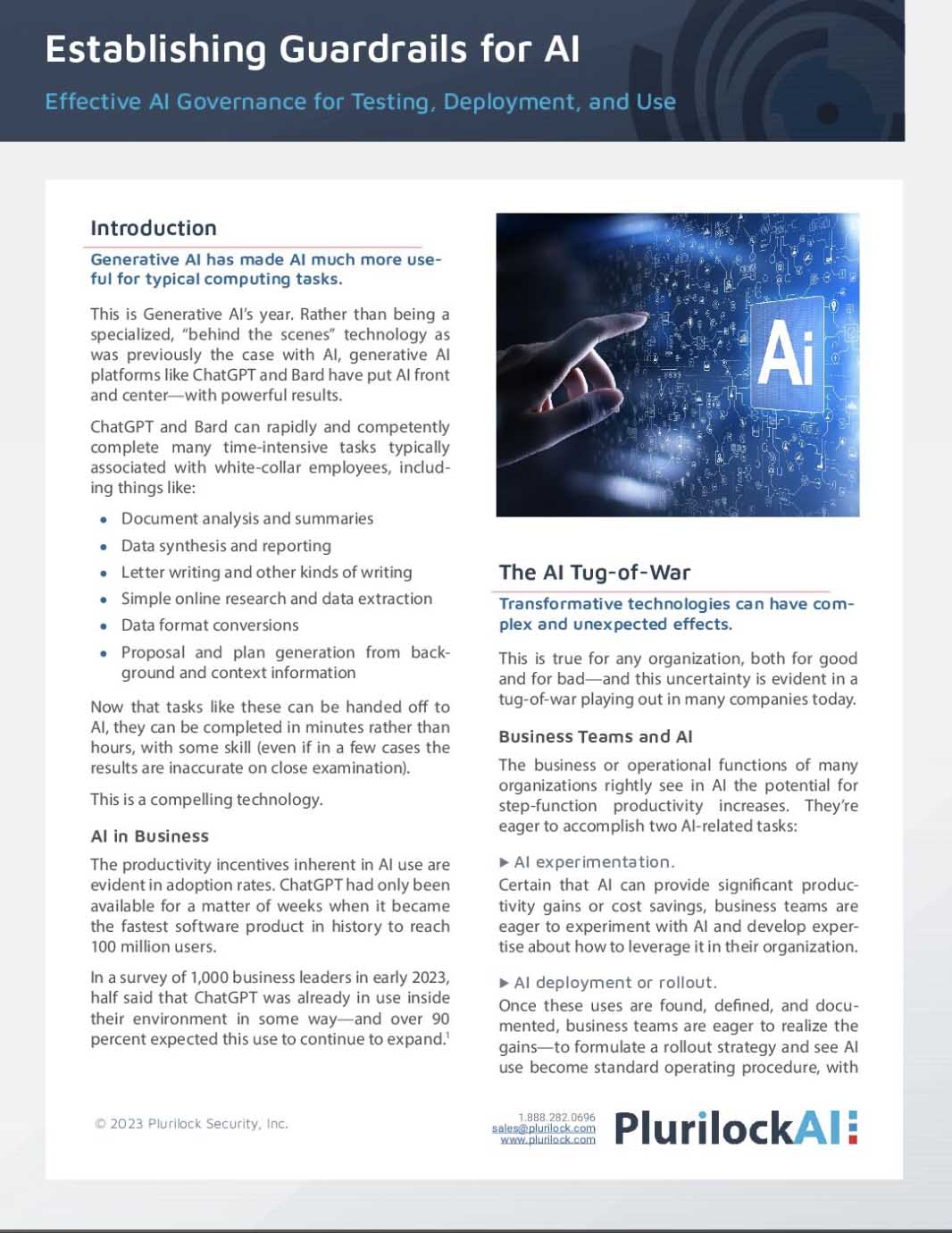
Establishing Guardrails for AI Whitepaper