Cybersecurity Reference > Glossary
What is Service Account Governance?





These accounts enable systems to authenticate and access resources without human intervention, making them critical components of modern IT infrastructure but also significant security risks if improperly managed.
Effective governance involves establishing policies for account creation, naming conventions, access permissions, credential rotation, and lifecycle management. Organizations must maintain comprehensive inventories of all service accounts, regularly audit their privileges, and ensure they follow the principle of least privilege. Many service accounts accumulate excessive permissions over time or remain active long after their associated applications are decommissioned, creating potential attack vectors.
Key practices include implementing automated credential rotation, monitoring service account activity for anomalous behavior, and establishing clear ownership and accountability for each account. Organizations should also enforce strong authentication methods, such as certificate-based authentication or managed identities where possible, rather than relying on static passwords.
Origin
As computing environments grew more complex through the 1990s and 2000s, service accounts proliferated without corresponding oversight. The problem intensified with the rise of distributed applications, microservices architectures, and cloud computing, where a single application might require dozens of service accounts across different platforms.
High-profile breaches in the 2010s revealed that attackers frequently targeted service accounts as pathways for lateral movement and privilege escalation. These accounts often had more access than they needed and weren't monitored as closely as human accounts. The concept of service account governance gained traction as security teams recognized that these accounts represented a significant gap in identity and access management programs, leading to the development of specialized tools and frameworks for managing non-human identities.
Why It Matters
The shift to cloud and containerized environments has multiplied the challenge—organizations now manage thousands of service accounts across hybrid infrastructures, many created automatically by orchestration platforms. Poor governance creates cascading vulnerabilities: accounts with hardcoded credentials in application code, credentials stored in plain text configuration files, accounts that authenticate with weak or default passwords.
When breaches do occur, forensic teams frequently discover that the initial access came through a forgotten service account or that lateral movement happened through service accounts with excessive cross-system permissions. The problem compounds itself because service accounts are harder to inventory than user accounts, making it difficult to even know what you're trying to protect.
The Plurilock Advantage
We establish governance frameworks that balance operational needs with security requirements, ensuring service accounts follow least privilege principles without breaking critical business processes.
Whether you need a baseline assessment, ongoing management, or emergency remediation after a security incident, our practitioners deliver practical solutions quickly. Learn more about our Identity and Access Management services.
.
Need Better Service Account Oversight?
Plurilock's identity governance solutions help organizations secure and manage service accounts effectively.
Get Service Account Governance → Learn more →Downloadable References
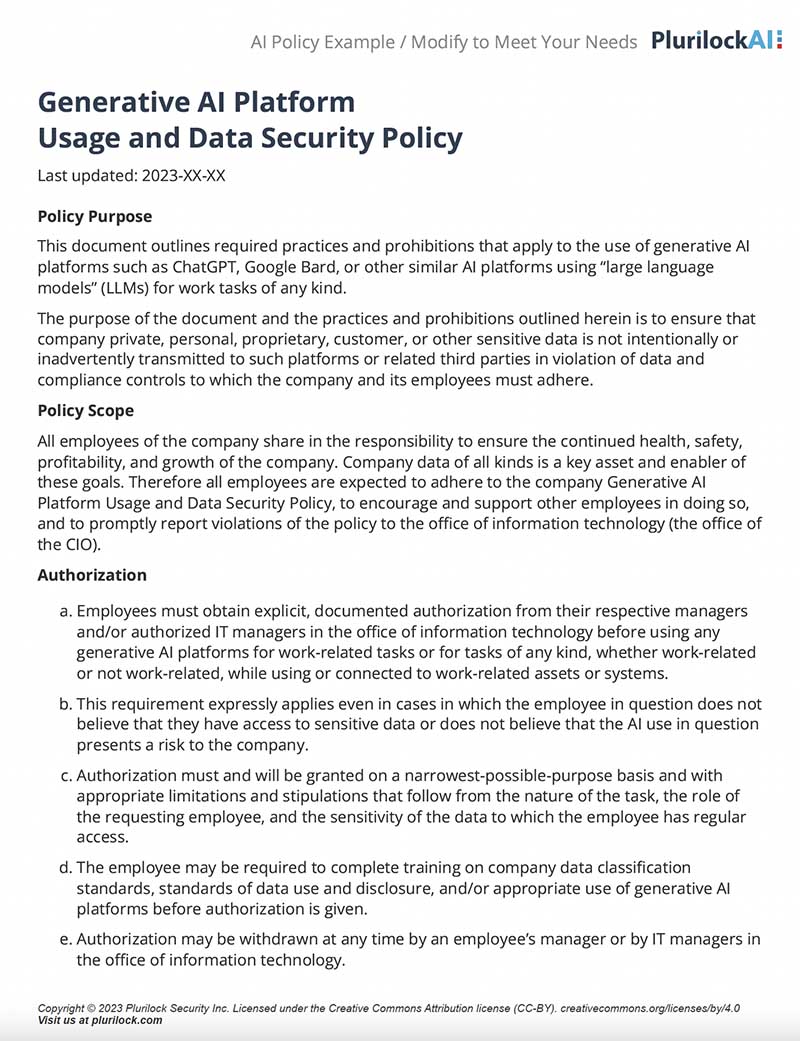
Sample Governance Policy for AI Use
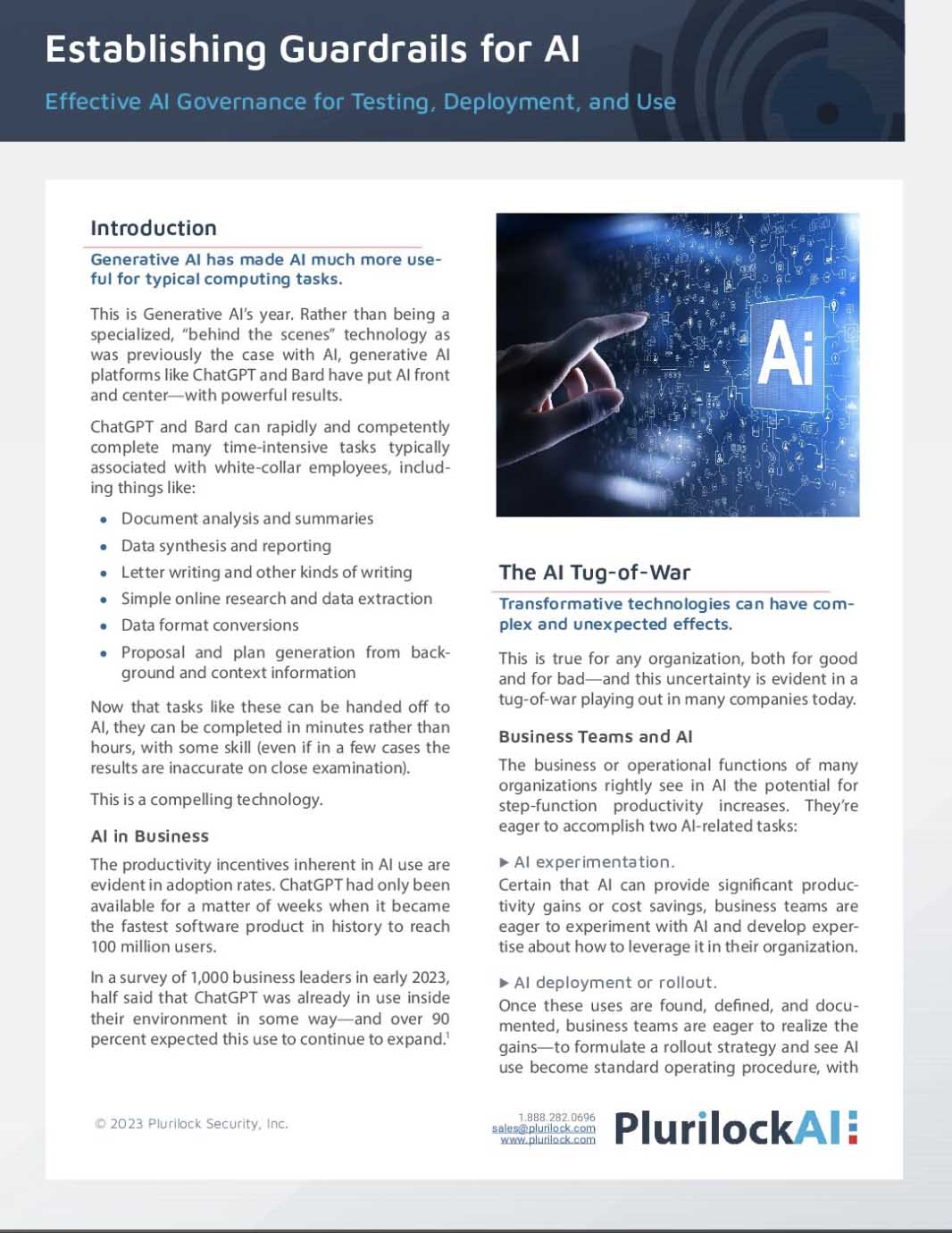
Establishing Guardrails for AI Whitepaper