Cybersecurity Reference > Glossary
What is a Software Bill of Materials (SBOM)?





Think of it as an ingredients list for software—it tells you exactly what's inside, from major frameworks down to small utility libraries. Each entry typically includes the component name, version number, supplier, licensing details, and dependency relationships. Many SBOMs also contain cryptographic hashes to verify component integrity. The document creates a transparent view into the composition of software products, revealing which third-party and open-source elements make up the whole.
Modern applications rarely consist of purely original code. They're assembled from dozens or hundreds of external components, each with its own maintenance history and vulnerability profile. When a critical flaw emerges in a widely-used component—like the Log4j vulnerability that affected countless systems—organizations with accurate SBOMs can immediately identify which applications are at risk. Without this inventory, security teams face the time-consuming task of manually investigating their entire software portfolio. Industry standards like SPDX and CycloneDX provide common formats for creating and sharing SBOMs, making them easier to generate automatically and integrate into security workflows.
Origin
The healthcare and telecommunications sectors began experimenting with SBOM requirements earlier than most industries, driven by regulatory concerns about device security and network integrity. However, the practice remained relatively niche until a series of devastating supply chain incidents made software transparency a broader priority. The 2020 SolarWinds compromise, where attackers infiltrated the software build process, highlighted how little visibility most organizations had into what was actually running in their environments.
The US government formalized SBOM requirements through a 2021 executive order on cybersecurity, directing federal agencies to obtain SBOMs from software suppliers. This regulatory push accelerated standardization efforts and prompted vendors to build SBOM generation into their development pipelines. What began as a manual documentation exercise has evolved into an automated process integrated with continuous integration systems, making it feasible to maintain accurate inventories even as code changes rapidly.
Why It Matters
The problem extends beyond known vulnerabilities. Organizations need to understand their exposure to unmaintained or end-of-life components, licensing risks, and dependency chains that might introduce unexpected security implications. An SBOM transforms software from an opaque binary into a transparent assembly of identifiable parts, each of which can be evaluated and monitored.
Regulatory requirements are expanding beyond government systems. Industries handling sensitive data increasingly face mandates to document their software composition. This isn't just bureaucratic overhead—it's a practical response to the reality that modern software security requires knowing what you're protecting. SBOMs enable faster incident response, more accurate risk assessments, and better-informed decisions about which software to deploy. They also shift some accountability to software vendors, who must now document what they're delivering rather than treating their products as black boxes.
The Plurilock Advantage
We work across your environment to identify where undocumented or unmanaged software creates risk, then implement controls to maintain visibility as systems evolve.
Our approach extends beyond compliance checkboxes to create actionable intelligence about your software supply chain exposure. Learn more about our governance, risk, and compliance services that help organizations maintain accurate asset inventories and respond quickly to emerging threats.
.
Need Help with SBOM Implementation?
Plurilock can help you establish comprehensive software bill of materials tracking and management.
Get SBOM Guidance → Learn more →Downloadable References
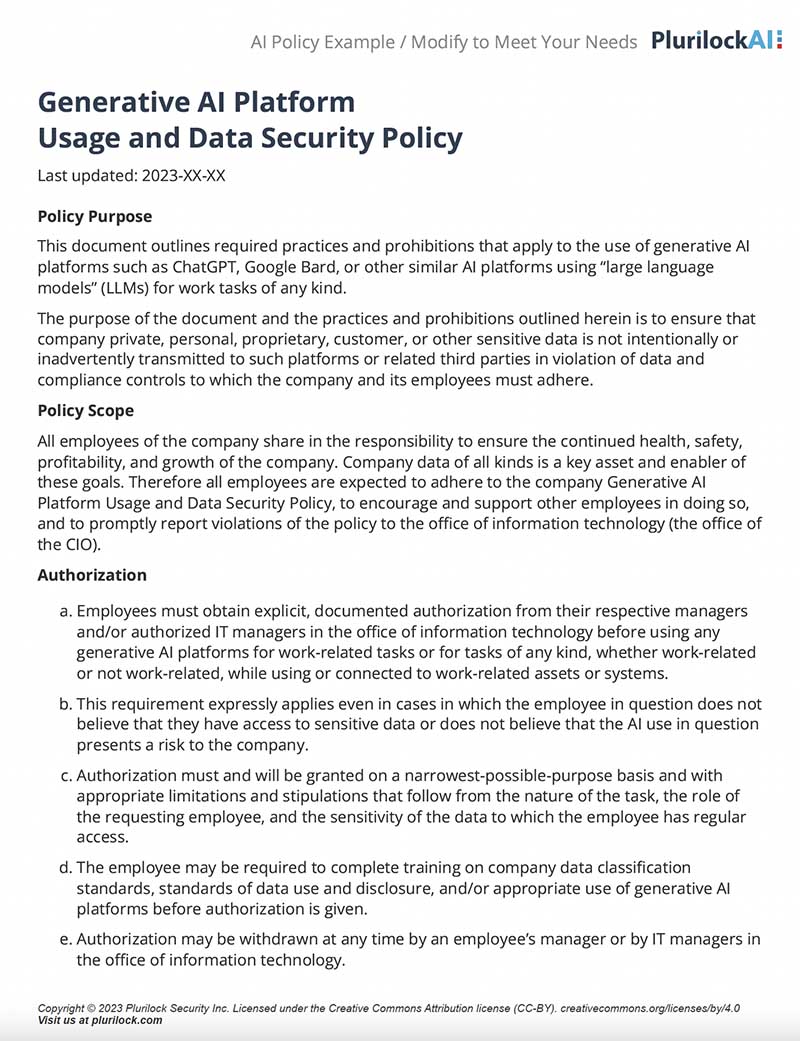
Sample Governance Policy for AI Use
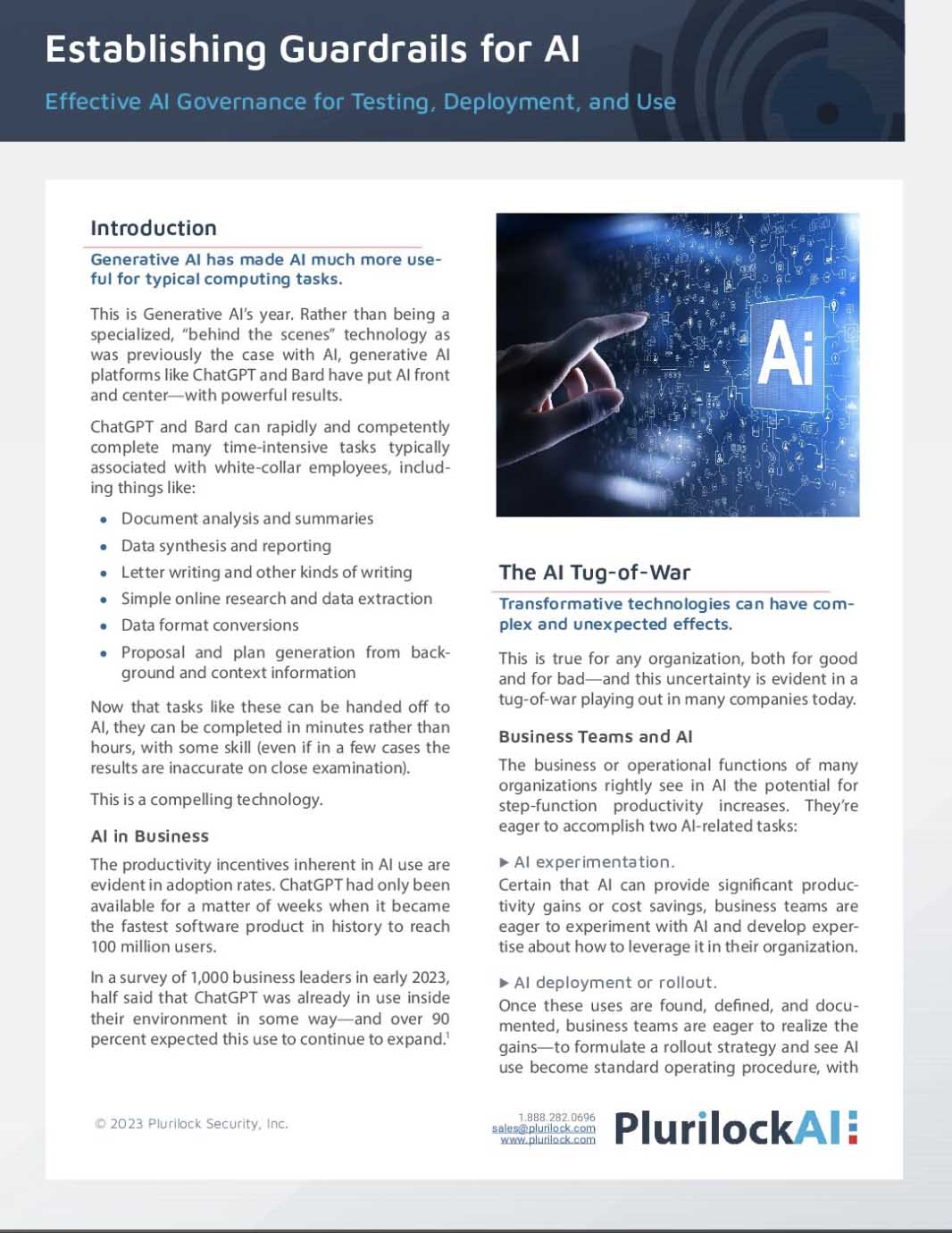
Establishing Guardrails for AI Whitepaper