Cybersecurity Reference > Glossary
What is Active Reconnaissance?





Unlike passive reconnaissance, which relies on publicly available data, active reconnaissance involves sending packets, making connections, or performing scans that can be detected by the target's security systems.
Common active reconnaissance methods include port scanning to identify open services, vulnerability scanning to find security weaknesses, ping sweeps to discover live hosts, and banner grabbing to determine software versions. Attackers might also attempt DNS zone transfers, perform network mapping, or probe for default credentials on discovered services.
While active reconnaissance provides more detailed and current information than passive methods, it carries significant risks for attackers. These activities generate logs, trigger intrusion detection systems, and may alert security teams to potential threats. Many organizations monitor for scanning activities as early indicators of attack preparation.
Security professionals also use active reconnaissance techniques during authorized penetration testing and security assessments to identify vulnerabilities before malicious actors can exploit them. The key distinction lies in authorization—legitimate security testing requires explicit permission from system owners.
Origin
The release of network mapping tools in the 1990s marked a turning point. Suddenly, comprehensive system reconnaissance became accessible to anyone with basic technical knowledge. These tools automated what previously required substantial expertise, democratizing both legitimate security testing and malicious reconnaissance.
The arms race between reconnaissance techniques and detection methods has intensified over decades. As organizations deployed intrusion detection systems to spot scanning activity, attackers developed slower, stealthier scanning methods. Modern active reconnaissance ranges from aggressive, noisy scans that complete in minutes to patient, distributed probes spread across weeks or months. The core concept remains unchanged, but the sophistication has grown exponentially as both attackers and defenders have refined their craft.
Why It Matters
The challenge lies in distinguishing between legitimate and malicious activity. Security researchers, potential customers evaluating services, and automated bots all generate reconnaissance-like traffic. Organizations must balance blocking suspicious activity against maintaining business operations. False positives can disrupt legitimate users, while missed detections leave attackers unimpeded.
Cloud environments have complicated reconnaissance detection further. Traditional network boundaries have dissolved, making it harder to define what constitutes abnormal probing versus normal traffic patterns. Attackers now blend reconnaissance into seemingly legitimate cloud service interactions, making detection more nuanced.
For defenders, understanding active reconnaissance techniques is essential. Security teams need to know what attackers look for, how they search for it, and what defensive postures actually work. This knowledge informs everything from network architecture to monitoring strategies, shaping how organizations build resilient security programs.
The Plurilock Advantage
We've worked with elite practitioners from NSA, US Cyber Command, and top-tier security organizations who understand both sides of the reconnaissance equation. Whether you need to understand what attackers see when they probe your systems or want to improve detection of reconnaissance activity, Plurilock mobilizes quickly with senior experts who solve problems rather than just document them.
.
Need Protection Against Active Reconnaissance?
Plurilock's threat detection services identify and block reconnaissance attempts targeting your infrastructure.
Get Threat Detection Now → Learn more →Downloadable References
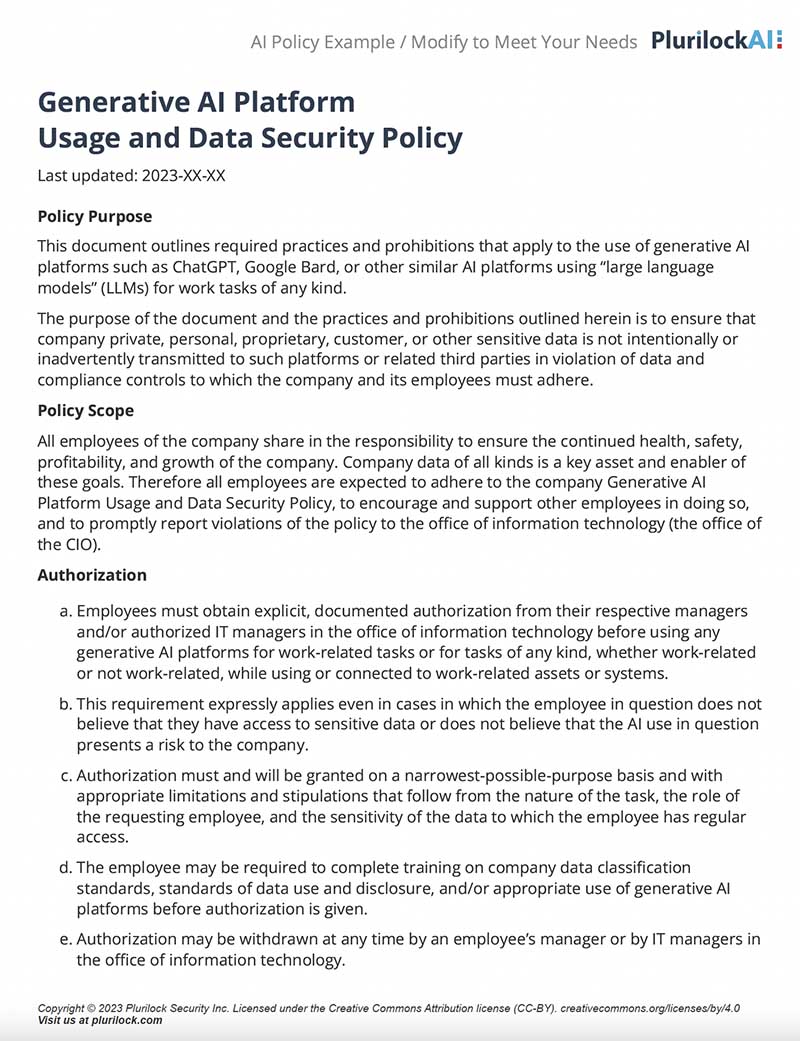
Sample Governance Policy for AI Use
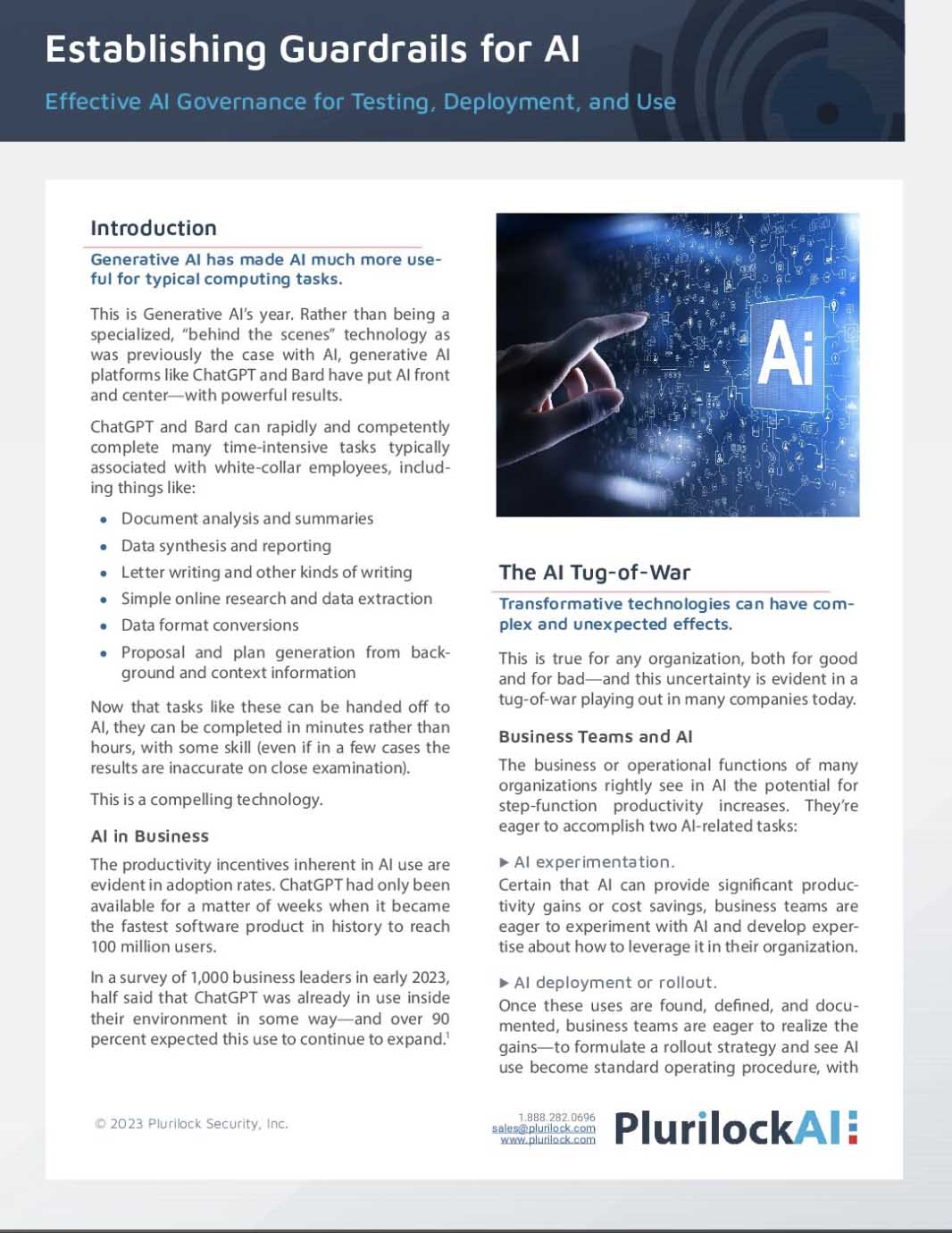
Establishing Guardrails for AI Whitepaper