Cybersecurity Reference > Glossary
What is Authorization Drift?

Picture an employee who starts in marketing, moves to sales, then transfers to finance. At each step, they gain new permissions for their current role—but often keep the old ones too. After a few years and several role changes, they might have access to systems spanning half the company, far beyond what they actually need.
This creates real security problems. Every unnecessary permission is a potential door for attackers who compromise that account. It also increases the damage from insider threats and accidents—someone with broader access can do more harm, whether intentionally or not. The principle of least privilege says users should only have the minimum access needed for their jobs, but authorization drift pushes steadily in the opposite direction.
The problem compounds because most organizations lack systematic ways to review and revoke permissions. IT teams add access easily when requested but rarely remove it proactively. Over years, the accumulated permissions across dozens of systems become difficult to track, let alone rationalize. Many companies only discover the extent of authorization drift during security audits or after an incident forces a closer look at who can access what.
Origin
The term itself gained traction in the 2010s as security professionals began studying patterns in access-related breaches. Researchers noticed that compromised accounts often had far more permissions than their job roles required, frequently due to accumulated access from previous positions. This observation crystallized into the specific concept of "drift"—a metaphor borrowed from engineering and science to describe gradual deviation from an intended state.
The rise of cloud computing and SaaS applications accelerated both the problem and awareness of it. Traditional on-premise systems might have dozens of applications to manage; cloud environments often have hundreds. Each application has its own permission model, and employees might change projects or responsibilities multiple times per year. The manual processes that barely worked in simpler environments completely broke down at cloud scale, making authorization drift impossible to ignore.
Why It Matters
Compliance frameworks increasingly recognize this risk. Regulations like SOX, HIPAA, and GDPR either explicitly or implicitly require organizations to limit user access to what's necessary for their roles. Authorization drift puts companies out of compliance and creates liability during audits. When auditors find users with inappropriate access to regulated data, the explanation "we forgot to remove their old permissions" doesn't provide much comfort.
The problem also complicates incident response and forensics. When investigating a security event, responders need to understand what the affected user could access and what they actually did. Authorization drift makes this analysis harder—you're sifting through permissions accumulated over years, trying to determine which are legitimate for the person's current role and which represent potential compromise paths. The noise obscures the signal exactly when clarity matters most.
The Plurilock Advantage
We implement role-based access controls that automatically align permissions with current responsibilities, and establish automated monitoring to catch drift as it begins rather than after years of accumulation.
Through our identity and access management services, we help clients maintain proper access hygiene with regular audits, automated provisioning and deprovisioning workflows, and clear governance processes that prevent unnecessary access from persisting.
.
Need Help Managing Authorization Drift?
Plurilock's identity governance solutions can help you maintain proper access controls continuously.
Get Authorization Control → Learn more →Downloadable References
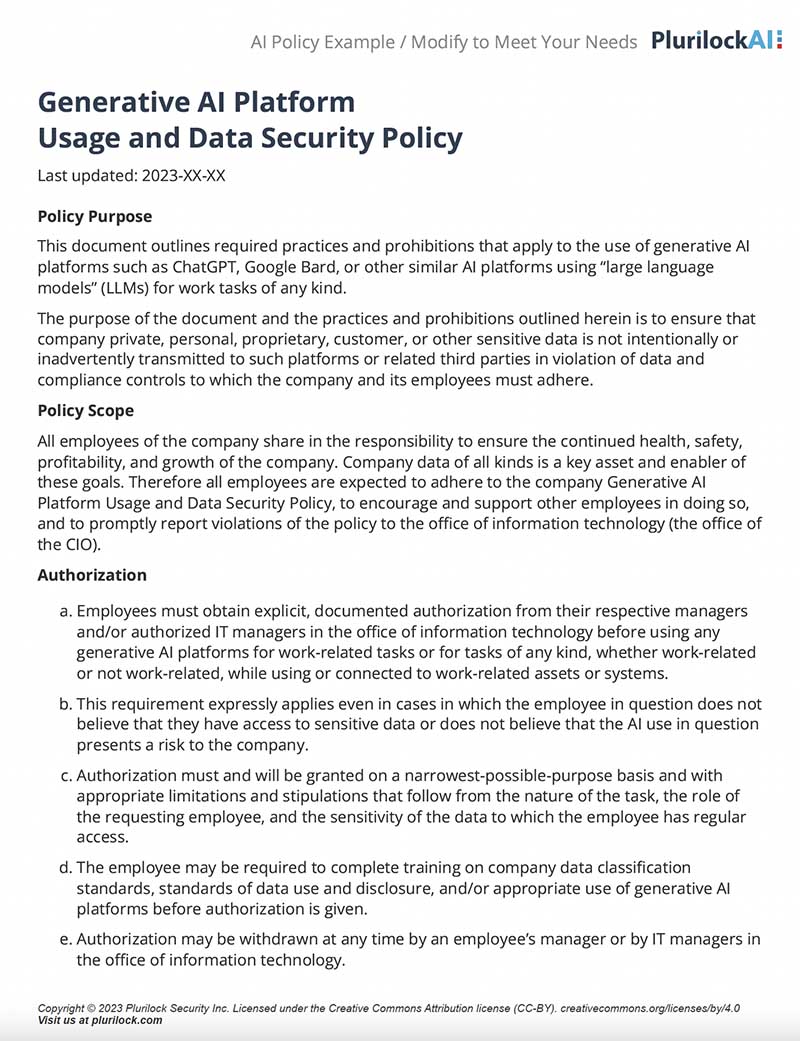
Sample Governance Policy for AI Use
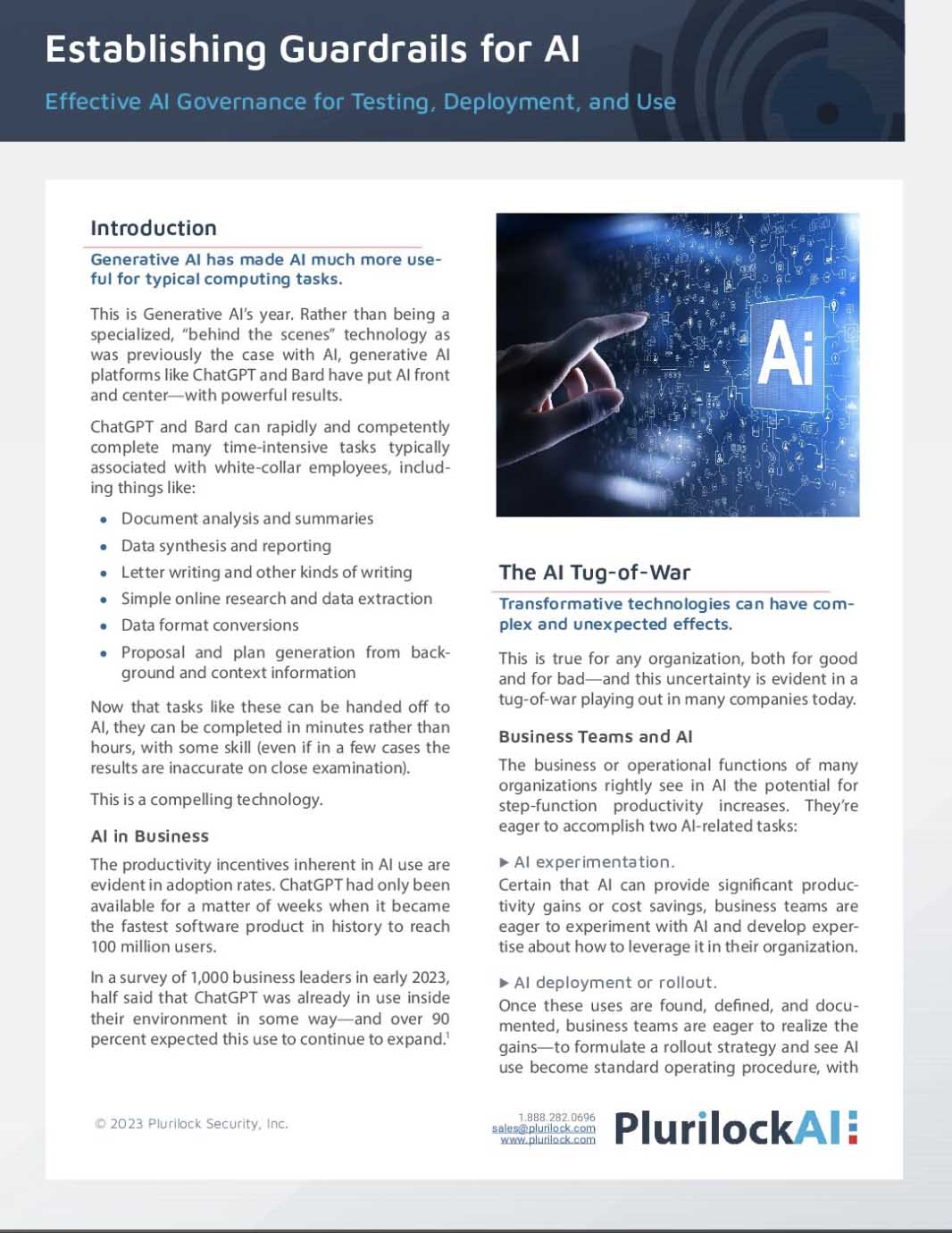
Establishing Guardrails for AI Whitepaper