Cybersecurity Reference > Glossary
What is a Cyber Risk Register?





It captures threat scenarios, vulnerable systems, the likelihood and impact of different outcomes, existing safeguards, and the residual risk that remains even after protections are in place. Rather than being a one-time snapshot, it's meant to be updated as risks shift, new threats emerge, and mitigation efforts take effect.
Most registers organize risks with scoring methods that combine probability and consequence, making it easier to see which threats deserve immediate attention and resources. Each entry typically includes who's responsible for managing that particular risk, what controls are already deployed, and what additional steps might reduce exposure further. The goal is to move beyond informal mental models of risk toward something documented, measurable, and shared across technical and business teams. When done well, a cyber risk register becomes the foundation for security planning, investment decisions, and conversations with executives who need to understand cyber threats in terms that connect to business objectives rather than technical minutiae.
Origin
Early cyber risk registers were often simple spreadsheets maintained by IT departments, focusing mainly on technical vulnerabilities and patch status. As the field matured, organizations recognized that cyber risk extended beyond technology into business processes, third-party relationships, and human behavior. Frameworks like NIST's Risk Management Framework and ISO 27005 provided more sophisticated methodologies for identifying, assessing, and documenting cybersecurity risks in ways that aligned with broader enterprise risk practices.
The evolution accelerated as regulations began requiring documented risk assessments. Standards for financial services, healthcare, and critical infrastructure pushed organizations toward formalized risk registers that could demonstrate compliance and due diligence. Today's registers reflect this history—they blend technical vulnerability tracking with business impact analysis and governance oversight in ways that earlier, purely technical approaches never attempted.
Why It Matters
Modern threat environments make this more critical. Attackers exploit complex supply chains, cloud misconfigurations, and social engineering tactics that don't fit neatly into traditional vulnerability scans. A comprehensive register captures these diverse risks in one place, including emerging threats that haven't yet been exploited but represent credible danger. It also supports regulatory compliance by demonstrating that the organization systematically identifies and addresses cyber risks, which matters for everything from SOC 2 audits to cyber insurance underwriting.
Perhaps most importantly, the register facilitates conversations across organizational boundaries. When security teams can point to a documented risk with assigned ownership, quantified impact, and clear mitigation status, they're better positioned to secure funding, coordinate response efforts, and hold stakeholders accountable for managing their piece of the puzzle.
The Plurilock Advantage
We bring expertise from former intelligence professionals and practitioners who've managed risk programs at scale, so the registers we help develop reflect real-world attack patterns and practical mitigation strategies.
Whether you're starting from scratch or revitalizing an outdated spreadsheet, we deliver frameworks that integrate with your broader security operations and support ongoing management rather than one-time compliance exercises.
.
Need Help Building Your Cyber Risk Register?
Plurilock's risk management experts can help you create comprehensive cyber risk documentation.
Get Risk Management Support → Learn more →Downloadable References
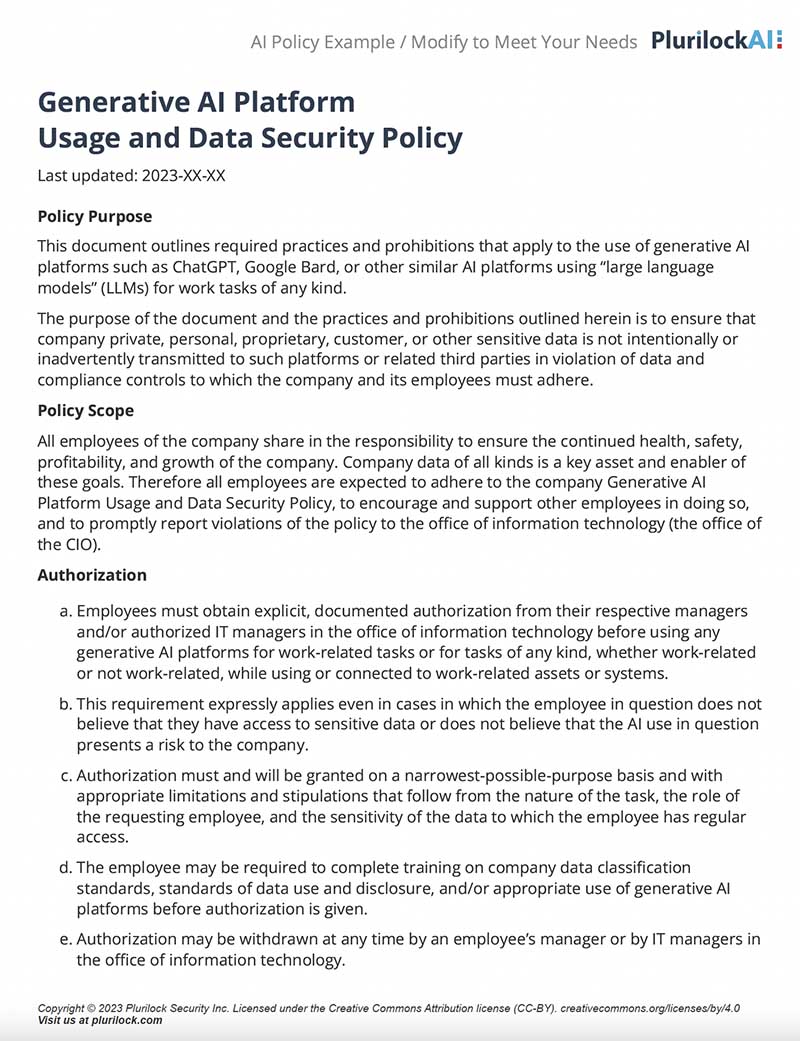
Sample Governance Policy for AI Use
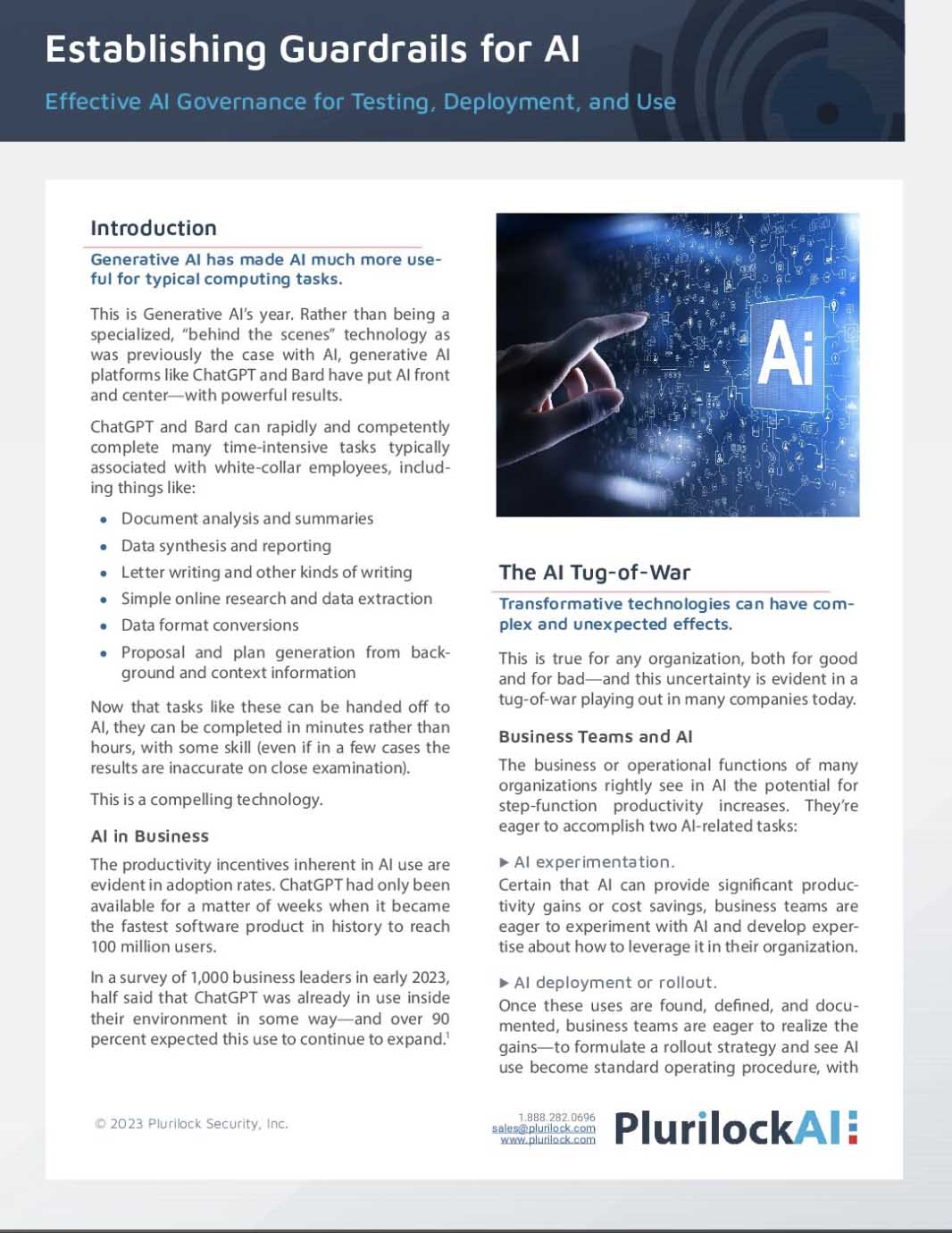
Establishing Guardrails for AI Whitepaper