Cybersecurity Reference > Glossary
What is Cyber Risk Appetite?





This strategic concept helps organizations balance security investments against operational needs, recognizing that absolute security is neither achievable nor economically practical.
Organizations establish their cyber risk appetite through formal risk assessment processes that consider factors such as regulatory requirements, industry standards, potential financial losses, reputational damage, and operational disruption. This appetite is typically expressed through risk tolerance statements, acceptable loss thresholds, or specific security control requirements.
A well-defined cyber risk appetite guides decision-making across the organization, from executive leadership choosing between security solutions to IT teams implementing new technologies. It helps organizations avoid both over-investing in unnecessary protections and under-investing in critical security measures. The appetite should align with the organization's overall business strategy and risk management framework.
Cyber risk appetite is not static—it evolves with changing threat landscapes, business priorities, regulatory environments, and organizational maturity. Regular review and adjustment ensure that security investments remain aligned with business needs while maintaining adequate protection against evolving cyber threats.
Origin
Early approaches to cybersecurity operated on a binary mindset: vulnerabilities were either fixed or they weren't. But as systems grew more complex and interconnected, this proved unsustainable. The sheer volume of potential risks made it impossible to address everything, and organizations needed frameworks for prioritization.
The 2008 financial crisis accelerated formal risk appetite discussions across industries. Regulatory frameworks like Basel III in banking and subsequent updates to standards like ISO 31000 pushed organizations to articulate their risk tolerances explicitly. These enterprise-wide approaches naturally extended to cybersecurity as digital threats became more prominent.
By the mid-2010s, major data breaches at well-known companies demonstrated that security decisions involved real business trade-offs. Organizations started developing formal cyber risk appetite statements, often tied to board-level governance. The rise of cyber insurance further formalized these discussions, as insurers required organizations to demonstrate clear risk management strategies before underwriting policies.
Why It Matters
The acceleration of digital transformation has made this even more challenging. Cloud adoption, remote work, IoT devices, and third-party integrations all introduce new risks. Each business initiative comes with security implications, and decisions need to happen quickly. A well-articulated risk appetite gives teams the framework to evaluate new technologies and partnerships without bottlenecking innovation.
Regulatory pressure has intensified too. Frameworks like GDPR, CCPA, and sector-specific regulations require organizations to demonstrate that their security posture aligns with the sensitivity of data they handle. Regulators increasingly expect boards to understand and actively manage cyber risk, not just delegate it to IT departments.
Perhaps most significantly, cyber risk appetite directly impacts an organization's resilience. Companies that haven't defined what risks they'll accept often either overspend on security theater or underspend and face catastrophic breaches. The organizations that weather incidents best are typically those that made conscious, documented decisions about where to invest and where to accept residual risk.
The Plurilock Advantage
We go beyond generic assessments to deliver risk quantification that speaks to boards and executives. Our team has guided organizations through cyber risk appetite development at every maturity level, from establishing initial frameworks to refining sophisticated enterprise programs. We help you make informed decisions about where to invest, what risks to accept, and how to communicate those choices across your organization—without the process drag that typically comes with governance initiatives.
.
Ready to Define Your Cyber Risk Appetite?
Plurilock helps organizations establish clear cybersecurity risk tolerance frameworks and policies.
Get Risk Framework Guidance → Learn more →Downloadable References
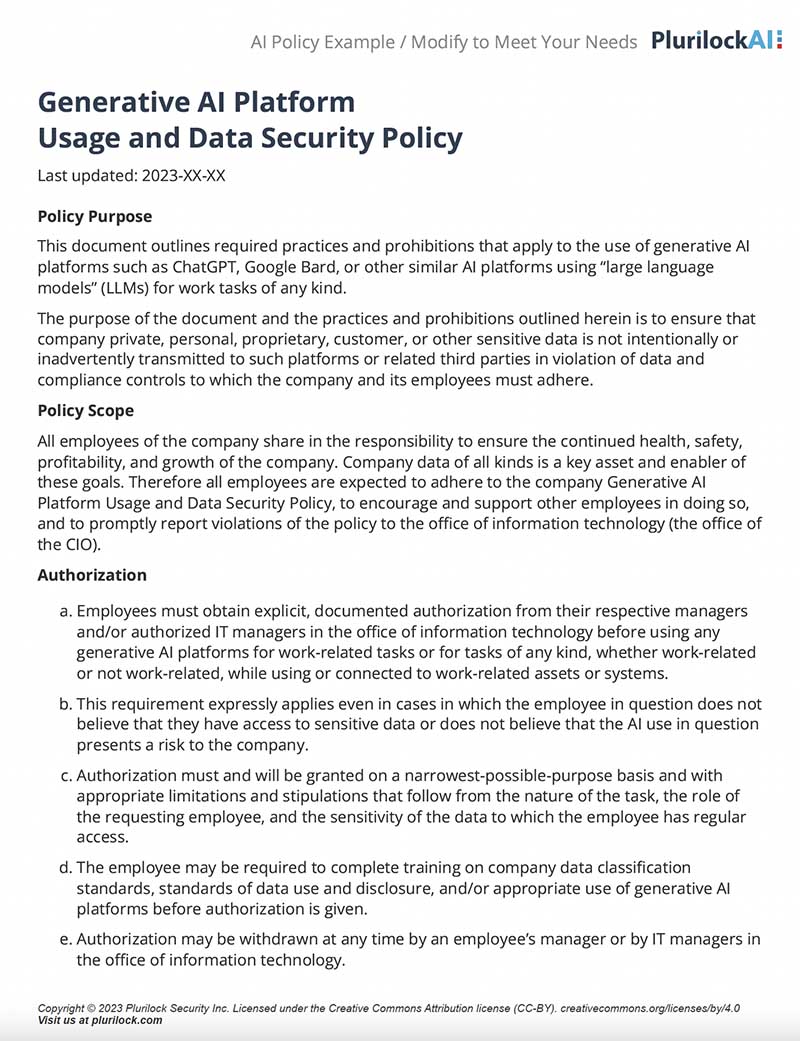
Sample Governance Policy for AI Use
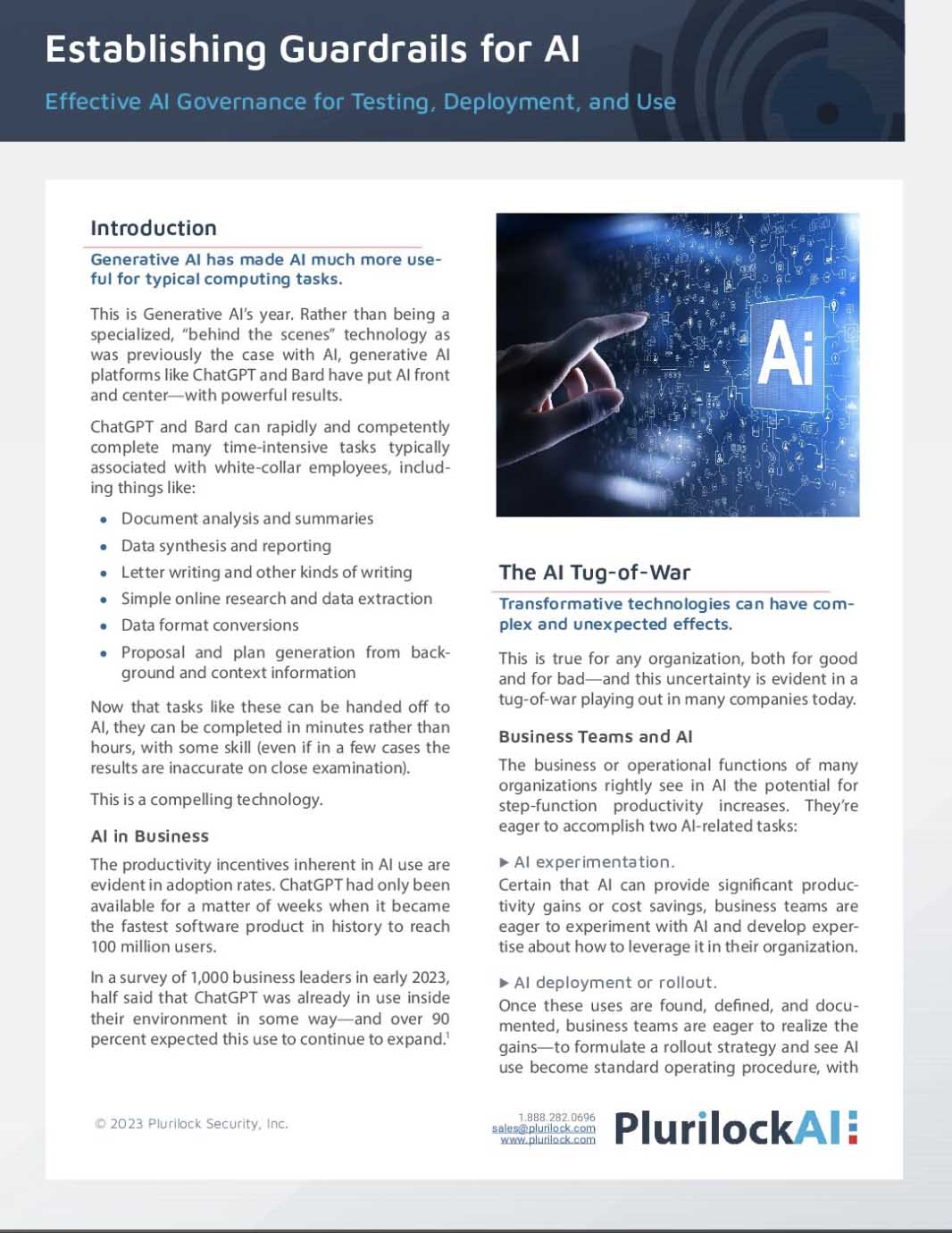
Establishing Guardrails for AI Whitepaper