Cybersecurity Reference > Glossary
What is Identity Posture?


It's a holistic measure that looks at everything from password policies and authentication methods to how quickly you remove access when someone leaves the company. Think of it as a security health score for your entire identity infrastructure—covering employees, contractors, service accounts, and anyone or anything else that needs to log in.
A strong identity posture means you've implemented controls like multi-factor authentication, you're enforcing least privilege access, and you're regularly reviewing who has permission to what. Organizations with weak identity postures typically have the opposite: too many people with admin rights they don't need, orphaned accounts from former employees still sitting in the directory, and limited visibility into what's actually happening with access across their environment.
Assessing identity posture involves examining account lifecycle management, authentication strength, privilege escalation risks, and your ability to spot suspicious identity activity before it becomes a breach. The goal is continuous awareness of identity-related vulnerabilities, since compromised credentials remain one of the easiest ways for attackers to get inside your network and move around undetected.
Origin
The shift toward "posture" language came from the cloud security world, where the term "security posture" was already being used to describe overall configuration hygiene. As identity became the new perimeter—especially with remote work and cloud adoption eliminating traditional network boundaries—security teams needed a framework for evaluating identity security as a whole rather than just implementing individual controls.
The 2020 pandemic accelerated this thinking dramatically. When everyone went remote, the VPN became the front door, and suddenly every identity represented a potential entry point. Organizations that had been lax about things like MFA enforcement or privileged access reviews found themselves scrambling. Around this time, identity posture management emerged as a distinct category, with security vendors building tools to continuously assess identity risks across hybrid environments. The idea was borrowed from cloud security posture management (CSPM), applying similar continuous monitoring and risk scoring concepts to identity infrastructure.
Why It Matters
The complexity of modern environments makes this even harder to manage. Most organizations now have identities scattered across on-premises Active Directory, multiple cloud platforms, SaaS applications, and third-party systems. Each environment has its own authentication mechanisms and permission models, creating blind spots where risky configurations hide. An account might have minimal privileges in one system but broad admin rights in another, and without a unified view of identity posture, those risks go unnoticed.
Regulatory pressure adds another dimension. Frameworks like Zero Trust explicitly require strong identity controls, and compliance standards increasingly mandate regular access reviews and privilege monitoring. Organizations that can't demonstrate good identity posture face audit failures and potential penalties. Beyond compliance, there's the practical reality that cleaning up identity sprawl after a breach is exponentially harder than maintaining good hygiene from the start.
The Plurilock Advantage
We don't just audit your identity posture—we help you remediate the risks we find, whether that means deploying better privileged access controls, streamlining account lifecycle processes, or establishing continuous monitoring.
Our approach focuses on practical security improvements that fit your operational reality, not theoretical frameworks that look good on paper but fail in implementation.
.
Need Help Strengthening Your Identity Posture?
Plurilock's identity security solutions can fortify your organization's authentication and access controls.
Assess My Identity Security → Learn more →Downloadable References
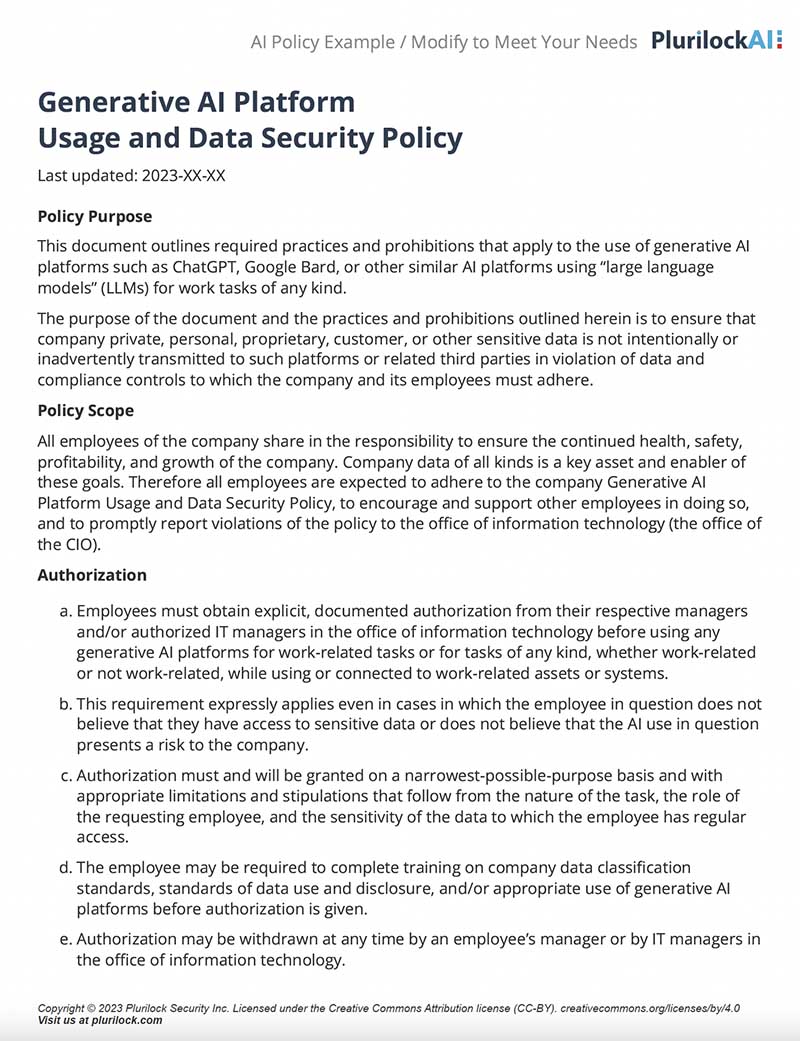
Sample Governance Policy for AI Use
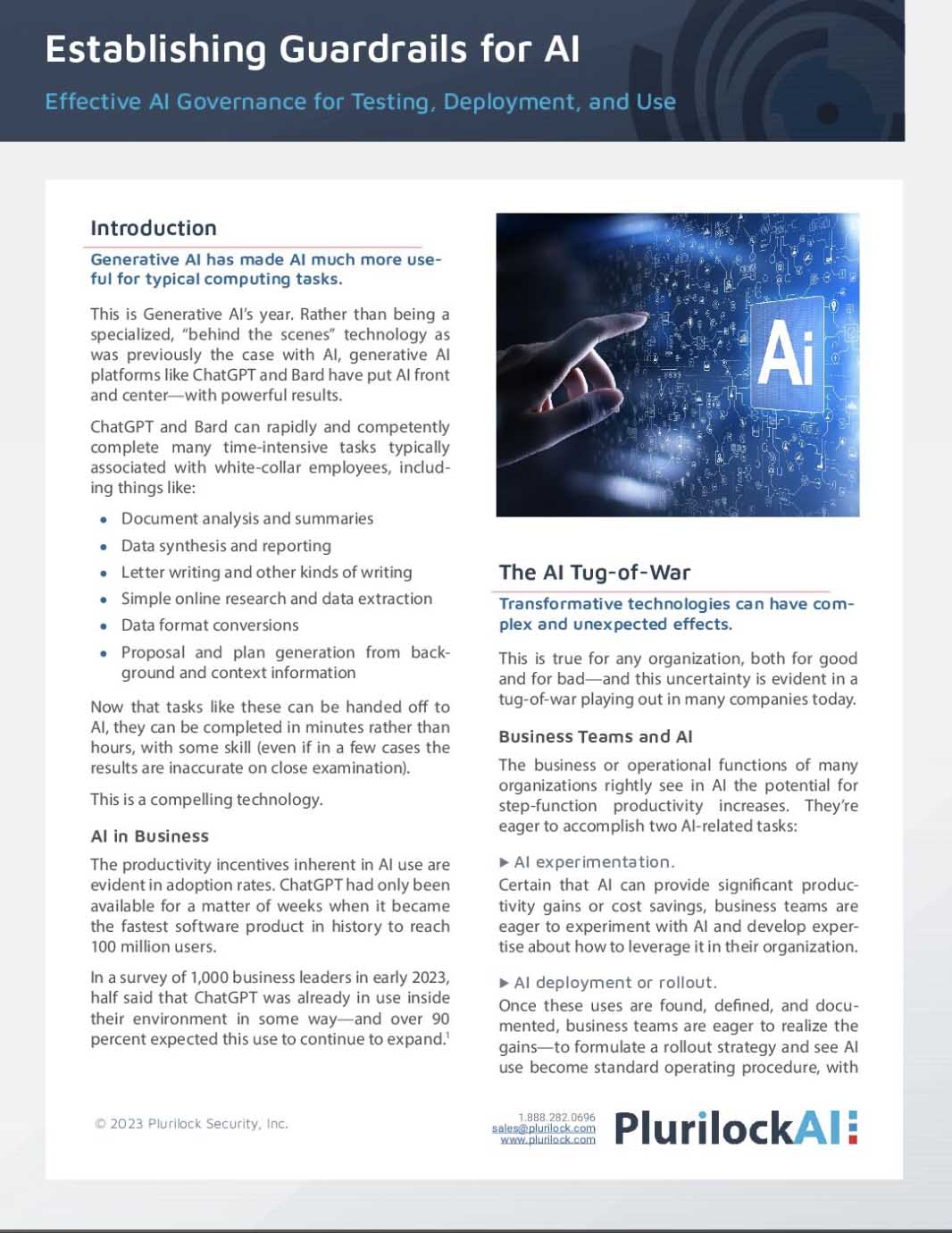
Establishing Guardrails for AI Whitepaper