Cybersecurity Reference > Glossary
What is a Secure Control Plane?





Think of it as the difference between the cockpit of a plane and the passenger cabin—the control plane is where the critical decisions happen, and you don't want unauthorized people getting access to those controls.
In network and cloud architectures, the control plane manages routing decisions, policy enforcement, authentication systems, and configuration updates. By keeping this layer separate and secured, organizations ensure that even if attackers compromise data flowing through the network, they can't gain administrative access to reconfigure systems, inject malicious settings, or steal management credentials. This separation becomes especially critical in software-defined networking environments where a centralized controller manages the entire infrastructure—making that controller an obvious high-value target.
Implementation typically involves network segmentation to physically or logically separate management traffic, encrypted channels for all administrative communications, multi-factor authentication for anyone accessing control functions, and strict access controls that limit who can make configuration changes. Modern approaches often layer in zero-trust principles and continuous monitoring to catch unauthorized access attempts before they succeed. The goal isn't just to build a wall around administrative functions—it's to create multiple defensive layers that make it exponentially harder for attackers to reach the controls that matter most.
Origin
The security implications became clearer as networks grew more complex and attacks more sophisticated. By the early 2000s, network security professionals were documenting cases where attackers who compromised data plane traffic could pivot to administrative access if control plane protections were weak. The rise of distributed denial-of-service attacks targeting routing protocols highlighted how vulnerable unsecured control planes could be.
Software-defined networking, which gained momentum in the 2010s, made control plane security even more critical. SDN architectures centralize control functions in software controllers, creating a single point of failure if compromised. This drove renewed focus on control plane isolation, authentication, and monitoring. Cloud computing further expanded the concept beyond networking to include the management layers of entire infrastructure stacks, making secure control plane design a foundational principle rather than just a networking concern.
Why It Matters
The shift to cloud infrastructure and software-defined everything has expanded the attack surface dramatically. Management APIs, orchestration platforms, and infrastructure-as-code systems all present potential control plane entry points. Many organizations discover too late that their cloud management consoles lack the same security rigor applied to production systems—despite having access to configure those production systems.
Modern threats like supply chain attacks often target control plane components specifically. Attackers know that compromising a widely-used management tool or gaining access to administrative credentials provides leverage across multiple targets. The 2020 SolarWinds incident demonstrated how attackers could use compromised management software to gain control plane access across thousands of organizations. As infrastructure becomes more automated and centrally managed, the importance of securing those central management functions only increases. Organizations that treat control plane security as an afterthought are essentially leaving the keys in the ignition.
The Plurilock Advantage
Our team includes former intelligence professionals and enterprise security leaders who understand that control plane security isn't just about perimeter defense—it requires layered protections that account for insider threats, compromised credentials, and sophisticated adversaries.
Whether you need architectural guidance, implementation support, or ongoing security validation, we deliver practical solutions that protect your most critical administrative functions. Learn more about our zero trust architecture and deployment services.
.
Need Help Securing Your Control Plane?
Plurilock's security experts can help implement robust control plane protection strategies.
Get Control Plane Security → Learn more →Downloadable References
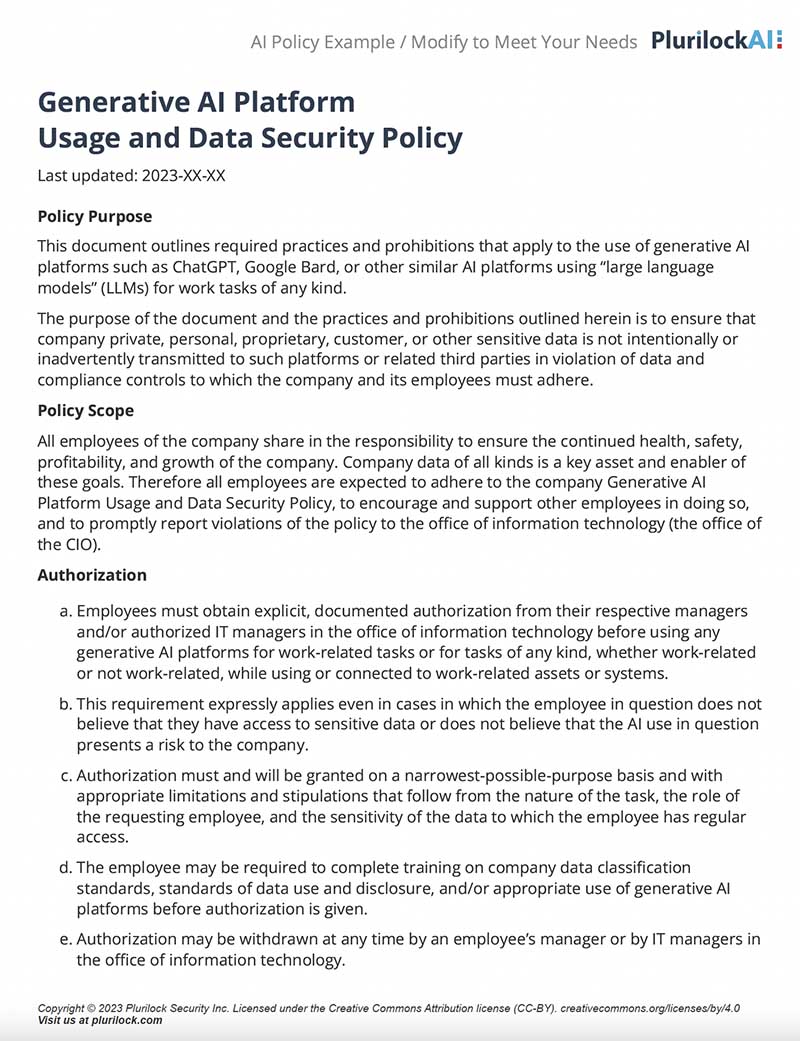
Sample Governance Policy for AI Use
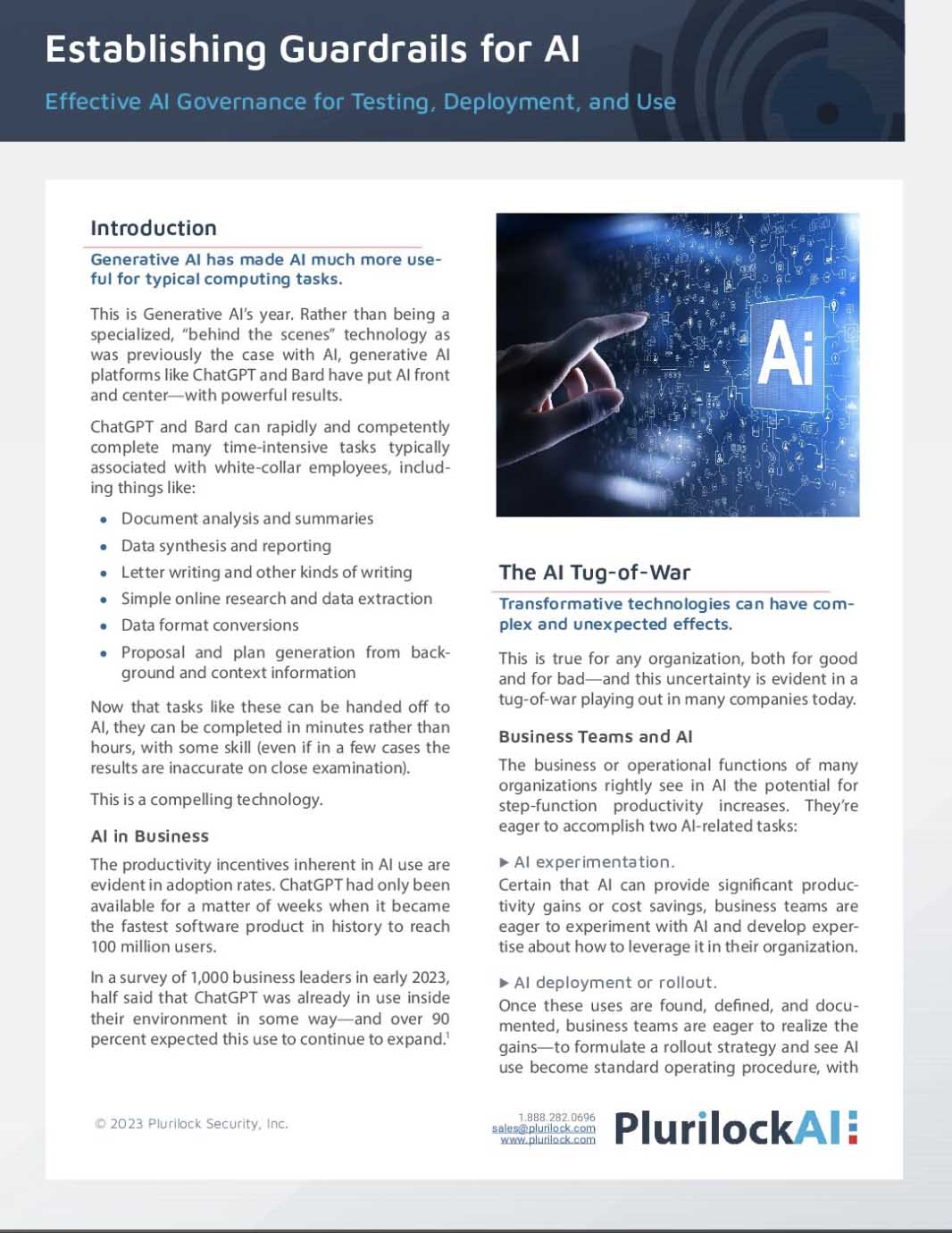
Establishing Guardrails for AI Whitepaper