Cybersecurity Reference > Glossary
What is Defense-in-Depth?





Think of it like protecting your home with locks, alarm systems, motion sensors, and cameras rather than just a deadbolt. If someone gets past one barrier, others still stand in their way.
The strategy works because modern attacks rarely succeed through a single vulnerability. An attacker might breach your network perimeter, but still face endpoint detection systems, access controls, encryption, and monitoring tools before reaching sensitive data. Each layer addresses different threats and attack methods, creating redundancy that compensates when individual controls fail.
These layers typically span physical security, network defenses, application security, endpoint protection, identity management, data encryption, and monitoring. A firewall might block malicious traffic at the perimeter. If something slips through, intrusion detection spots unusual behavior. Should malware reach an endpoint, security software contains it. Even if data gets extracted, encryption renders it useless without proper keys.
The approach demands more investment than single-point solutions, but it reflects how sophisticated adversaries actually operate. Advanced persistent threats unfold in stages over weeks or months, probing different systems and exploiting various weaknesses. Defense-in-depth acknowledges this reality by ensuring no single failure creates catastrophic exposure.
Origin
Computer security adopted the metaphor in the 1990s as networks grew more complex and threats more sophisticated. Early systems often relied on perimeter security alone—the "castle and moat" model where a strong firewall protected everything inside. This worked reasonably well when networks had clear boundaries and most users worked on-site.
But as organizations adopted distributed architectures, remote access, and cloud services, the perimeter dissolved. Attackers found ways around or through firewalls, making interior defenses essential. The Morris Worm in 1988 demonstrated how quickly threats could spread once inside a network, prompting security professionals to question single-layer approaches.
By the late 1990s and early 2000s, defense-in-depth had become standard practice in enterprise security. The National Security Agency formalized the concept in guidance documents, and compliance frameworks like PCI DSS began requiring layered controls. The approach evolved from military metaphor to foundational principle as organizations recognized that perfect prevention was impossible.
Why It Matters
Ransomware attacks illustrate this clearly. Attackers typically gain initial access through phishing emails, then move laterally across networks, escalate privileges, disable backups, and finally deploy encryption. Effective defense requires email filtering to block phishing attempts, endpoint detection to spot suspicious behavior, access controls to limit lateral movement, backup protection, and network segmentation to contain damage. Miss any layer and the attack succeeds.
Regulatory requirements increasingly mandate defense-in-depth approaches. CMMC, HIPAA, GDPR, and similar frameworks recognize that single controls fail and require organizations to implement complementary protections. Auditors expect to see multiple layers addressing each critical risk.
The strategy also matters for business resilience. When security incidents occur—and they will—layered defenses limit damage and provide visibility into what happened. Monitoring tools track attacker movements between layers, helping responders understand the scope of compromise and prevent recurrence. Organizations without depth often discover breaches months later through external notifications, by which point damage is extensive and forensic evidence scarce.
The Plurilock Advantage
Our team designs integrated architectures spanning network security, identity management, data protection, and cloud environments. We deploy and configure technologies so they actually communicate and correlate threats across layers. Learn how our zero trust services create cohesive, layered defenses that adapt to your specific threats and environment.
.
Need a Comprehensive Security Strategy?
Plurilock's defense-in-depth solutions create multiple layers of protection for your organization.
Get Your Security Assessment → Learn more →Downloadable References
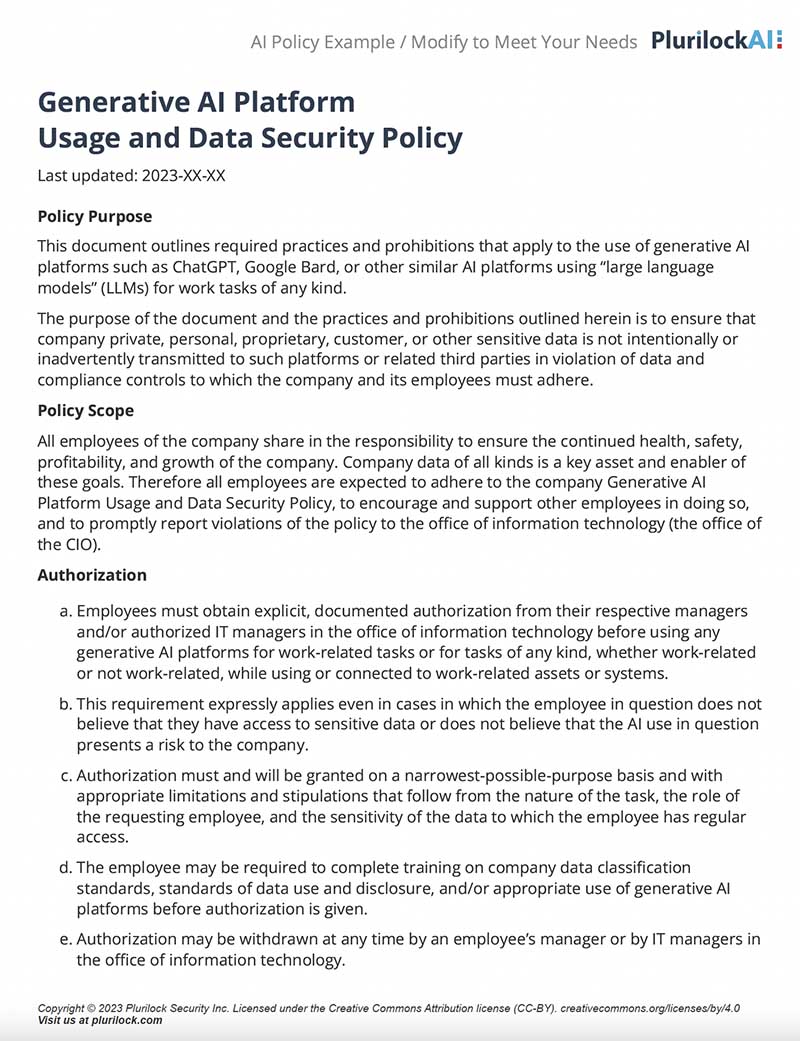
Sample Governance Policy for AI Use
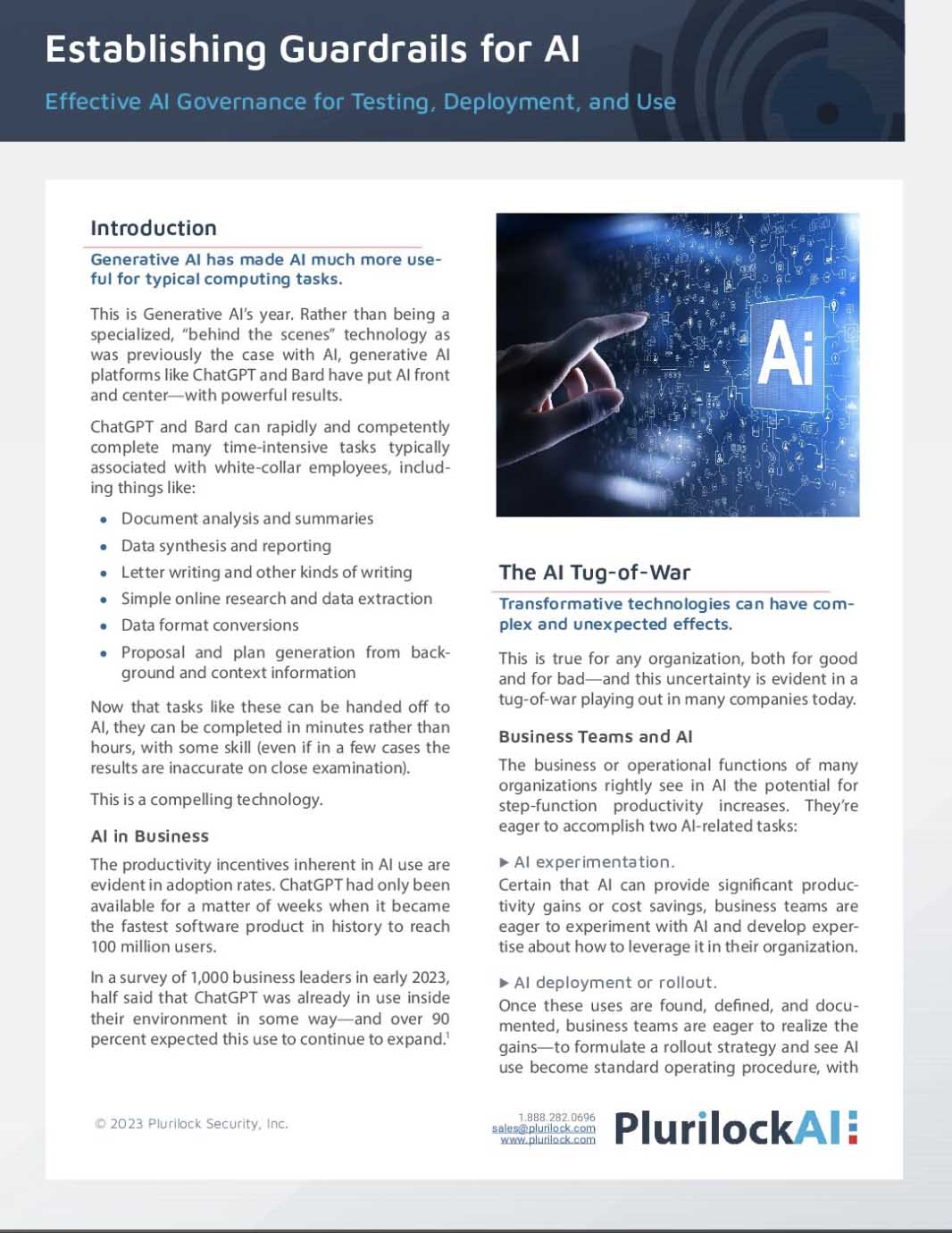
Establishing Guardrails for AI Whitepaper