Cybersecurity Reference > Glossary
What is a Compensating Control?





Organizations turn to these alternatives when technical limitations, budget constraints, or system incompatibilities prevent them from implementing standard security controls. The goal is straightforward: achieve equivalent protection through different means while still meeting your compliance obligations.
Think of a legacy industrial control system that can't support modern encryption. Instead of leaving it vulnerable, you might isolate it on a separate network segment, add extensive monitoring, and implement strict access controls. These combined measures compensate for the missing encryption. The same principle applies across countless scenarios—when you can't do the textbook solution, you find another way to close the security gap.
Regulatory frameworks like PCI DSS explicitly allow compensating controls, but they come with strings attached. You need to document why the standard control isn't feasible, demonstrate that your alternative provides comparable protection, and prove it actually works through regular testing. Auditors will scrutinize these justifications closely. The documentation burden alone often surprises organizations that view compensating controls as an easy workaround rather than a rigorous alternative approach that demands ongoing validation and management.
Origin
The formalization of compensating controls in cybersecurity came with the introduction of the Payment Card Industry Data Security Standard in 2004. PCI DSS needed to protect cardholder data across an incredibly diverse landscape—from small retail shops to global e-commerce platforms. The standard's creators knew that prescribing rigid, one-size-fits-all technical controls would be impractical. They built in a structured approach for organizations to propose alternatives, provided those alternatives met specific criteria for rigor and documentation.
Other regulatory frameworks followed suit. HIPAA's Security Rule adopted a similar philosophy, and various industry standards incorporated the concept. The approach reflected a maturing understanding of risk management: security isn't about checking boxes on a compliance form, but about achieving measurable risk reduction. As technology environments grew more complex and heterogeneous, the need for flexibility became even more apparent, though the standards for justifying and validating compensating controls also became more stringent.
Why It Matters
The real challenge is that compensating controls often become permanent fixtures rather than temporary bridges. What starts as a pragmatic solution can outlive the circumstances that necessitated it. Organizations accumulate technical debt in the form of complex, nonstandard security measures that require specialized knowledge to maintain. This creates documentation overhead, complicates audits, and increases the risk that controls will degrade over time without anyone noticing.
Auditors and regulators have grown more skeptical of compensating controls precisely because they've seen them abused. Some organizations treat them as loopholes rather than legitimate alternatives, implementing weak substitutes that don't actually address the underlying risk. The burden of proof rests with the organization to demonstrate equivalence, and that demonstration requires both technical competence and honest risk assessment. When done right, compensating controls enable security in complex environments. When done poorly, they create the illusion of compliance while leaving significant gaps.
The Plurilock Advantage
When you're stuck between legacy systems and compliance requirements, we find practical solutions that satisfy auditors without creating operational nightmares. Our approach focuses on measurable risk reduction rather than compliance theater, ensuring your compensating controls stand up to scrutiny while actually securing your environment.
.
Need Help Implementing Compensating Controls?
Plurilock's cybersecurity experts can design and deploy effective compensating controls for your organization.
Get Expert Guidance → Learn more →Downloadable References
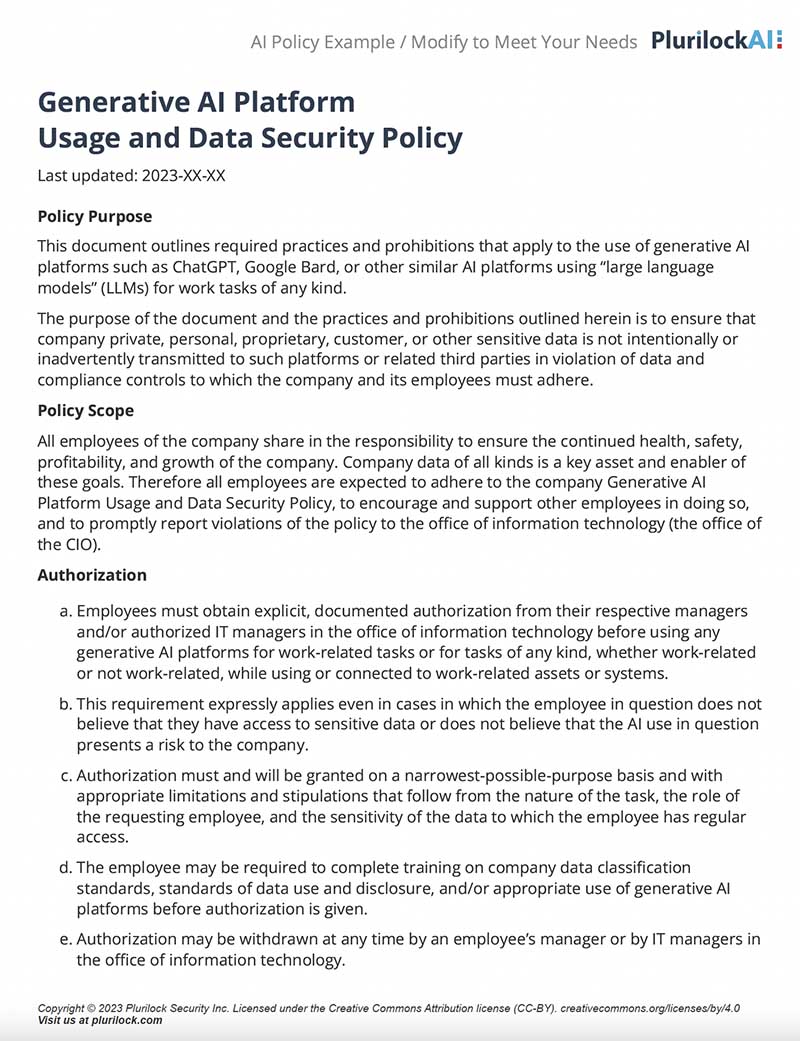
Sample Governance Policy for AI Use
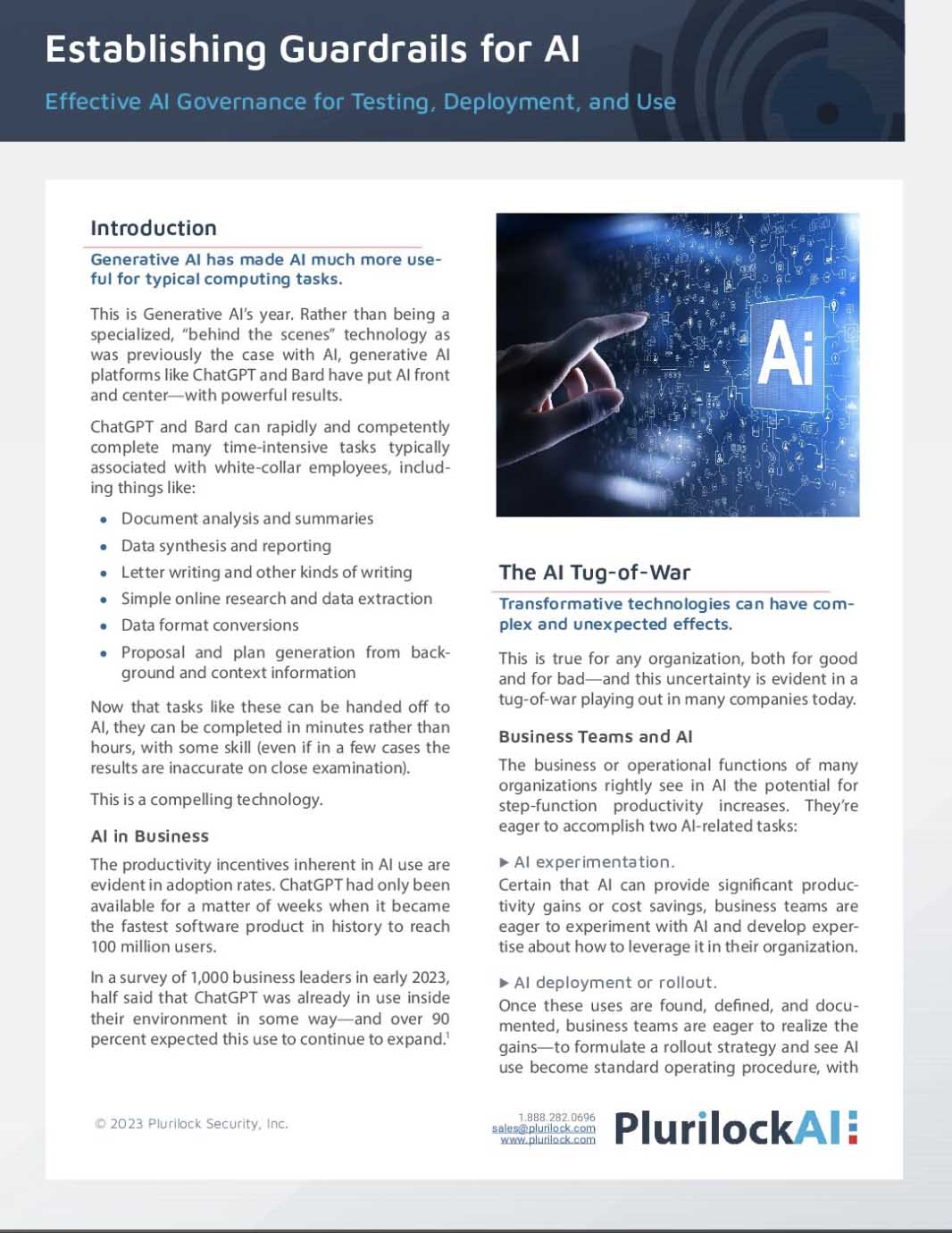
Establishing Guardrails for AI Whitepaper