
Cybersecurity Reference > Glossary
What is Pre-Incident Conditioning?





Rather than striking immediately, threat actors invest time—sometimes weeks or months—in seemingly benign interactions that prime victims to accept malicious actions as legitimate. An attacker might send several authentic-looking company updates before slipping in a malicious link, or repeatedly contact someone posing as IT support to normalize such interactions before requesting credentials. The technique works because humans naturally develop trust through repeated, consistent exposure to familiar patterns and personas.
What makes pre-incident conditioning particularly dangerous is its exploitation of cognitive biases. Each innocuous interaction builds a mental model in the target's mind about what's "normal" for this relationship or communication channel. By the time the actual attack arrives, the victim's psychological defenses have been systematically lowered. They're not encountering a suspicious stranger—they're dealing with what feels like a known entity. This approach has become a cornerstone of sophisticated spear-phishing campaigns and advanced persistent threat operations, where the investment in conditioning pays dividends through higher success rates and reduced suspicion.
Origin
As social engineering became recognized as a cybersecurity threat in the 1990s, practitioners like Kevin Mitnick documented how building rapport over time dramatically increased attack success rates. However, the term "pre-incident conditioning" and its systematic application in cyber campaigns gained prominence in the 2010s as researchers analyzed sophisticated nation-state operations and business email compromise schemes.
The technique evolved alongside communication technology. Email allowed attackers to scale conditioning efforts beyond face-to-face interactions. Social media provided new reconnaissance and relationship-building channels. Modern threat actors can now automate portions of the conditioning process while maintaining enough personalization to seem genuine. The patience required for effective conditioning also became a distinguishing characteristic of advanced persistent threats, separating opportunistic criminals from well-resourced, mission-focused adversaries willing to invest months in a single high-value target.
Why It Matters
The technique has become increasingly common in business email compromise schemes targeting finance departments, where attackers condition employees over weeks with legitimate-seeming correspondence before issuing fraudulent wire transfer requests. The FBI estimates business email compromise causes billions in annual losses, with conditioning playing a role in many successful attacks. Similarly, supply chain compromises often begin with patient conditioning of vendor relationships.
Detection presents unique difficulties. Security tools excel at identifying known malicious indicators but struggle with context-dependent threats where each individual message appears benign. Only when viewed as a campaign over time does the conditioning pattern become apparent. Organizations need behavioral analytics that can identify unusual relationship patterns and communication sequences, not just scan individual messages for threats. The human element remains crucial—security teams must understand these psychological tactics to recognize and counter them effectively.
The Plurilock Advantage
Our former intelligence professionals bring tradecraft experience from environments where these techniques were developed, allowing us to design testing scenarios that reveal how employees respond to patient, relationship-building approaches rather than just obvious phishing attempts.
We help organizations develop behavioral detection capabilities and security awareness programs that address the psychological dimensions of modern social engineering campaigns, not just technical indicators.
.
Need Help Strengthening Your Pre-Incident Response?
Plurilock's pre-incident conditioning services prepare your organization for effective threat response.
Strengthen Defenses Now → Learn more →Downloadable References
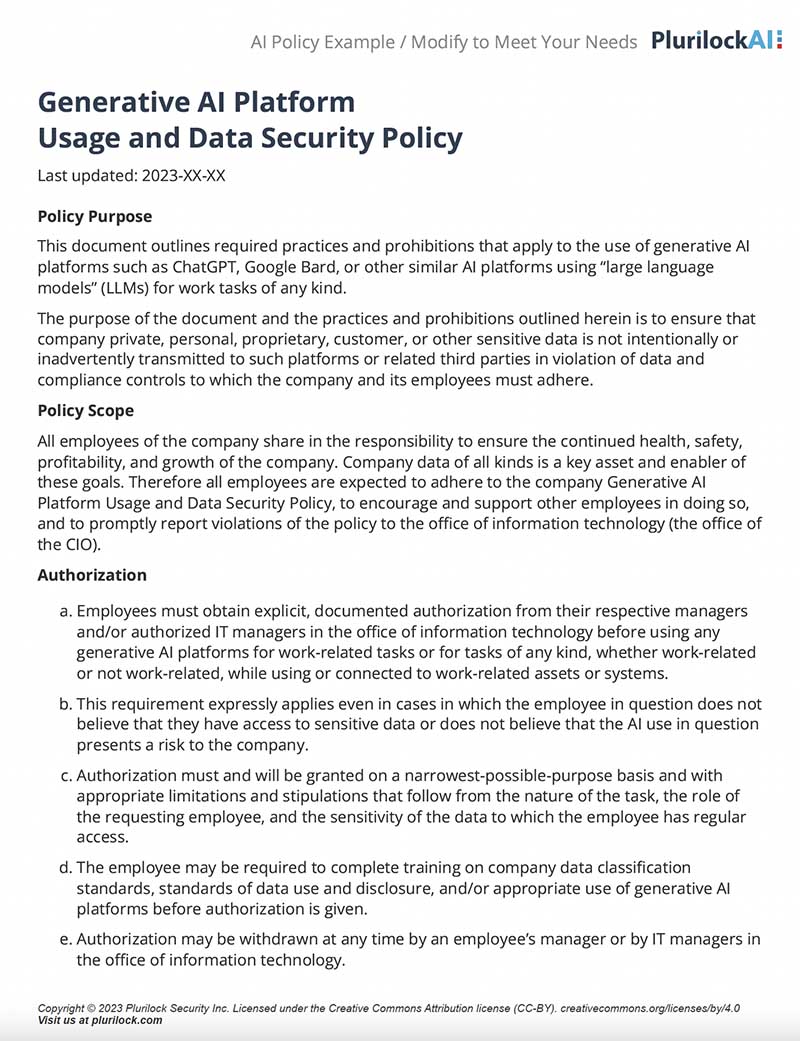
Sample Governance Policy for AI Use
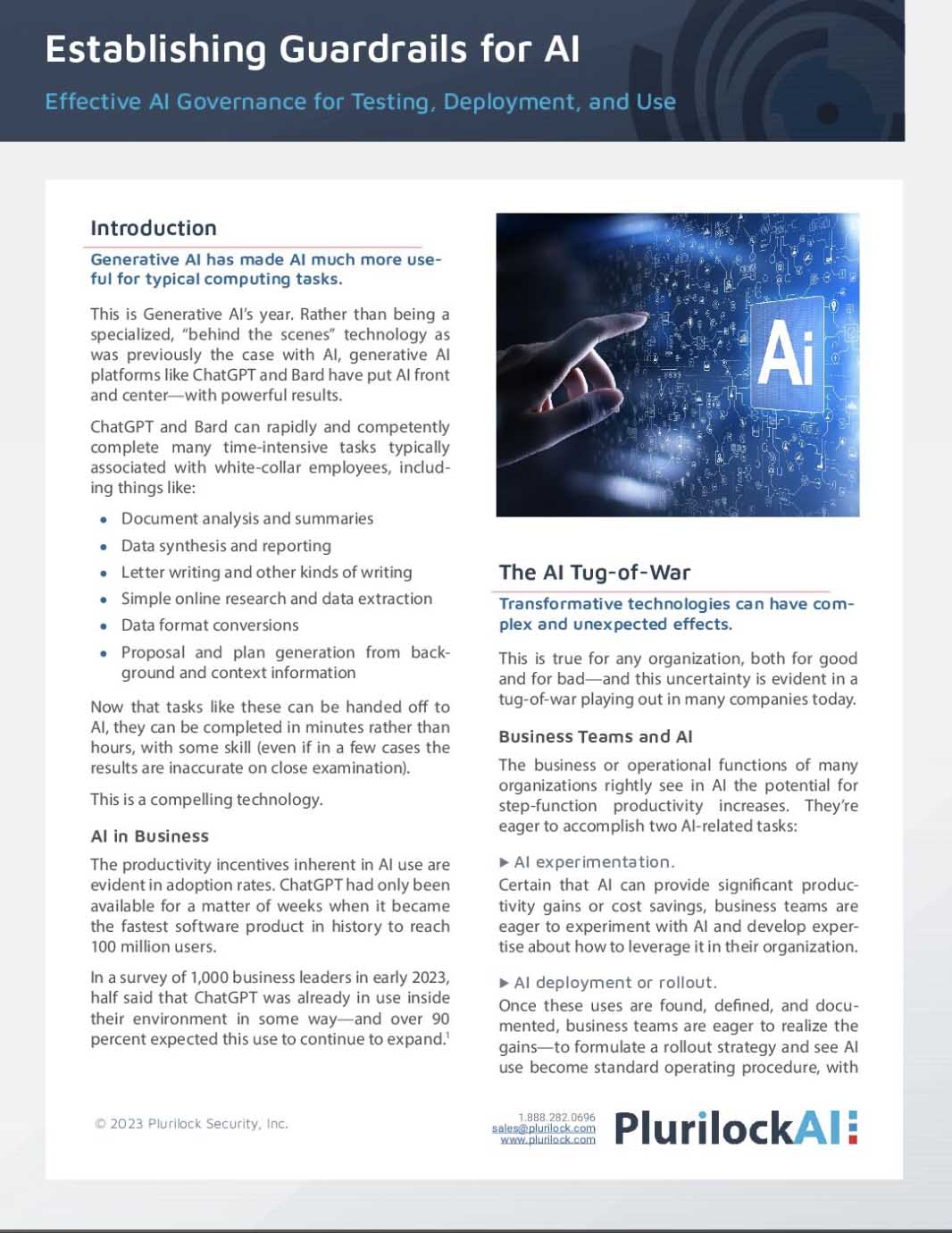
Establishing Guardrails for AI Whitepaper