Cybersecurity Reference > Glossary
What is Runtime Drift?




Picture a container that starts life locked down tight, configured exactly right—minimal privileges, no unnecessary services, clean as can be. Six months later, after patches and updates and the occasional manual fix, it's running with elevated permissions it shouldn't have, listening on ports nobody documented, and generally looking nothing like what the security team approved. That's drift in action.
This happens most often in containerized environments, cloud infrastructure, and distributed systems where configurations shift incrementally. Unlike a sudden breach or obvious misconfiguration that sets off alarms immediately, drift creeps in slowly. A little permission added here, a service enabled there, and before long the system's actual security posture bears little resemblance to its intended state. The danger isn't just theoretical—drift creates exploitable gaps that attackers can leverage, weakens access controls bit by bit, and introduces compliance violations that auditors will definitely notice. Detection requires continuous monitoring against known-good baselines, tracking behavioral changes over time, and comparing running states to what was originally approved. Mitigation leans heavily on infrastructure as code, automated compliance checks, and immutable infrastructure patterns that prevent unauthorized runtime modifications.
Origin
Early container advocates promised immutability—the idea that you'd deploy a container image and it would run exactly as built, unchanging until replaced entirely. Reality proved messier. Organizations discovered that runtime environments weren't staying put. Live containers accumulated changes through debugging sessions, emergency patches applied directly to running instances, and automated tools making incremental adjustments. The DevOps movement, with its emphasis on continuous deployment and rapid iteration, inadvertently accelerated drift by increasing the frequency of changes.
By 2018, security researchers were documenting how drift created attack surfaces in production Kubernetes clusters. The industry started developing specialized monitoring tools to track runtime behavior against deployment manifests. The concept evolved from a purely operational concern into a recognized security risk, particularly as compliance frameworks began explicitly addressing configuration baseline maintenance in cloud-native environments.
Why It Matters
The security implications are concrete. A container that started with read-only filesystem access might gradually accumulate write permissions through seemingly innocent updates. Network policies that initially restricted lateral movement get relaxed during troubleshooting and never get tightened back up. Secrets that were supposed to be rotated monthly linger for six months because automated rotation broke and nobody noticed. Each small deviation compounds the risk.
Compliance frameworks increasingly recognize drift as a distinct risk category. Standards like PCI DSS, SOC 2, and FedRAMP require organizations to maintain and verify security baselines—not just at deployment time, but continuously. When auditors ask to prove your running systems match approved configurations, discovering significant drift can derail certification. The challenge isn't just technical but organizational, requiring coordination between security, operations, and development teams who all touch production systems in different ways.
The Plurilock Advantage
We combine behavioral analysis with compliance scanning to spot drift early, and our team brings practical experience from organizations where drift led to actual incidents.
Rather than overwhelming your team with alerts about every minor change, we help distinguish between legitimate operational needs and genuine security risks, focusing remediation efforts where they matter most.
.
Need Help Managing Runtime Drift?
Plurilock's continuous monitoring solutions can detect and prevent unauthorized runtime changes.
Get Runtime Protection → Learn more →Downloadable References
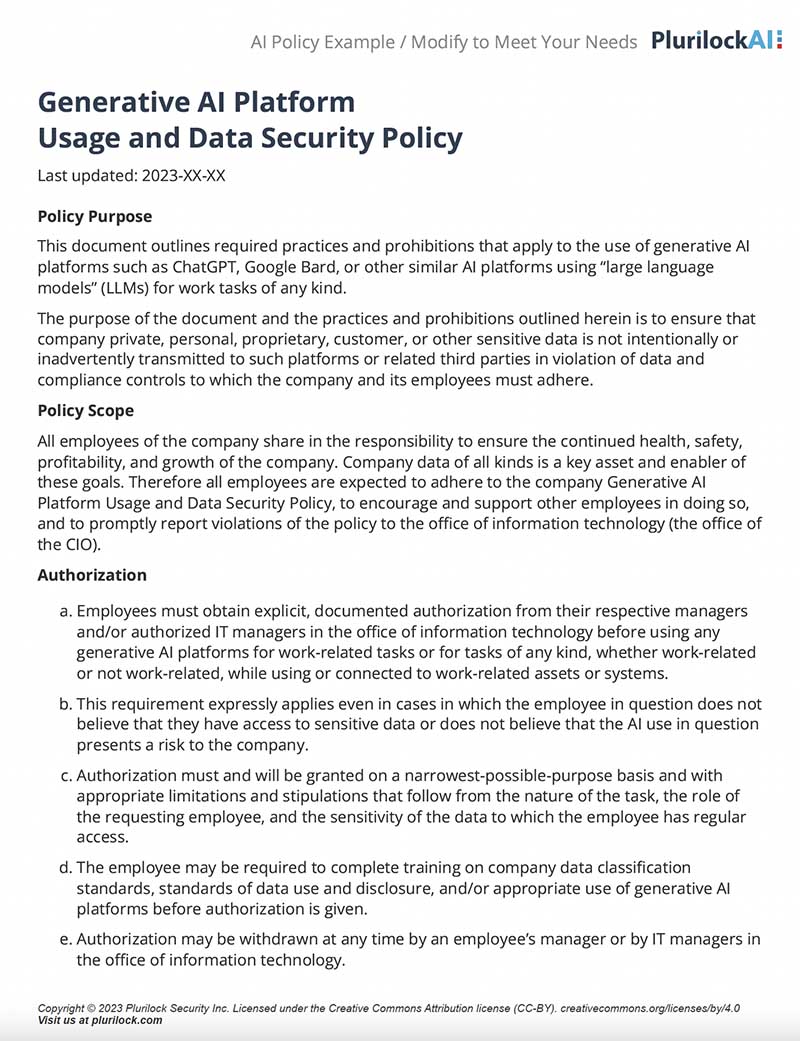
Sample Governance Policy for AI Use
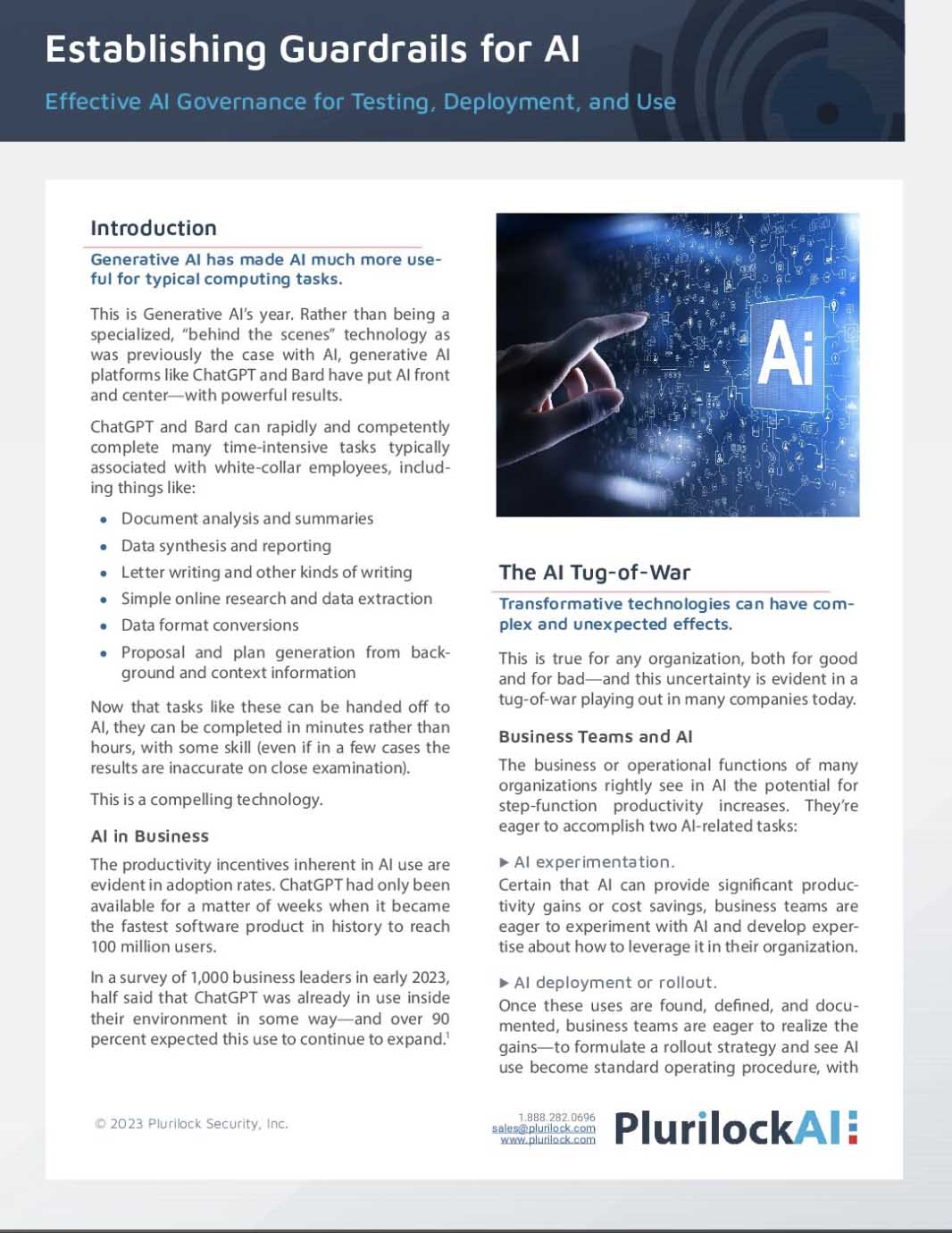
Establishing Guardrails for AI Whitepaper