
Cybersecurity Reference > Glossary
What is Attack Path Enumeration?





Think of it as plotting all the ways someone could break into a building—not just the obvious front door, but also the unlocked window around back, the maintenance entrance, and the weak spot in the fence. In cybersecurity, these paths often involve chaining together multiple smaller vulnerabilities: a misconfigured service account here, an unpatched server there, overly permissive access controls somewhere else.
The process looks at your network topology, system configurations, user permissions, and application weaknesses to build a complete picture of how an attacker could move from initial access to their ultimate goal. That goal might be stealing sensitive data, deploying ransomware, or taking control of critical systems. Both attackers and defenders use this technique, though obviously for different purposes. Penetration testers and red teams use it to show organizations where their real risks lie, while security architects and blue teams use it to understand their attack surface and figure out which problems to fix first. Automated tools can help scan networks and identify common issues, but experienced analysts still need to piece together the subtle, multi-step chains that automated scanners miss.
Origin
Attack graphs, the formal academic predecessor to modern attack path enumeration, emerged from research institutions studying network security models. These early frameworks tried to mathematically represent all possible attack sequences in a network. The problem was that even small networks generated enormous, unwieldy graphs that were hard to interpret or act on.
As Active Directory became ubiquitous in enterprise environments during the 2000s, attackers developed sophisticated techniques for moving laterally through Windows networks. This forced defenders to think more carefully about identity and access paths, not just network vulnerabilities. The rise of tools like BloodHound in the mid-2010s brought attack path enumeration into mainstream security practice, making it practical to visualize how attackers could abuse trust relationships and permissions to move through an environment. What was once an academic exercise became an operational necessity.
Why It Matters
The technique has become especially important as organizations adopt cloud services, hybrid environments, and complex identity systems. An attacker might move from a compromised cloud workload to on-premises systems, or vice versa, using identity federation and service accounts as bridges. Traditional security tools that focus on individual alerts or vulnerabilities often miss these connected paths.
Ransomware operators have gotten very good at attack path enumeration. They don't just encrypt the first system they compromise—they map out your environment, find paths to backup systems and domain controllers, and position themselves to cause maximum damage before deploying their payload. Defenders need to think the same way, identifying and breaking the most dangerous paths before attackers find them. This means looking beyond vulnerability scanners and compliance checklists to understand how your environment actually works as an interconnected system, where trust relationships and accumulated permissions create highways for attackers to travel.
The Plurilock Advantage
We combine automated discovery with deep manual analysis to map paths through complex hybrid environments, from cloud services to on-premises infrastructure.
Our adversary simulation services show you exactly how attackers would move through your environment, giving you the insight you need to break the most dangerous paths before they're exploited.
.
Need Help Mapping Attack Vectors?
Plurilock's security experts can identify and analyze potential attack paths in your environment.
Start Attack Path Analysis → Learn more →Downloadable References
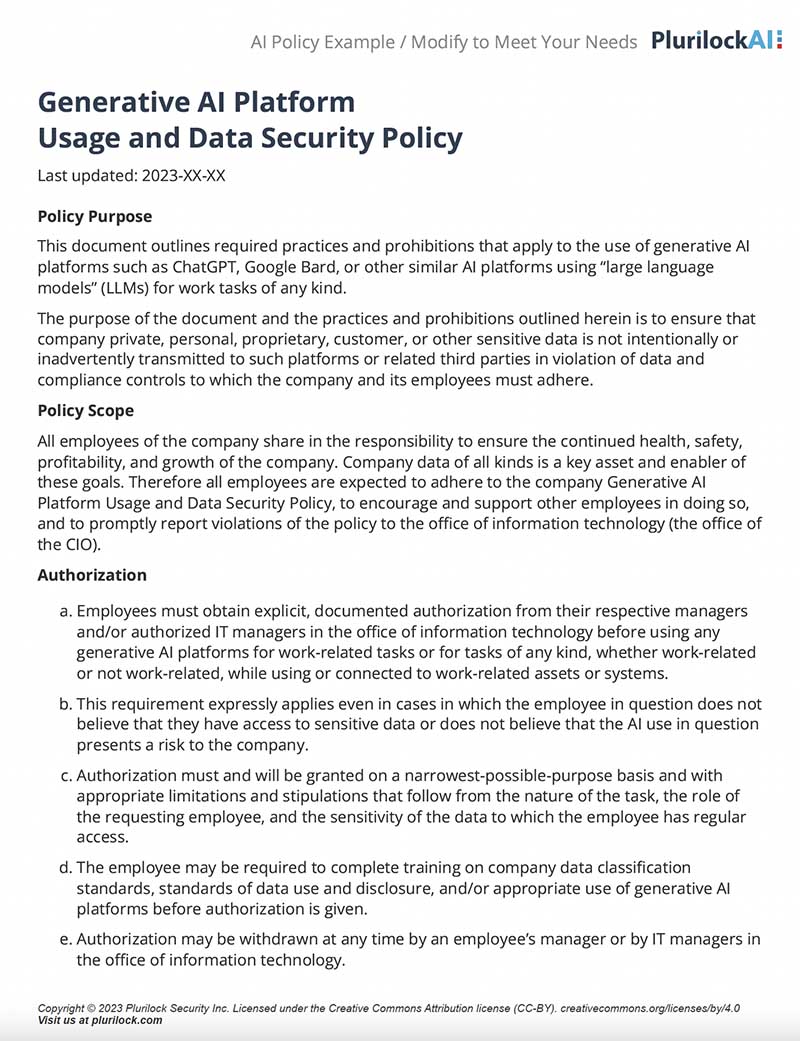
Sample Governance Policy for AI Use
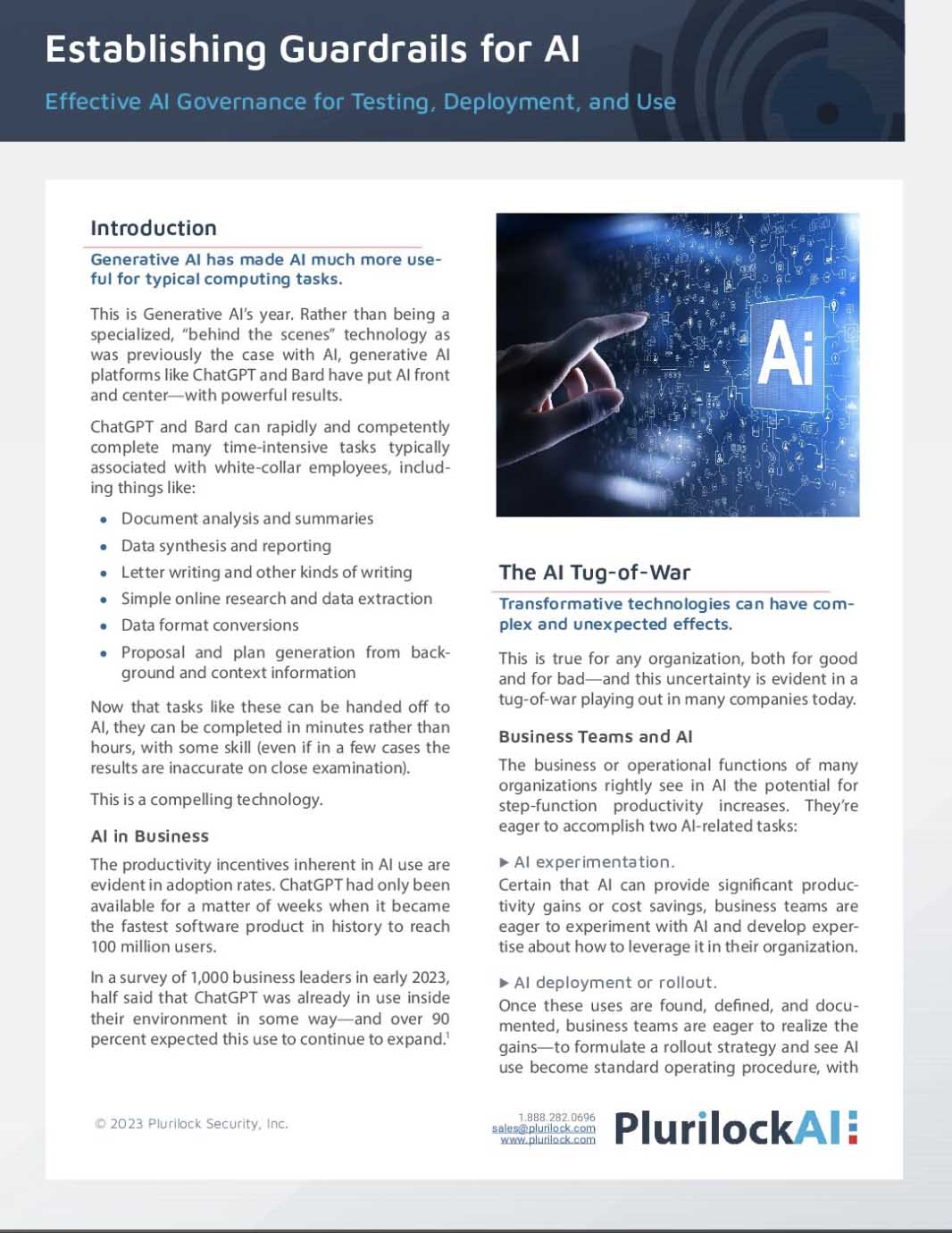
Establishing Guardrails for AI Whitepaper