Cybersecurity Reference > Glossary
What is an Attack Path?





Think of it like a chain of doors and hallways through your environment—the attacker moves from one exploitable weakness to the next, progressively getting closer to whatever they're after. They might start with a phishing email that compromises one user's credentials, use those credentials to access an internal system, exploit a misconfiguration to gain elevated privileges, and ultimately reach the database or file server they've been targeting all along.
What makes attack paths particularly important is that they're rarely about a single vulnerability. Most successful breaches involve multiple steps, each taking advantage of different weaknesses in different places. An attacker might combine a two-year-old unpatched vulnerability in one system with overly permissive access controls in another and poor network segmentation to tie it all together. Understanding these paths means seeing your environment the way an attacker does—as a connected system where one small weakness can become a stepping stone to something much worse. Security teams use attack path analysis to identify which vulnerabilities matter most, not just which ones exist, and to figure out where defensive measures will actually break an attacker's progression rather than just slow them down.
Origin
The formal study of attack paths gained momentum in the late 1990s and early 2000s as researchers developed attack graphs and threat modeling methodologies. These frameworks attempted to map all possible routes an attacker might take through a network. The concept evolved further with the rise of Advanced Persistent Threats in the 2010s, when organizations realized sophisticated attackers were spending weeks or months inside networks, carefully moving from system to system. This led to frameworks like MITRE ATT&CK, which catalogs the tactics and techniques attackers use at each stage of their progression. Today, attack path analysis incorporates machine learning and automated tools that can analyze complex environments and identify potential routes through thousands of interconnected systems and cloud services.
Why It Matters
The shift toward zero trust architectures reflects how seriously organizations now take attack path analysis. Rather than assuming anything inside the network perimeter is safe, zero trust assumes breach and tries to limit what an attacker can do once they're inside. Network segmentation, least privilege access, and continuous monitoring all aim to break potential attack paths or detect attackers while they're still progressing through early stages. The challenge is that identifying all possible attack paths in a complex environment requires seeing relationships between systems that aren't always obvious—how identity systems connect to cloud resources, how service accounts tie together different applications, where trust relationships create unexpected access.
The Plurilock Advantage
Our team includes former intelligence professionals and military cyber operators who think like sophisticated adversaries, not just automated scanners.
We help you prioritize fixes based on what actually breaks attack chains in your environment, whether that means network segmentation, privilege restrictions, or detection capabilities. When you need to understand where you're genuinely vulnerable versus where you just have theoretical risks, we show you the paths that matter.
.
Worried About Your Attack Surface Exposure?
Plurilock's attack path analysis reveals how attackers could compromise your systems.
Map Your Attack Paths → Learn more →Downloadable References
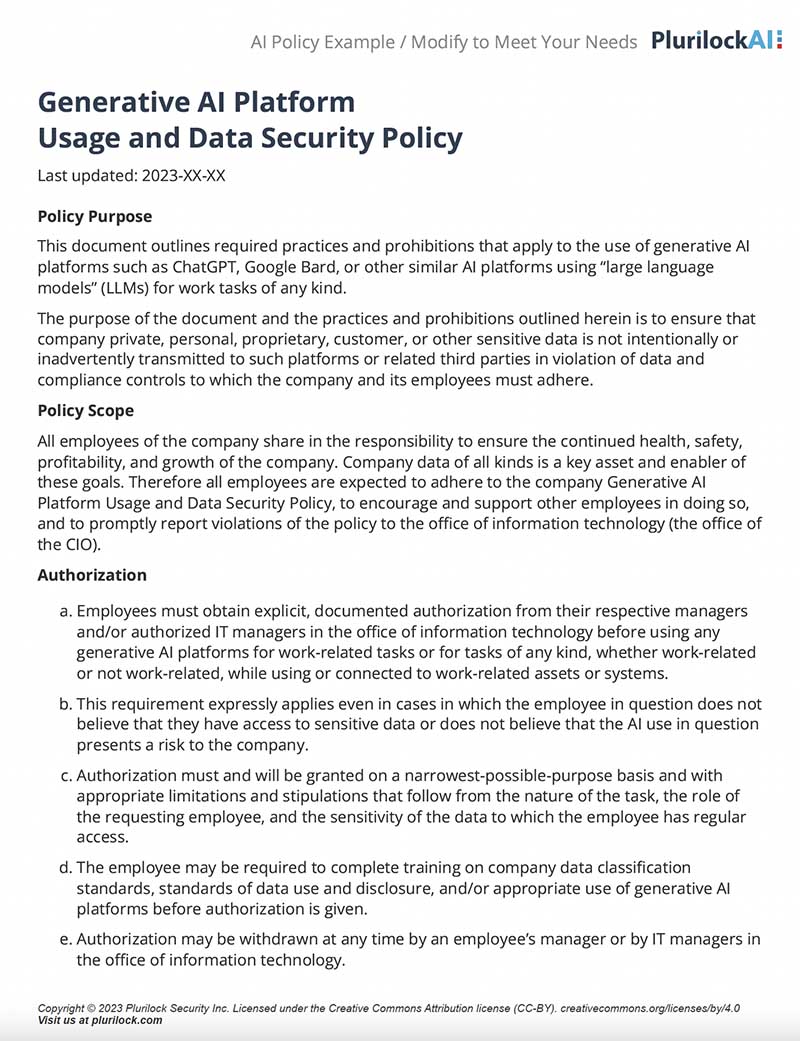
Sample Governance Policy for AI Use
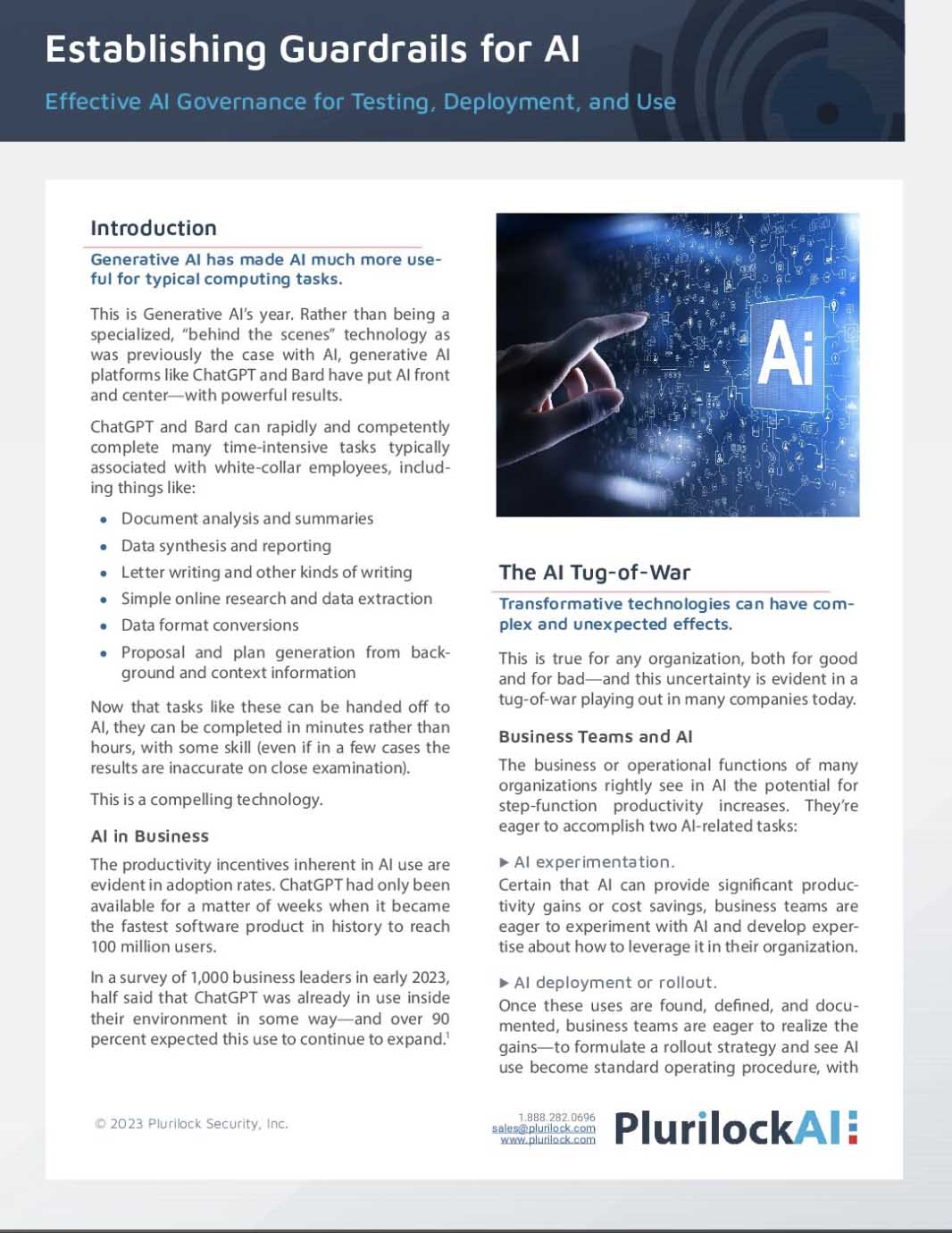
Establishing Guardrails for AI Whitepaper