
Cybersecurity Reference > Glossary
What are Attack Success Criteria?





These might include accessing particular databases, maintaining undetected access for a certain period, encrypting critical systems for ransom, or exfiltrating intellectual property. The criteria vary widely depending on the attacker's motivation—a ransomware operator measures success differently than a nation-state actor conducting espionage or a hacktivist seeking to embarrass a target.
These criteria matter because they reveal what attackers actually value, which isn't always what defenders assume. A breach that compromises thousands of low-value records might be meaningless to sophisticated attackers hunting for engineering documents or executive communications. Some attackers prioritize speed and disruption, while others invest months establishing persistence and moving laterally to reach their true objectives. Understanding these goals helps security teams move beyond generic defenses toward targeted protection of what adversaries actually want.
When organizations map their assets against likely attack success criteria, they can make smarter decisions about where to concentrate defensive resources. This thinking shifts security from a checkbox exercise to a strategic response based on what would actually constitute a damaging loss.
Origin
Early computer security focused primarily on preventing unauthorized access—a binary success or failure from the defender's perspective. As threats grew more sophisticated, particularly with the rise of targeted attacks and espionage campaigns in the mid-2000s, security professionals recognized that attackers often had specific, nuanced objectives beyond simple intrusion. The discovery of prolonged advanced persistent threat campaigns, where attackers maintained access for years while carefully exfiltrating specific data, demonstrated that success criteria could be complex and time-dependent.
Frameworks like MITRE ATT&CK, introduced in 2013, helped formalize this thinking by mapping adversary tactics and objectives in structured ways. Modern threat intelligence practices now routinely analyze attacker success criteria as part of understanding adversary capabilities and intentions, recognizing that different threat actors pursue fundamentally different goals even when using similar technical methods.
Why It Matters
The shift toward remote work and cloud infrastructure has complicated this picture. Attackers now define success criteria that account for dispersed assets, multiple identity providers, and hybrid environments. A successful attack might involve compromising cloud storage rather than traditional databases, or hijacking authentication systems to enable future access across numerous services. The criteria have become more sophisticated as attackers adapt to modern architectures.
Perhaps most importantly, recognizing attack success criteria helps organizations measure their security posture meaningfully. Instead of counting patched vulnerabilities or blocked connection attempts, they can assess whether defenses actually prevent adversaries from achieving their objectives. This perspective transforms security metrics from technical tallies into business-relevant measures of risk.
The Plurilock Advantage
Our team, including former intelligence professionals and senior practitioners from NSA and Cyber Command, brings deep experience in thinking like adversaries and mapping their true objectives.
We help you identify which assets represent high-value targets, then build layered defenses that specifically frustrate attacker goals rather than chasing generic compliance checkboxes.
.
Need Help Defining Attack Success Criteria?
Plurilock's security experts can help establish comprehensive attack success metrics.
Get Expert Guidance → Learn more →Downloadable References
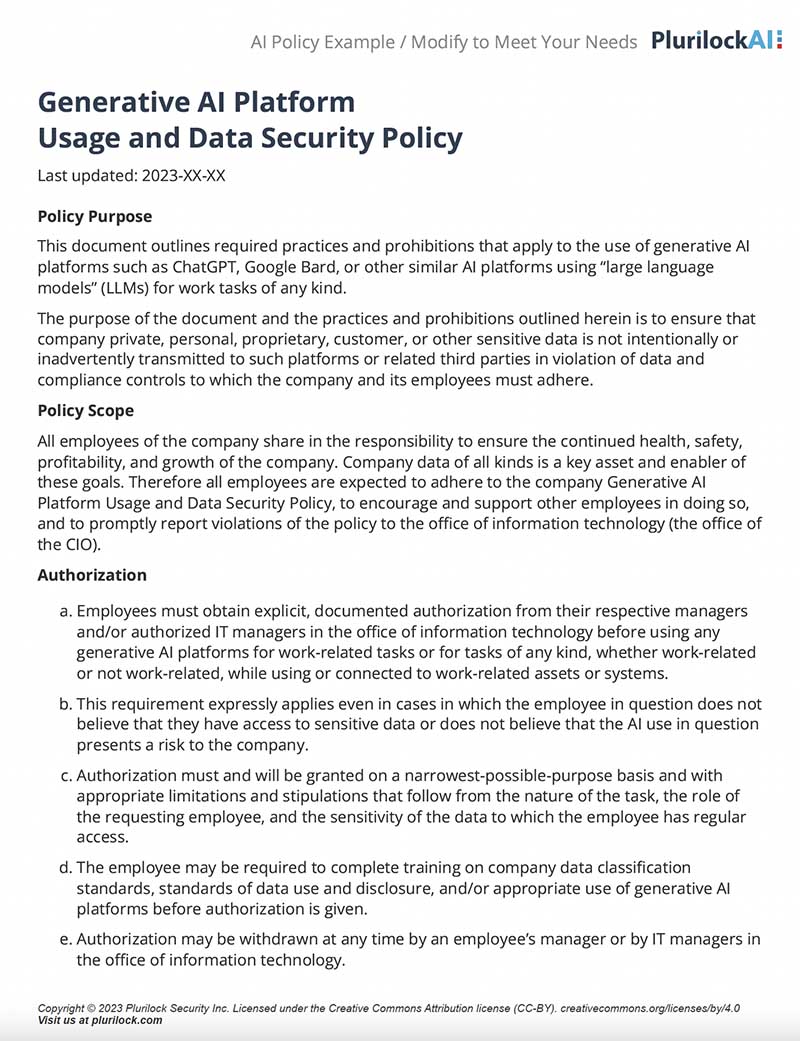
Sample Governance Policy for AI Use
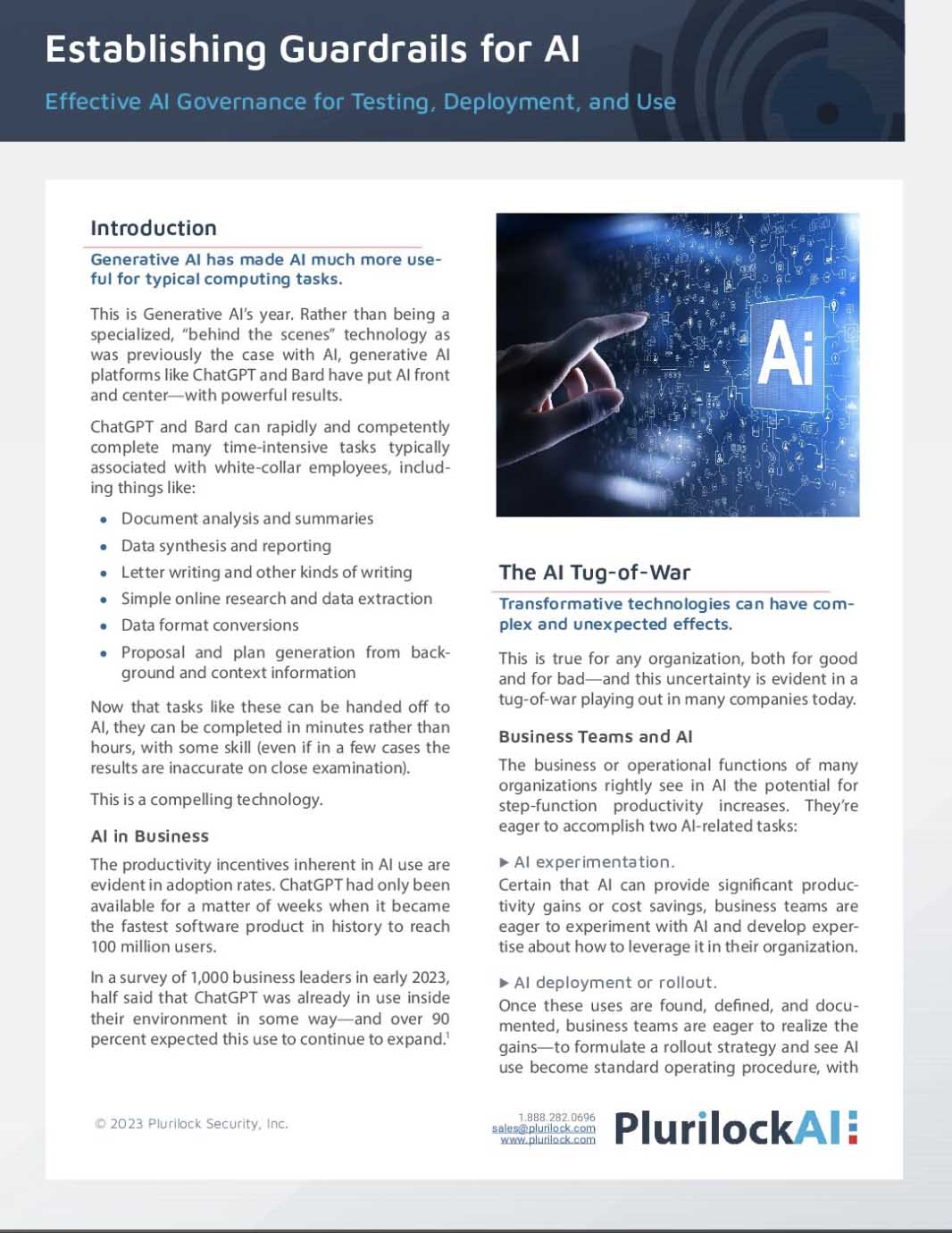
Establishing Guardrails for AI Whitepaper