Cybersecurity Reference > Glossary
What is Compliance Scope Definition?

It's essentially drawing a map of what needs to be protected and monitored to meet standards like PCI DSS, HIPAA, or SOX. This boundary-setting determines where you'll need to implement controls, conduct audits, and maintain documentation.
The work involves cataloging assets and tracing how regulated information moves through your environment. For payment card compliance, you'd identify every system that touches cardholder data—from payment terminals to databases to backup systems. For healthcare, you'd map all systems handling protected health information, including the applications, servers, and network segments involved.
Getting the scope right matters because it shapes everything that follows. Draw it too broadly and you'll waste resources protecting systems that don't need the same level of control. Draw it too narrowly and you'll miss critical assets, creating gaps that auditors will flag and attackers might exploit. The challenge intensifies as organizations adopt cloud services, containerization, and microservices architectures where data flows become less obvious and system boundaries blur. Scope needs regular review as your environment changes—new applications launch, infrastructure shifts, and business processes evolve.
Origin
The Payment Card Industry Data Security Standard, first published in 2004, made scope definition especially important by introducing the concept of the cardholder data environment—a defined boundary within which stringent controls applied. This framework popularized the idea that organizations could segment their networks to reduce compliance burden, making scope definition a strategic activity rather than just an administrative task.
Early approaches were often manual and document-heavy, relying on spreadsheets and network diagrams that quickly became outdated. The rise of cloud computing in the 2010s complicated matters significantly. Traditional network-based scoping methods struggled with dynamic infrastructure, shared responsibility models, and data that moved fluidly between on-premises and cloud environments. This forced the development of more sophisticated approaches using automated discovery tools, data flow mapping technologies, and continuous monitoring to maintain accurate scope boundaries as environments changed in real time.
Why It Matters
The stakes are tangible. Regulators can impose significant fines for compliance failures, but the bigger risk often comes from security incidents that exploit gaps in coverage. When critical systems fall outside your defined scope, they don't receive the necessary controls, monitoring, or audit attention. Attackers frequently target these overlooked assets as entry points.
Inaccurate scope also creates operational problems. Overscoping forces teams to apply expensive controls to low-risk systems, draining budgets and creating busywork that distracts from real priorities. Underscoping leaves blind spots that surface during audits, forcing rushed remediation work and potentially delaying business initiatives. Cloud adoption amplifies these challenges because traditional perimeter-based thinking doesn't translate well to environments where infrastructure is ephemeral and boundaries are logical rather than physical. Organizations need approaches that can keep pace with infrastructure-as-code deployments and containers that spin up and down in minutes.
The Plurilock Advantage
We help you right-size your compliance scope to cover what matters without overengineering, and we build processes that keep scope definitions current as your environment evolves. Learn more about our governance, risk, and compliance services.
.
Need Help Defining Your Compliance Scope?
Plurilock's compliance experts can help you accurately map and define your regulatory requirements.
Define My Compliance Scope → Learn more →Downloadable References
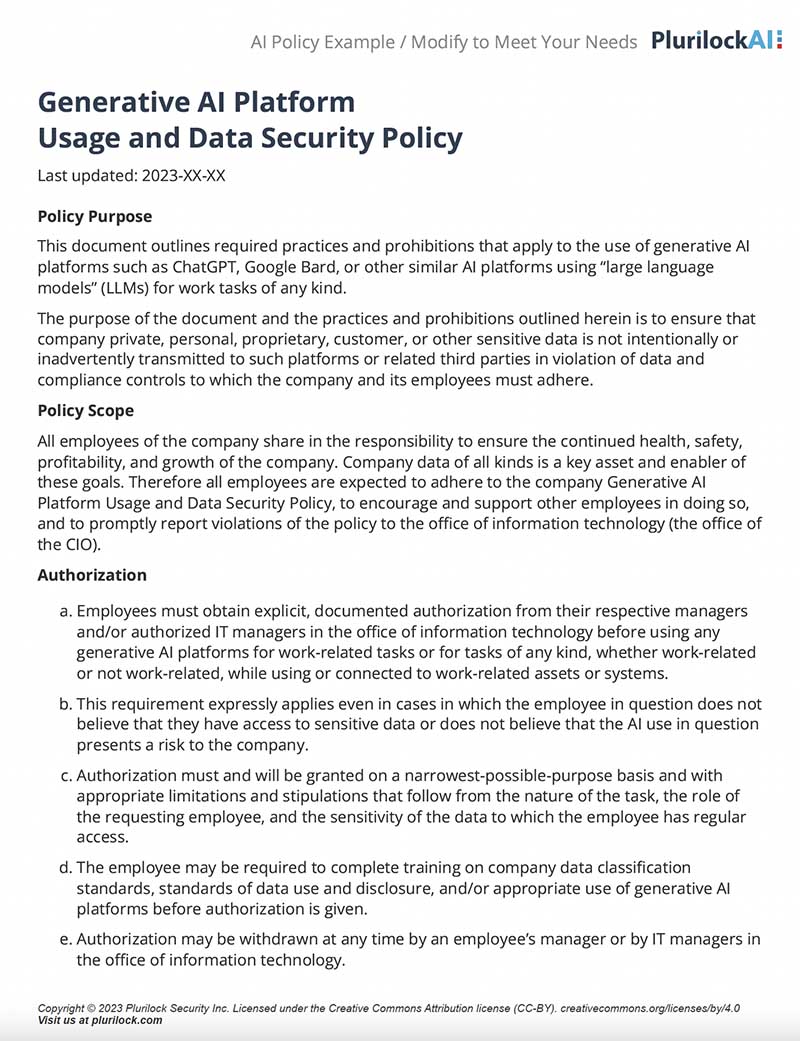
Sample Governance Policy for AI Use
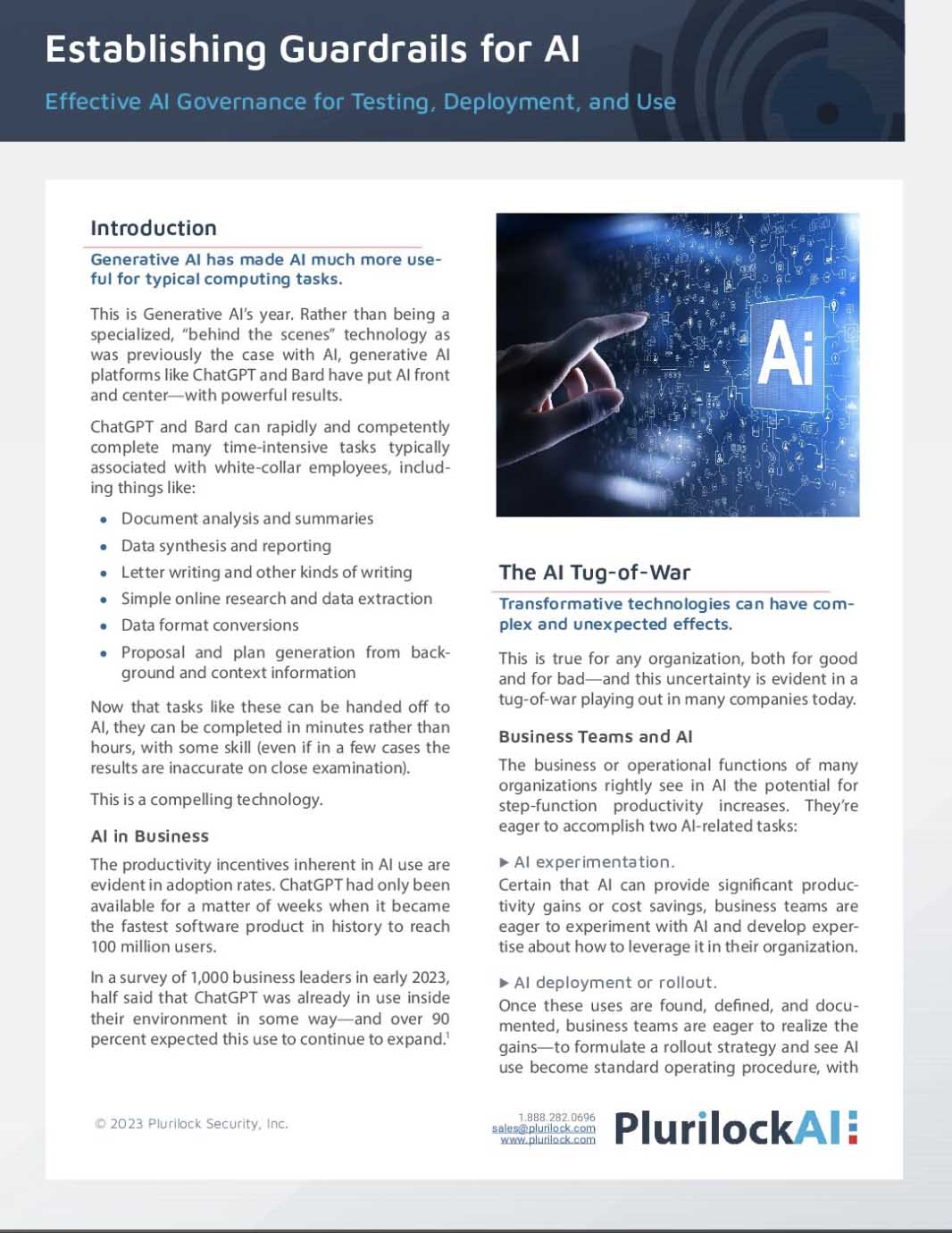
Establishing Guardrails for AI Whitepaper