Cybersecurity Reference > Glossary
What is Risk Treatment?





Once you know what threats you're facing, you need to pick a strategy: avoid the risk entirely by eliminating the activity that causes it, reduce it through security controls, transfer it to someone else through insurance or outsourcing, or simply accept it if the cost of addressing it outweighs the potential damage. The choice depends on how much impact the risk could have, how likely it is to occur, and what resources you're willing to commit.
What makes risk treatment tricky is that it's not a one-time decision. Your threat landscape shifts constantly—new vulnerabilities emerge, business priorities change, and controls that worked last year might not be sufficient today. You need to keep revisiting your treatment decisions and adjusting them as conditions evolve. The goal isn't to eliminate all risk, which is impossible and would paralyze your business, but to bring your risk profile down to a level your organization can live with. Good risk treatment also means documenting your decisions thoroughly, both for compliance requirements and so future teams understand why certain choices were made.
Origin
As cybersecurity matured from a technical niche into a business-critical function in the early 2000s, these risk management principles were adapted to address digital threats. Standards like ISO 27001 and frameworks from NIST codified risk treatment processes specifically for information security, giving organizations structured approaches rather than ad-hoc responses. The terminology became more standardized, and the expectation shifted from purely technical defenses to business-informed decision-making about which risks deserved attention and resources.
The concept has evolved from a box-checking exercise into something more dynamic. Early approaches treated risk treatment as a phase you completed and moved on from, but contemporary practice recognizes it as continuous. The speed at which threats evolve—think ransomware's rapid sophistication or the sudden emergence of AI-driven attacks—means treatment decisions now require regular reassessment rather than annual reviews.
Why It Matters
The stakes have gotten higher as cyber threats have become more consequential. A ransomware attack that encrypts critical systems or a data breach exposing customer information can damage reputation, trigger regulatory penalties, and disrupt operations for weeks. Treatment decisions directly determine your resilience when these events happen. Choosing to accept a risk because mitigation seemed too expensive looks very different after that risk materializes into a million-dollar incident.
Modern compliance frameworks increasingly require documented risk treatment processes, not just risk assessments. Regulators want to see that you've made informed decisions about your security posture, with clear rationale for why certain risks were treated one way versus another. This documentation becomes critical during audits or post-incident investigations. Risk treatment has shifted from an internal management exercise to something that external parties—insurers, regulators, business partners—expect to see evidence of.
The Plurilock Advantage
We bring expertise across offensive security, cloud hardening, and data protection, which means we can accurately assess the effectiveness of different treatment options and implement controls that actually work.
Our team includes former intelligence professionals and Fortune 500 CISOs who've made these decisions at scale, so we understand the balance between security rigor and operational reality. We focus on outcomes, helping you build a defensible risk posture without wasting resources on unnecessary controls.
.
Need Help Managing Cybersecurity Risks?
Plurilock's risk treatment services help organizations systematically address and mitigate identified threats.
Get Risk Treatment Support → Learn more →Downloadable References
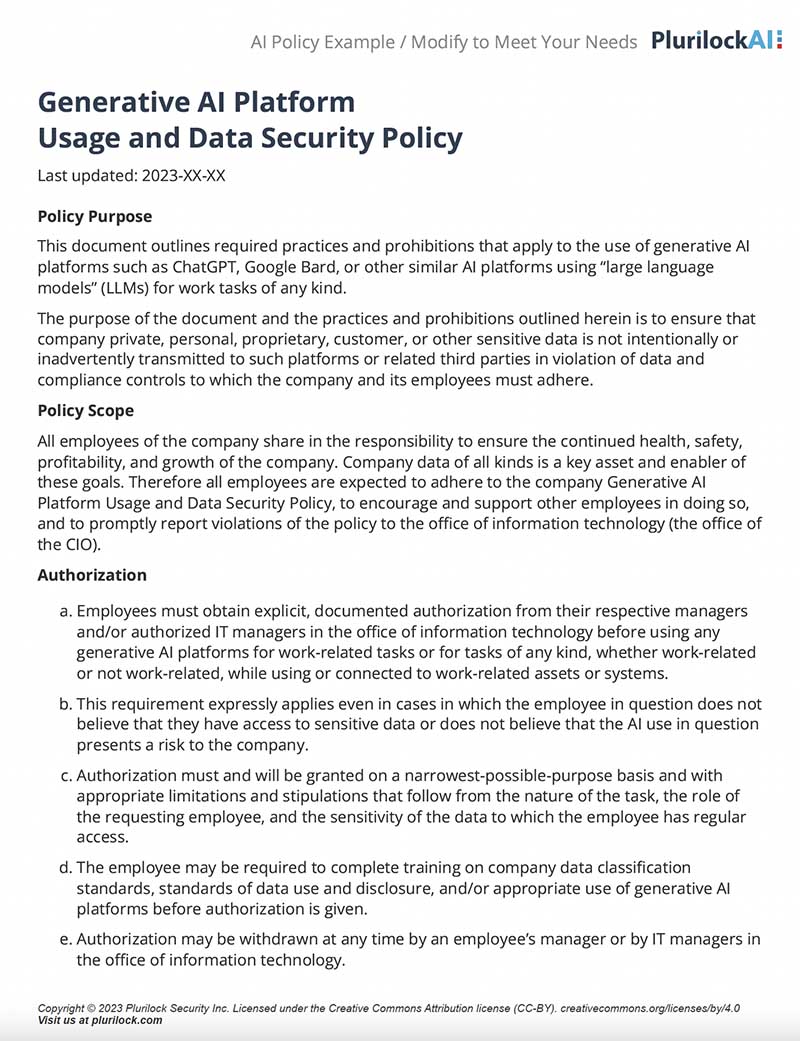
Sample Governance Policy for AI Use

Establishing Guardrails for AI Whitepaper