Cybersecurity Reference > Glossary
What is Incident Triage?

When a Security Operations Center receives hundreds or thousands of alerts daily, analysts need to quickly determine which ones represent genuine threats requiring immediate attention and which can wait or are false positives. The process involves evaluating the nature of the suspicious activity, which systems are affected, what data might be at risk, and how the incident could impact business operations.
Good triage depends on clear criteria and consistent decision-making. Analysts look at indicators like the attack vector, the value of targeted assets, whether the threat is active or contained, and signs of the attacker's sophistication. Most organizations classify incidents into severity tiers—critical, high, medium, low—each with defined response timelines. A ransomware infection spreading across production servers gets immediate attention; a blocked phishing email might merit only documentation.
Many teams use SOAR platforms to automate parts of this process, applying predefined rules to sort alerts and gather initial context before human review. Speed matters here. The faster you identify what needs urgent response, the less time attackers have to move laterally, exfiltrate data, or cause damage. Effective triage prevents both wasted effort on minor issues and delayed response to serious threats.
Origin
By the early 2000s, large enterprises were drowning in security alerts. Studies showed that many organizations ignored or missed critical warnings simply because they were buried among thousands of low-priority notifications. The discipline of formal incident triage developed as a response to this overload. Security teams borrowed frameworks from IT service management, adapting priority matrices and severity classifications to cybersecurity contexts.
The rise of advanced persistent threats and targeted attacks in the late 2000s made triage more sophisticated. Analysts needed to spot subtle indicators of compromise among routine events. More recently, machine learning and automation have transformed the field, with tools that can perform initial triage faster than humans. Yet the fundamental challenge remains: separating signal from noise quickly enough to mount an effective defense.
Why It Matters
The stakes of getting triage wrong are high. Prioritize incorrectly and you might spend hours investigating a minor configuration issue while ransomware encrypts your databases. Conversely, dismissing alerts too quickly can mean missing the early signs of a breach. Many major incidents began with alerts that were triaged as low-priority and never investigated thoroughly.
Resource constraints make triage unavoidable. Most security teams are understaffed, and analyst time is precious. Triage serves as a force multiplier, ensuring that skilled professionals focus on genuine threats rather than chasing false positives. As threat actors become more sophisticated and the attack surface expands with cloud adoption and remote work, the ability to quickly assess and prioritize incidents becomes a fundamental defensive capability. Organizations that do triage well can respond to real threats in minutes rather than hours or days.
The Plurilock Advantage
Our approach combines automated alert enrichment with expert human analysis to separate genuine threats from noise quickly.
When seconds count during an active incident, our incident response services mobilize rapidly—often within hours—to provide the senior-level expertise needed for accurate triage and immediate containment of critical threats.
.
Need Help Prioritizing Security Incidents?
Plurilock's incident triage services help you rapidly assess and categorize threats.
Get Triage Support → Learn more →Downloadable References
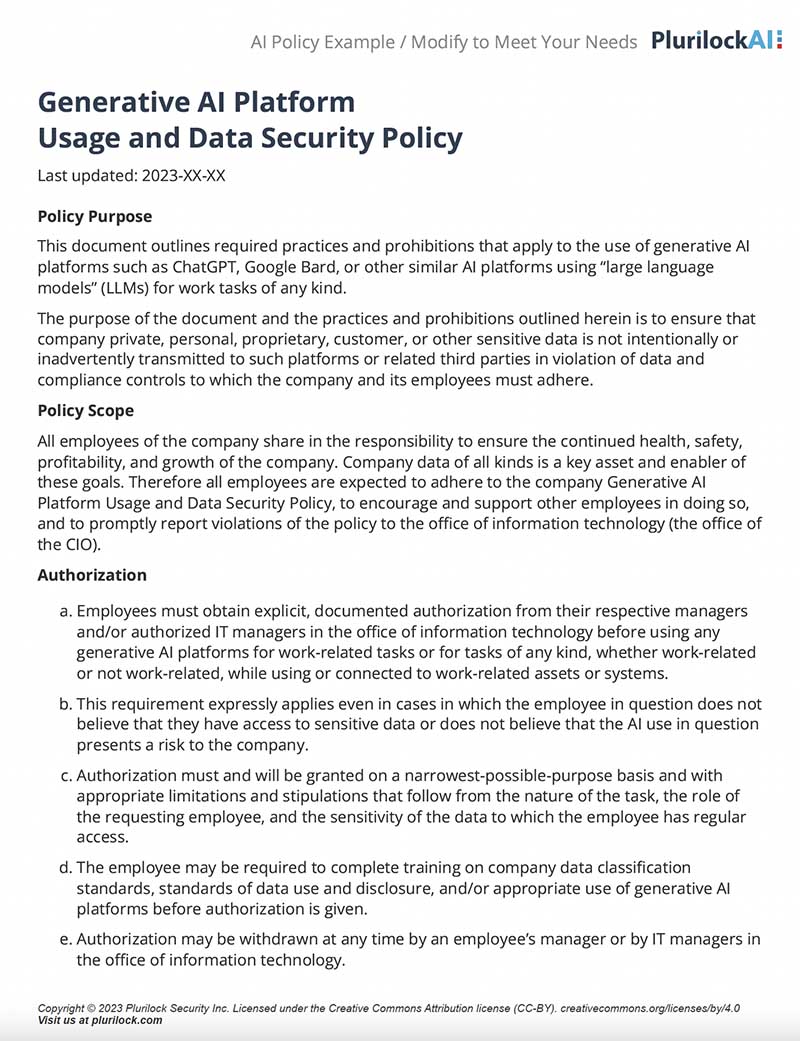
Sample Governance Policy for AI Use
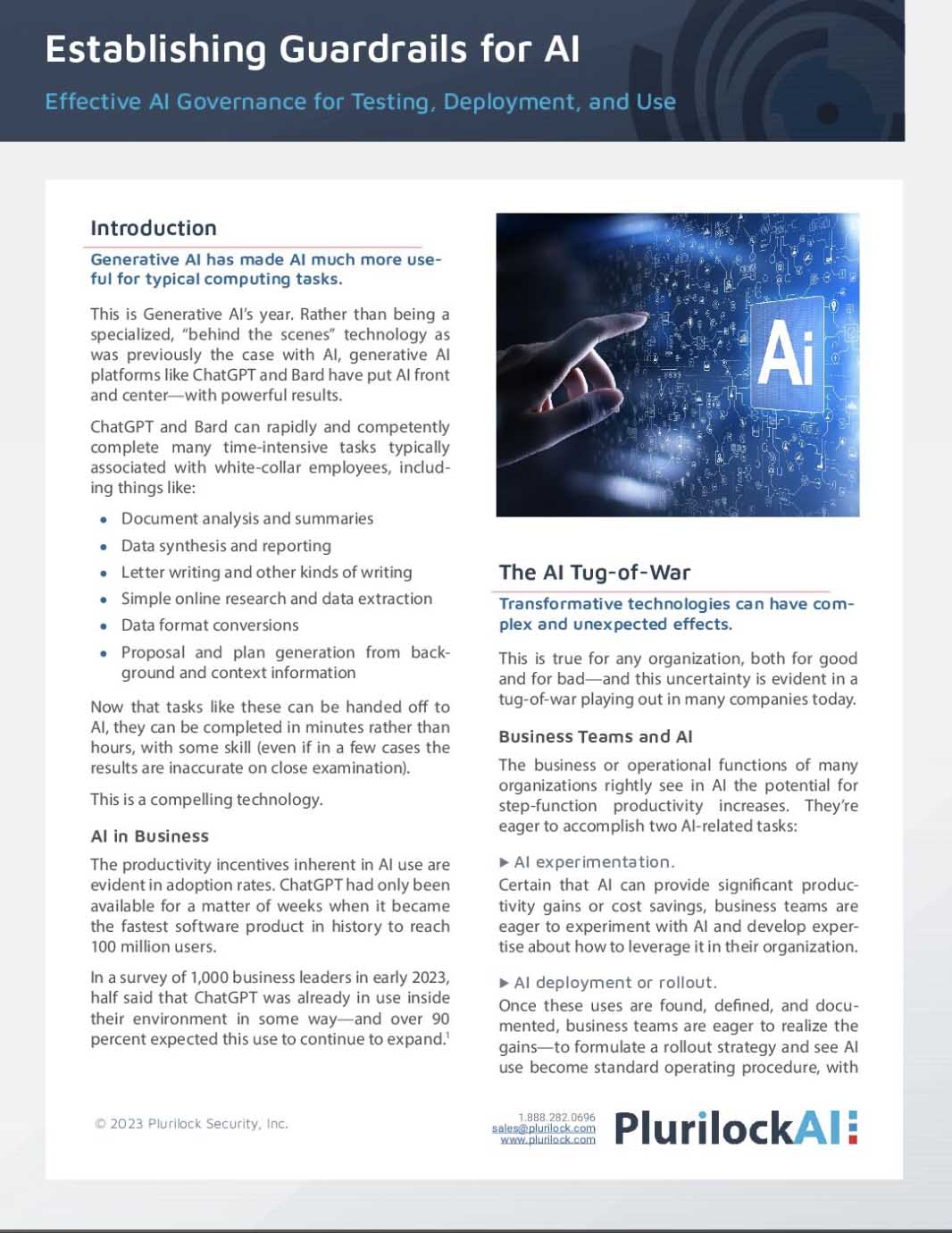
Establishing Guardrails for AI Whitepaper