
Cybersecurity Reference > Glossary
What is a Next-Generation Firewall (NGFW)?





While older firewalls make decisions based on IP addresses, ports, and protocols, NGFWs can identify and control specific applications regardless of how they're tunneling through the network. This matters because modern applications don't play by the old rules—they use dynamic ports, encrypt their traffic, and often masquerade as legitimate web traffic.
NGFWs use deep packet inspection to examine the actual content of data packets, not just their headers. This lets them spot malicious payloads, block specific applications (even when they're trying to hide), and enforce policies based on who's using the application and what they're doing with it. Most NGFWs pull in threat intelligence feeds to block known bad actors in real-time, and many can decrypt SSL/TLS traffic to inspect encrypted sessions. Some include sandboxing to detonate suspicious files in a safe environment, and integration with SIEM platforms for centralized security monitoring. The more sophisticated models use machine learning to spot anomalous behavior that signature-based detection would miss. Organizations typically deploy NGFWs at network perimeters and between internal segments to catch threats that would sail past traditional firewalls.
Origin
The catalyst was Web 2.0 and the shift toward application-centric computing. Attackers realized they could tunnel almost anything through port 80 or 443, rendering port-based security largely obsolete. Meanwhile, organizations were losing visibility and control as employees used an expanding array of cloud applications, peer-to-peer tools, and social media—all appearing as generic web traffic to traditional firewalls.
Early NGFWs were essentially intrusion prevention systems (IPS) bolted onto firewall platforms, but the technology matured quickly. By the early 2010s, major security vendors had rebuilt their architectures from the ground up to support application awareness as a core function rather than an add-on. The integration of threat intelligence feeds, SSL inspection, and user identity awareness followed as organizations demanded more context-aware security controls. What started as a marketing term became an industry standard as the limitations of port-based filtering became undeniable.
Why It Matters
Modern threats exploit the gap between what traditional firewalls can see (ports and protocols) and what's actually happening (applications and content). Ransomware, data exfiltration, and command-and-control communications often tunnel through legitimate-looking web traffic. An attacker who's compromised an endpoint can use dozens of techniques to communicate outbound through port 443, and a traditional firewall will wave it through because "it's just HTTPS."
The challenge is that NGFWs are only as effective as their configuration and maintenance. Many organizations deploy them but don't enable SSL inspection due to performance concerns or complexity, leaving a massive blind spot. Others create overly permissive application rules that defeat the purpose of granular control. The technology has also become a performance bottleneck in high-speed networks, forcing tough choices between security depth and network speed. Still, for most organizations, an NGFW is the first line of defense that can actually understand what applications are crossing the network and whether they're being used appropriately.
The Plurilock Advantage
We focus on practical configurations that actually get used rather than theoretical policies that get disabled when they slow things down. That includes right-sizing SSL inspection, building application rules that align with real business needs, and integrating NGFWs with your broader security stack. Learn more about our data protection services.
.
Need Advanced Network Protection?
Plurilock's next-generation firewall solutions provide comprehensive threat detection and network security.
Get Firewall Consultation → Learn more →Downloadable References
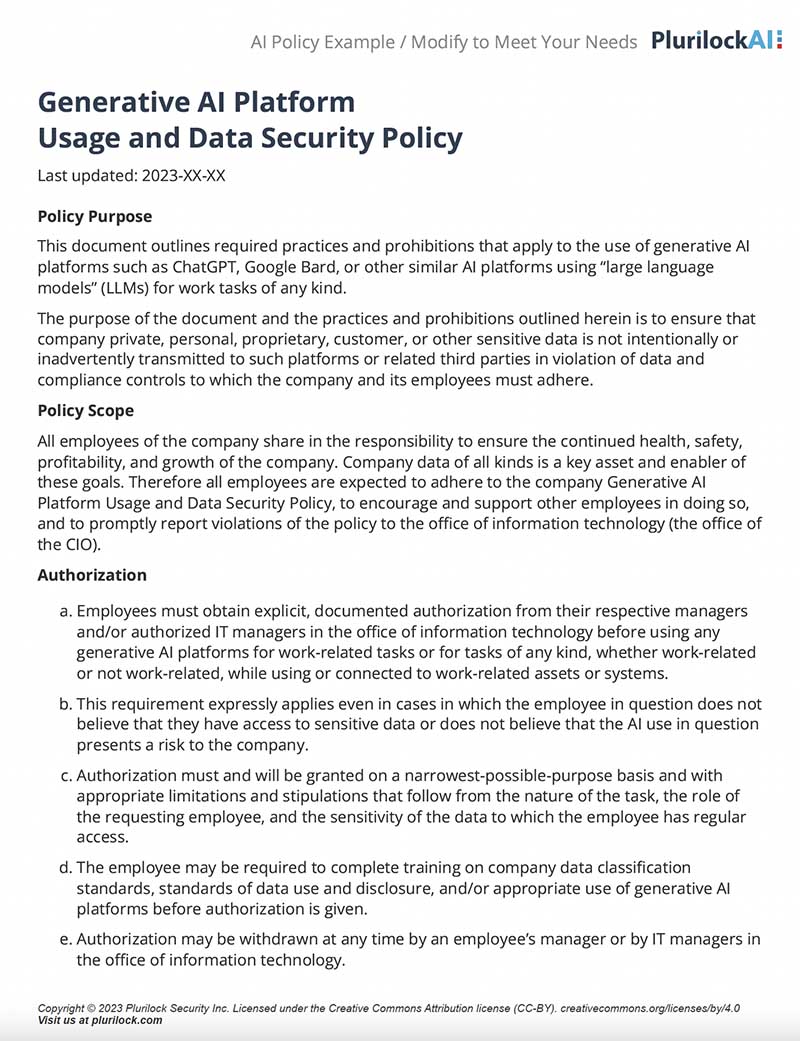
Sample Governance Policy for AI Use
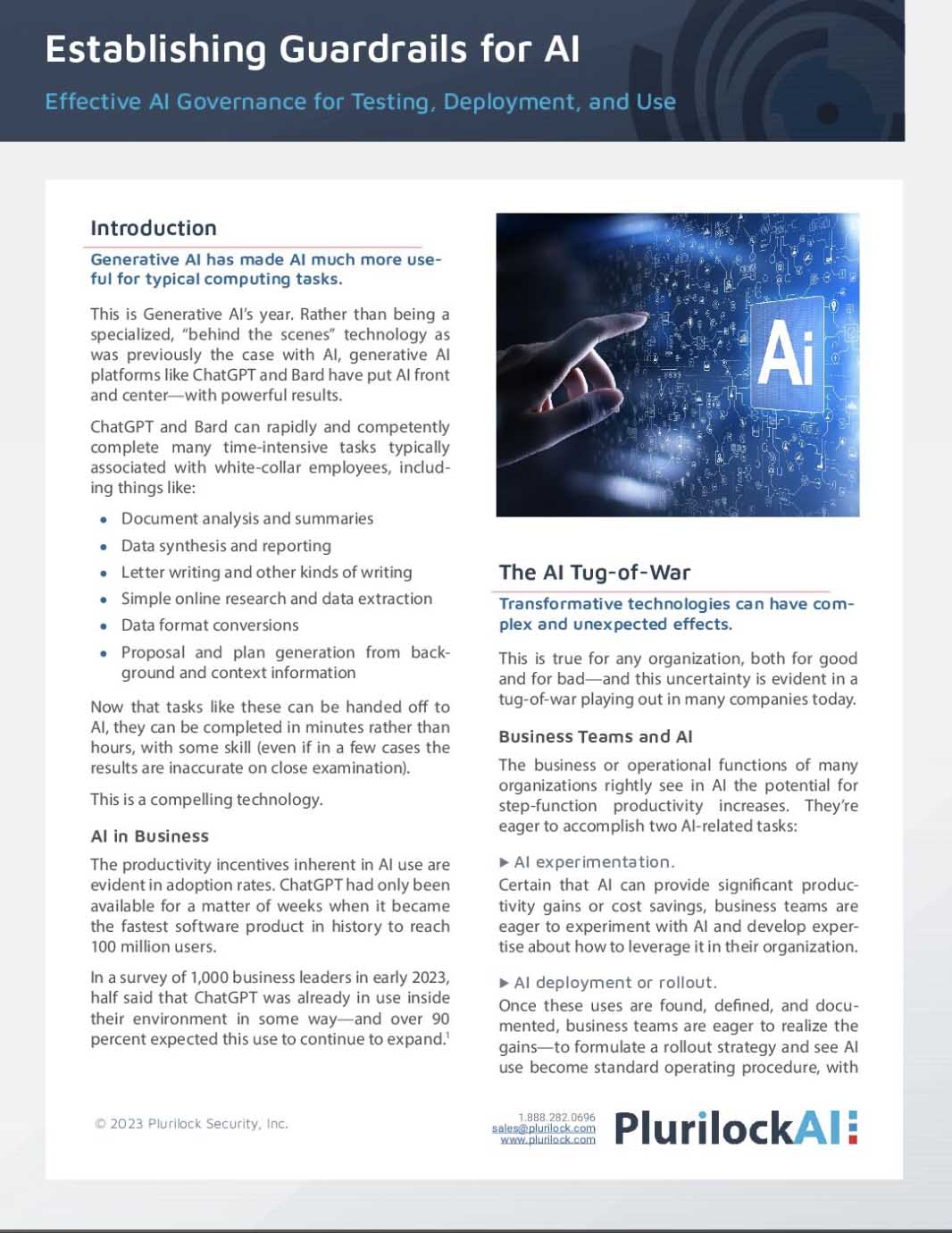
Establishing Guardrails for AI Whitepaper