Cybersecurity Reference > Glossary
What is a Plan of Action and Milestones (POA&M)?

This structured framework identifies security weaknesses, assigns responsibility for their resolution, establishes timelines for completion, and monitors progress toward achieving compliance with security standards and regulations. POA&Ms serve as critical management tools in cybersecurity governance, particularly within government agencies and organizations following frameworks like NIST or FISMA.
Each entry typically includes the vulnerability description, its risk level, assigned owner, planned corrective actions, resource requirements, and milestone dates for completion. The document creates accountability by clearly defining who is responsible for addressing each security gap and when remediation activities should be completed.
These plans are living documents that require regular updates as vulnerabilities are discovered, remediated, or re-prioritized based on changing risk assessments. POA&Ms enable organizations to systematically approach cybersecurity improvements, ensure compliance with regulatory requirements, and provide transparency to stakeholders about security posture and remediation efforts.
Origin
Before this standardization, organizations handled vulnerability tracking inconsistently, often using ad hoc spreadsheets or informal tracking methods that made cross-agency coordination difficult. The Office of Management and Budget (OMB) and the National Institute of Standards and Technology (NIST) developed specific guidance for POA&M structure and maintenance as part of the broader Risk Management Framework.
While the term and formal structure originated in government contexts, private sector organizations gradually adopted similar approaches, particularly those working with federal contracts or operating in heavily regulated industries. The evolution of POA&Ms reflects a broader shift toward systematic, documented cybersecurity management rather than reactive, undocumented responses to security issues.
Why It Matters
The document provides essential visibility to leadership and auditors, answering the fundamental question: what security problems do we have, and what are we doing about them? This transparency becomes particularly important during compliance audits, where assessors expect to see not just current security controls but evidence of how organizations handle identified gaps.
The living nature of POA&Ms also forces regular reassessment of priorities as new threats emerge or business contexts change. A vulnerability that seemed low-priority six months ago might become critical as attack patterns evolve. The structured format facilitates communication between technical teams who discover vulnerabilities and executives who allocate resources for remediation, bridging a gap that often leads to security failures.
The Plurilock Advantage
We help organizations build POA&Ms that drive real security improvements rather than becoming stale administrative documents. Our team mobilizes quickly to assess current security posture, identify gaps, and establish realistic timelines with clear accountability—turning vulnerability management into a strategic advantage rather than an audit burden.
.
Need Help Creating Your POA&M?
Plurilock's compliance experts can guide you through developing comprehensive action plans.
Get POA&M Support → Learn more →Downloadable References

Sample Governance Policy for AI Use
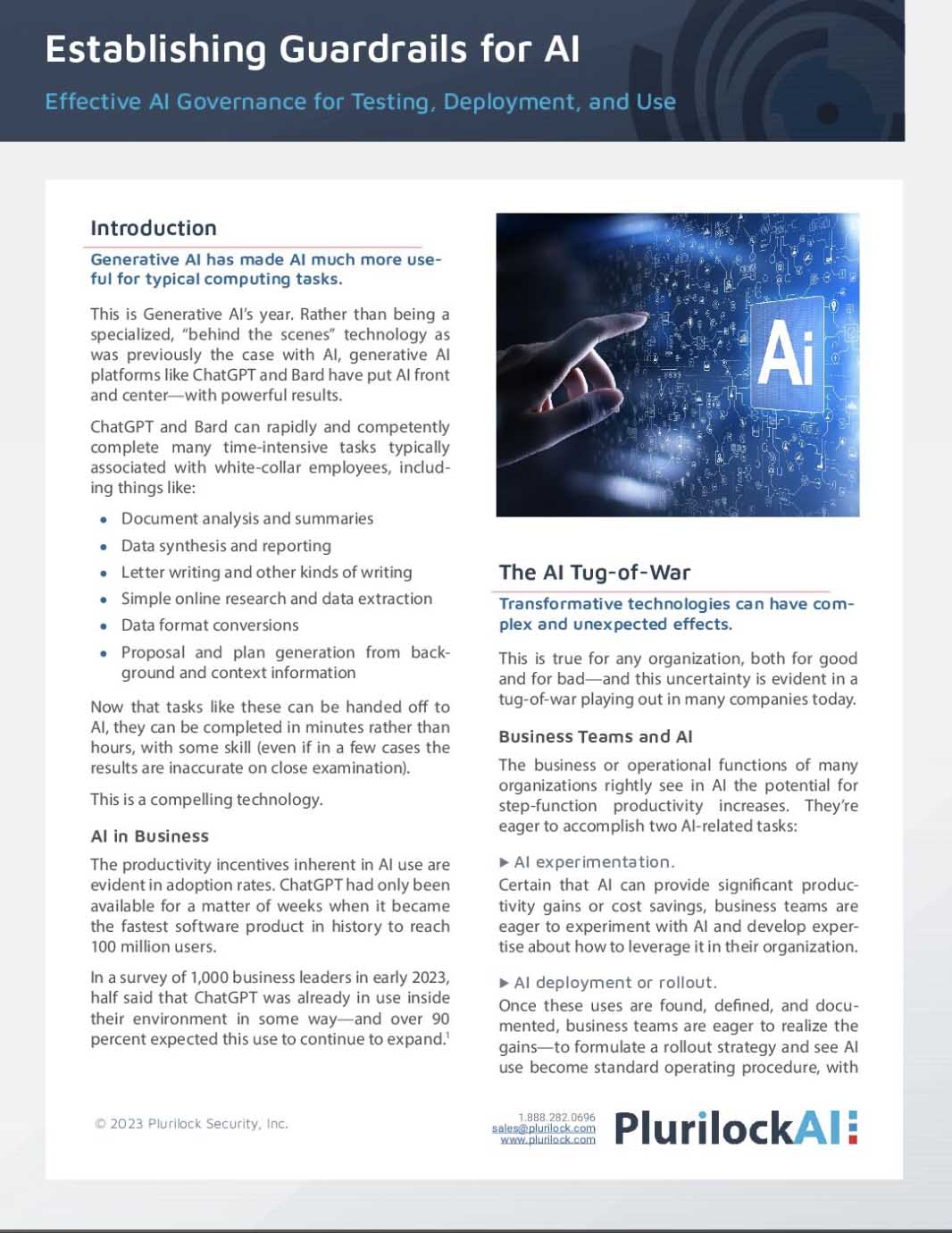
Establishing Guardrails for AI Whitepaper