
Cybersecurity Reference > Glossary
What is Post-Breach Assurance?





Rather than treating a breach as a catastrophic endpoint, this approach recognizes that sophisticated attackers often establish persistence before anyone notices. The strategy shifts focus from pure prevention to continuous verification—monitoring for signs of attacker presence, lateral movement, and data exfiltration even after initial defenses have been bypassed.
The technical implementation involves several layers working together. Behavioral analytics establish baselines for normal user and system activity, flagging deviations that might indicate compromise. Endpoint detection watches for suspicious process behavior, unauthorized access attempts, and anomalous network connections. Network segmentation limits how far an attacker can move laterally, while continuous authentication verifies identity throughout a session rather than trusting a single login event. These systems generate alerts that feed into threat hunting operations, where analysts investigate potential indicators of compromise before they escalate into full-scale incidents.
What makes post-breach assurance different from traditional incident response is the assumption of ongoing risk. Instead of waiting for a confirmed breach to trigger action, these capabilities run constantly, reducing the window between initial compromise and detection—what's known as dwell time.
Origin
The shift accelerated after several watershed incidents demonstrated that even well-defended organizations could be compromised. Security teams began adopting an "assume breach" mentality, influenced partly by the growing sophistication of nation-state actors and organized cybercrime groups. The 2013 Target breach, where attackers maintained network access for weeks while exfiltrating customer data, became a case study in why detection and response mattered as much as prevention.
By the mid-2010s, this thinking had formalized into frameworks and products. The MITRE ATT&CK framework, released in 2015, provided a systematic way to understand post-exploitation tactics, giving defenders a common language for discussing what attackers do after initial access. Endpoint detection and response tools evolved to address these scenarios, moving beyond signature-based antivirus toward behavioral monitoring that could spot novel techniques.
Why It Matters
The stakes have escalated because dwell time directly correlates with damage. Ransomware operators spend weeks mapping networks and identifying backup systems before deploying encryption. Data thieves gradually exfiltrate sensitive information to avoid triggering volume-based alerts. Nation-state actors establish persistent access for long-term espionage. The longer they remain undetected, the more thorough their compromise becomes.
Regulatory frameworks increasingly expect organizations to demonstrate detection capabilities, not just preventive controls. Cyber insurance underwriters ask specific questions about monitoring tools, incident response procedures, and mean time to detection. Proving that you can identify and contain breaches quickly has become as important as showing strong perimeter defenses. For organizations handling sensitive data or operating critical infrastructure, post-breach assurance isn't optional—it's the difference between a contained incident and a catastrophic compromise that makes headlines.
The Plurilock Advantage
We deploy behavioral analytics, endpoint monitoring, and network visibility tools as integrated systems rather than disconnected products.
When our team identifies potential compromise, we mobilize investigation and containment in hours, not days—because in post-breach scenarios, speed determines whether you're dealing with a contained incident or a full-scale crisis.
.
Need Post-Breach Recovery Guidance?
Plurilock's incident response experts help organizations rebuild security and restore stakeholder confidence.
Get Recovery Support → Learn more →Downloadable References
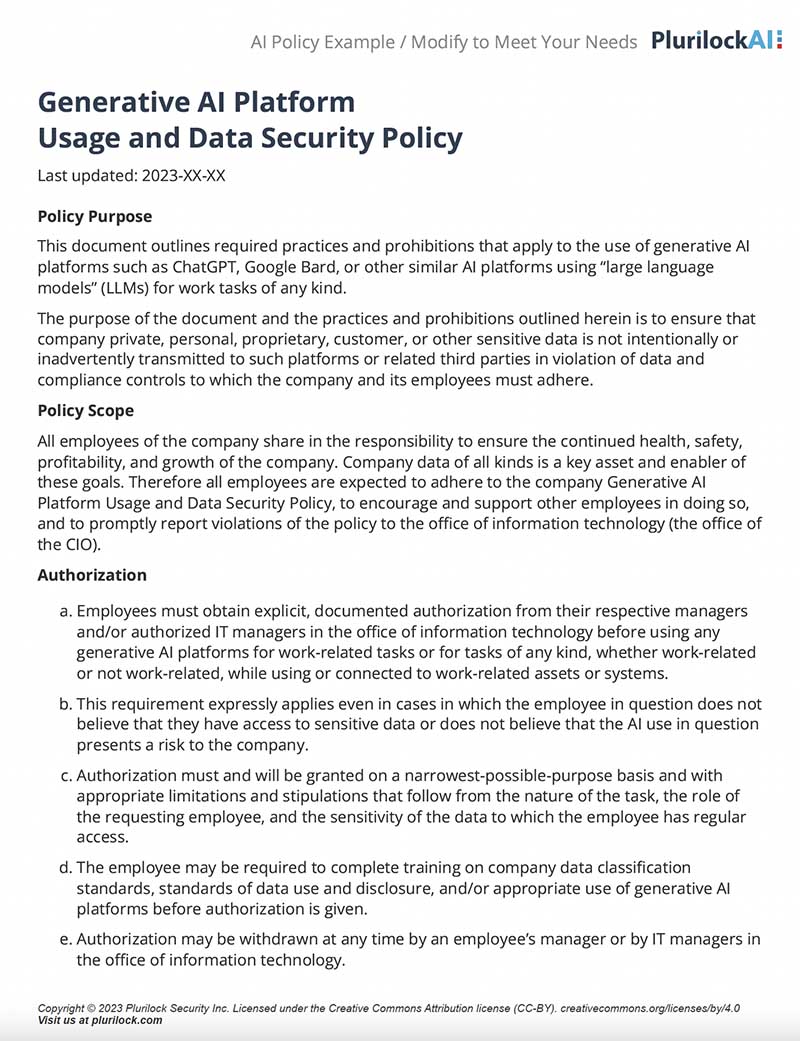
Sample Governance Policy for AI Use
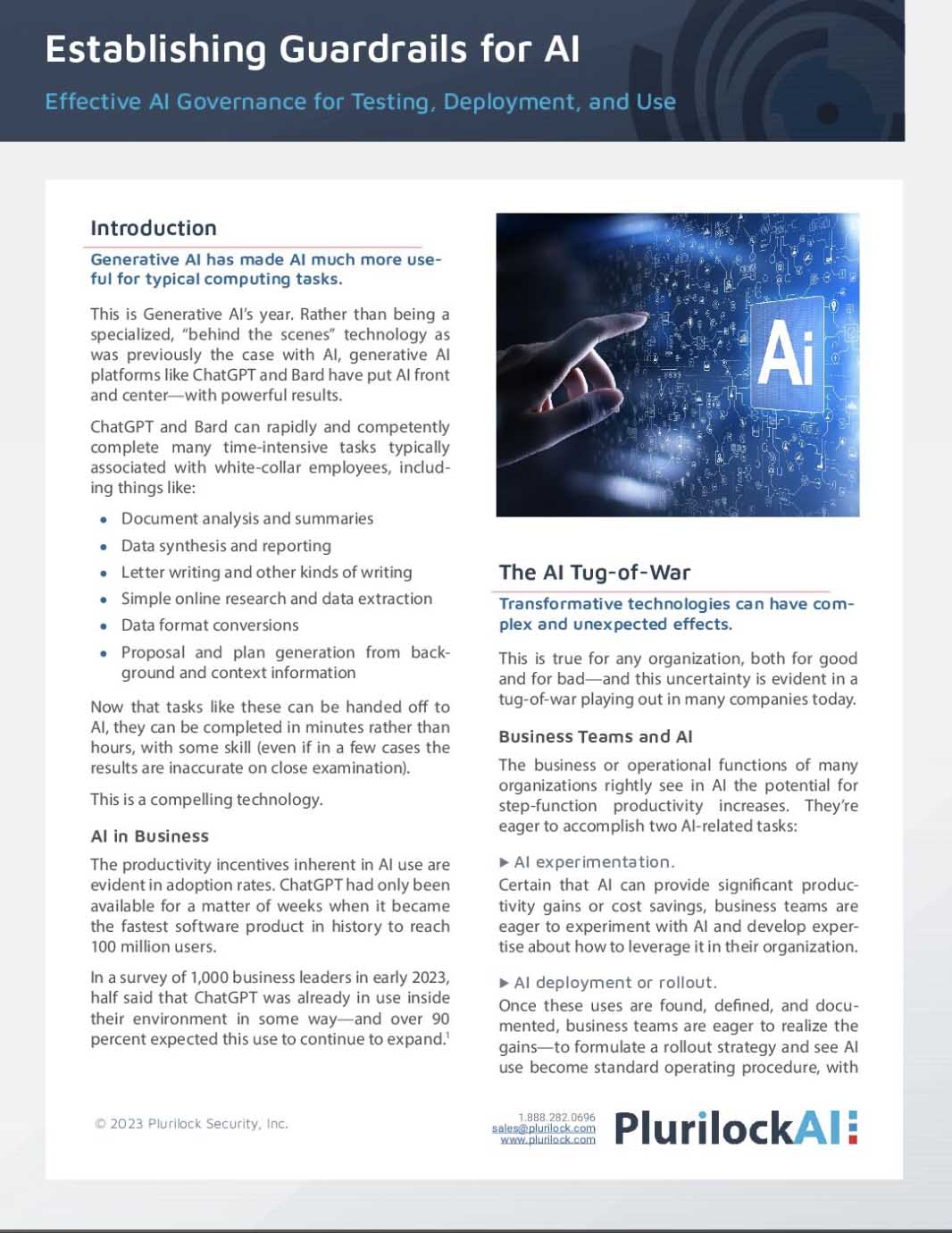
Establishing Guardrails for AI Whitepaper