Cybersecurity Reference > Glossary
What is Red Teaming?





Unlike traditional penetration testing, red teaming takes a broader, more adversarial approach that tests not just technical systems but also physical security, social engineering vulnerabilities, and human factors across the entire organization.
Red teams typically operate with minimal information about the target environment, mimicking how actual attackers would approach the organization. They might attempt to breach perimeter defenses, compromise endpoints, escalate privileges, move laterally through networks, and exfiltrate data—all while remaining undetected by the organization's security team (often called the "blue team"). The exercise duration can range from weeks to months, allowing red teams to employ sophisticated, multi-stage attack scenarios that reflect advanced persistent threats.
The goal extends beyond identifying technical vulnerabilities to evaluating the effectiveness of security processes, incident response procedures, and overall security awareness. Red teaming provides organizations with realistic insights into their security posture from an attacker's perspective, helping identify gaps that traditional security assessments might miss and ultimately improving their ability to detect, respond to, and prevent genuine cyber threats.
Origin
The cybersecurity community adapted red teaming concepts in the 1990s and early 2000s as networks became more complex and traditional security testing showed its limitations. Early adopters were mostly government agencies and defense contractors who recognized that sophisticated adversaries required equally sophisticated testing methods. The approach gained momentum after several high-profile breaches demonstrated that organizations with strong technical defenses could still fall victim to attacks that exploited human vulnerabilities or combined multiple attack vectors.
Over time, red teaming evolved from simple adversarial testing to comprehensive assessments that mirror real threat actor behavior. The practice matured alongside the broader shift in cybersecurity thinking—from perimeter defense to assume-breach mentality—and now incorporates elements like social engineering, physical security testing, and supply chain attacks that reflect how modern adversaries actually operate.
Why It Matters
Organizations often discover during red team exercises that their impressive security tools aren't configured properly, their incident response procedures break down under pressure, or their staff inadvertently helps attackers without realizing it. These insights are nearly impossible to gain from compliance audits or standard penetration tests. A red team might reveal that while your firewall blocks external threats effectively, an attacker who gains initial access through a phishing email can move freely through internal networks for weeks without detection.
The exercise also tests whether your security operations center can actually detect and respond to threats in real time, not just in theory. Many organizations learn that their detection capabilities have significant blind spots or that communication between security teams and other departments isn't as effective as they assumed. This real-world validation helps prioritize security investments and identify which defensive improvements will actually make a difference when a genuine attack occurs.
The Plurilock Advantage
Where other providers take months to mobilize, we can often spin up in days because we're practitioners who solve problems, not process managers who schedule meetings.
Our adversary simulation services deliver realistic insights into your actual security posture, not just a list of theoretical vulnerabilities. We help you understand where you're truly at risk and what to fix first.
.
Ready to Test Your Defenses?
Plurilock's red teaming services simulate real-world attacks to strengthen your security posture.
Schedule a Red Team Exercise → Learn more →Downloadable References
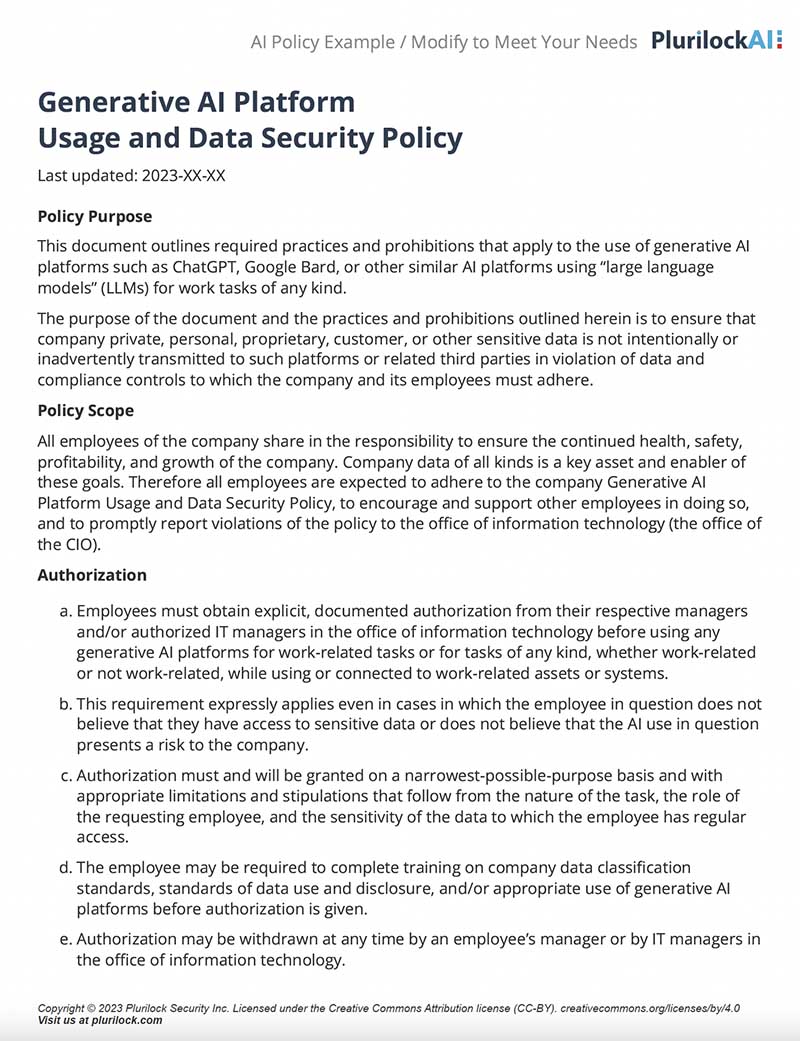
Sample Governance Policy for AI Use

Establishing Guardrails for AI Whitepaper