Cybersecurity Reference > Glossary
What is Security Awareness Training?





These programs typically cover topics like phishing identification, password security, social engineering tactics, safe browsing practices, and incident reporting procedures. Effective training goes beyond one-time presentations to include ongoing education through simulated phishing exercises, interactive modules, and regular updates about emerging threats. The goal is to transform employees from potential security vulnerabilities into an organization's first line of defense against cyberattacks.
Research consistently shows that human error contributes to the majority of successful cyberattacks, making security awareness training a critical component of any comprehensive cybersecurity strategy. Organizations that implement regular training programs typically see significant reductions in successful phishing attempts and other social engineering attacks. Modern programs often incorporate gamification elements, real-world scenarios, and measurable outcomes to increase engagement and retention. Many also provide role-specific training, recognizing that executives, IT staff, and general employees face different types of security risks and require tailored educational approaches.
Origin
The real shift came in the 2000s when phishing attacks became widespread and expensive. Organizations realized that technical controls alone couldn't stop threats that exploited human psychology. This period saw the development of simulated phishing campaigns and more sophisticated training platforms. The 2010s brought increasing regulatory requirements around security awareness, with frameworks like NIST and ISO explicitly calling for documented training programs.
Today's approach reflects a maturation of the field. Instead of compliance checkbox exercises, modern security awareness training focuses on behavioral change and measurable risk reduction. The rise of remote work, cloud services, and sophisticated social engineering tactics has pushed programs to become more frequent, targeted, and interactive than their predecessors.
Why It Matters
The threat landscape has made this even more critical. Attackers use AI to craft convincing phishing emails, deepfakes to impersonate executives, and psychological manipulation refined over millions of attempts. They know which tactics work on which types of employees and adjust accordingly. An untrained workforce facing these threats is a liability that technical controls can't fully compensate for.
Beyond preventing breaches, effective training changes organizational culture. When employees understand not just what to do but why it matters, they become active participants in security rather than obstacles to bypass. They report suspicious activity, question unusual requests, and make security-conscious decisions in ambiguous situations. This cultural shift often catches threats that automated systems miss and creates resilience that persists even as attack methods evolve.
The Plurilock Advantage
We combine assessment with education, showing people exactly how they might be compromised rather than asking them to imagine it.
Our team includes former intelligence professionals who understand how attackers actually think and operate. When we design training and testing programs, we're drawing on experience that goes far beyond textbook scenarios, delivering outcomes that measurably reduce your organization's human attack surface.
.
Need Better Employee Security Awareness?
Plurilock's comprehensive training programs help organizations build stronger human security defenses.
Start Training Today → Learn more →Downloadable References
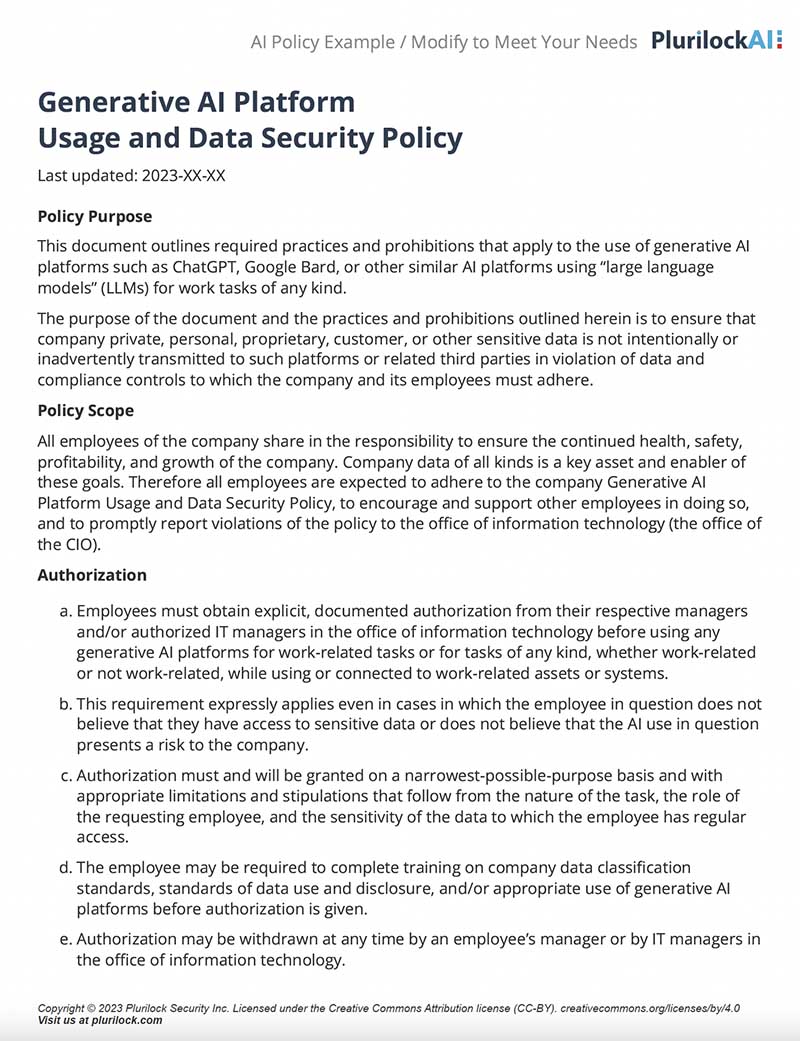
Sample Governance Policy for AI Use
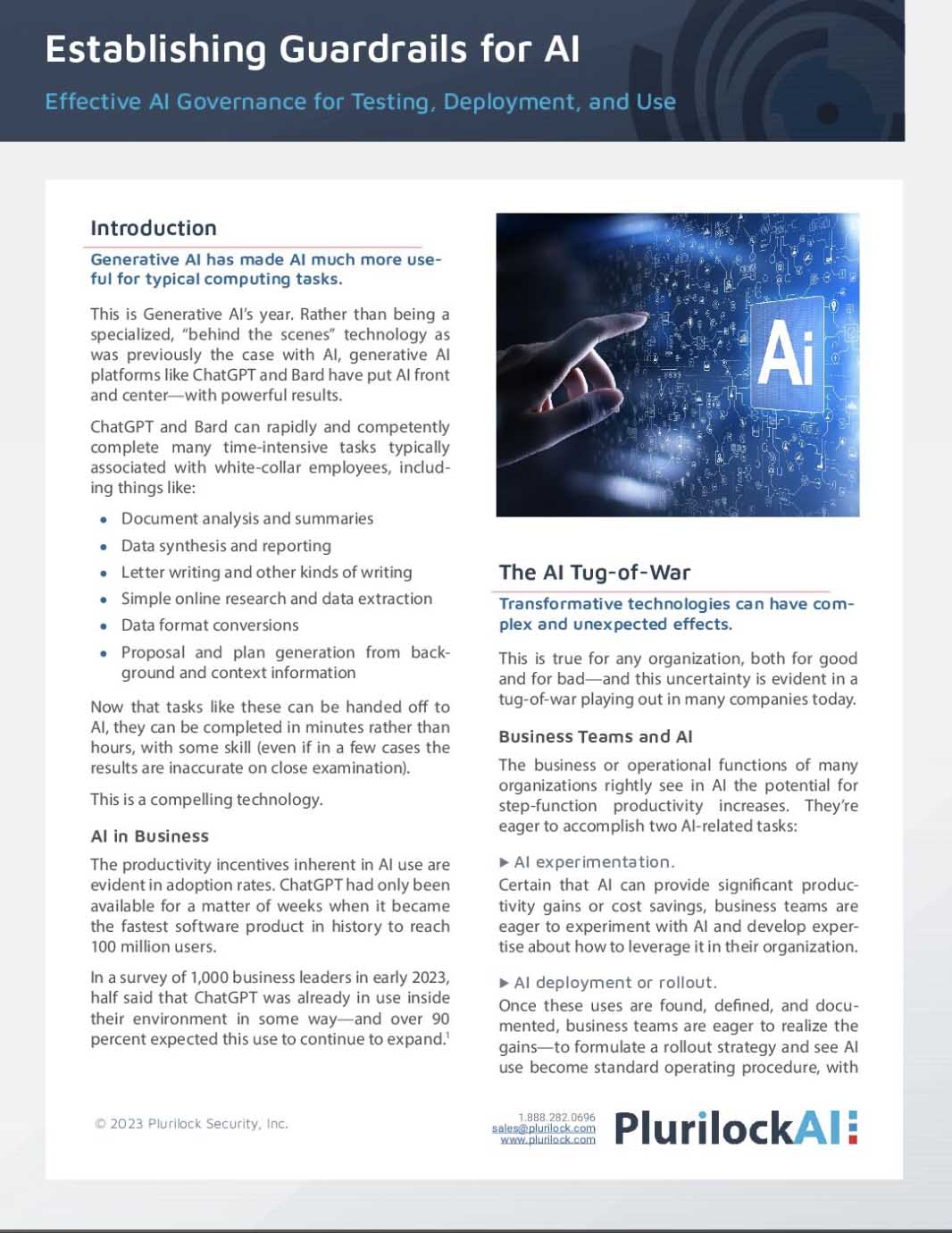
Establishing Guardrails for AI Whitepaper