Cybersecurity Reference > Glossary
What is a Security Control Bypass?





Think of it like someone discovering they can walk through your garden gate while your front door security system stays quiet. These bypasses exploit the gaps, assumptions, and blind spots in how security tools actually work rather than breaking through them head-on.
The methods vary widely. An attacker might tunnel data through DNS requests to slip past network filters, abuse trusted administrative tools that security software deliberately ignores, or exploit the seams between different security products that don't quite coordinate. Someone could use legitimate remote access software that endpoint protection treats as safe, or craft malicious payloads that signature-based detection simply doesn't recognize. The common thread is that defenders have put controls in place, and attackers have found the edges where those controls don't quite reach.
What makes bypasses particularly dangerous is that they work in the dark. Your security infrastructure keeps running, logs look normal, and alerts stay quiet while unauthorized access or data theft proceeds. The compromise might not surface until much later, when the damage is done. Defending against bypasses requires more than deploying tools—it demands testing those tools from an adversary's perspective, watching for behavior that looks wrong even when specific signatures don't match, and understanding that any single control will eventually have a workaround.
Origin
The 1990s brought firewalls and intrusion detection systems, which immediately spawned bypass techniques. Attackers learned to tunnel traffic through allowed protocols, fragment packets to evade signature matching, or time their activities to avoid detection thresholds. The pattern was established: every new security control eventually faced bypass attempts.
By the 2000s, as security products proliferated, the gaps between them became exploitation opportunities. An attacker might be blocked by a firewall but could bypass endpoint protection, or vice versa. The rise of legitimate administrative tools created new bypass vectors—why develop custom malware when PowerShell or WMI could accomplish the same goals while being explicitly trusted by security software?
Today's bypass techniques reflect modern security architecture. Attackers exploit trust relationships in zero-trust implementations, abuse cloud service APIs that security tools can't inspect, or leverage machine learning systems' blind spots. The evolution continues: as defenses grow more sophisticated, so do the methods for working around them.
Why It Matters
The consequences are concrete. When ransomware operators bypass endpoint detection by abusing legitimate system tools, or when data exfiltration proceeds through DNS tunneling that network filters miss, the technical controls that were supposed to prevent these outcomes simply don't. Compliance frameworks and security audits often focus on whether controls exist rather than whether they can be circumvented, creating a false sense of security.
Modern attack chains routinely incorporate bypass techniques. Initial access might evade email security, lateral movement might abuse trusted administrative channels, and exfiltration might use sanctioned cloud services. Each step bypasses a different control, and the cumulative effect is that traditional detection fails. This reality drives the shift toward behavioral detection and zero-trust principles, though these too have bypass methods.
The challenge for defenders is that you can't simply buy your way out of bypass risk. Every control has limitations, and attackers are professionally motivated to find them. Effective security requires understanding where your controls fail, testing them adversarially, and building detection that doesn't depend on any single layer working perfectly.
The Plurilock Advantage
Our team includes former intelligence professionals and offensive security specialists who understand bypass techniques intimately because they've developed and countered them in high-stakes environments. We test not just individual controls but the seams between them, revealing where layered defenses still leave openings. When we find bypasses, we help implement detection and response capabilities that catch adversary behavior even when specific controls are circumvented—moving you beyond relying on any single layer of defense.
.
Need Help Preventing Security Control Bypass?
Plurilock's security assessments identify weaknesses before attackers can exploit bypass vulnerabilities.
Request Security Assessment → Learn more →Downloadable References
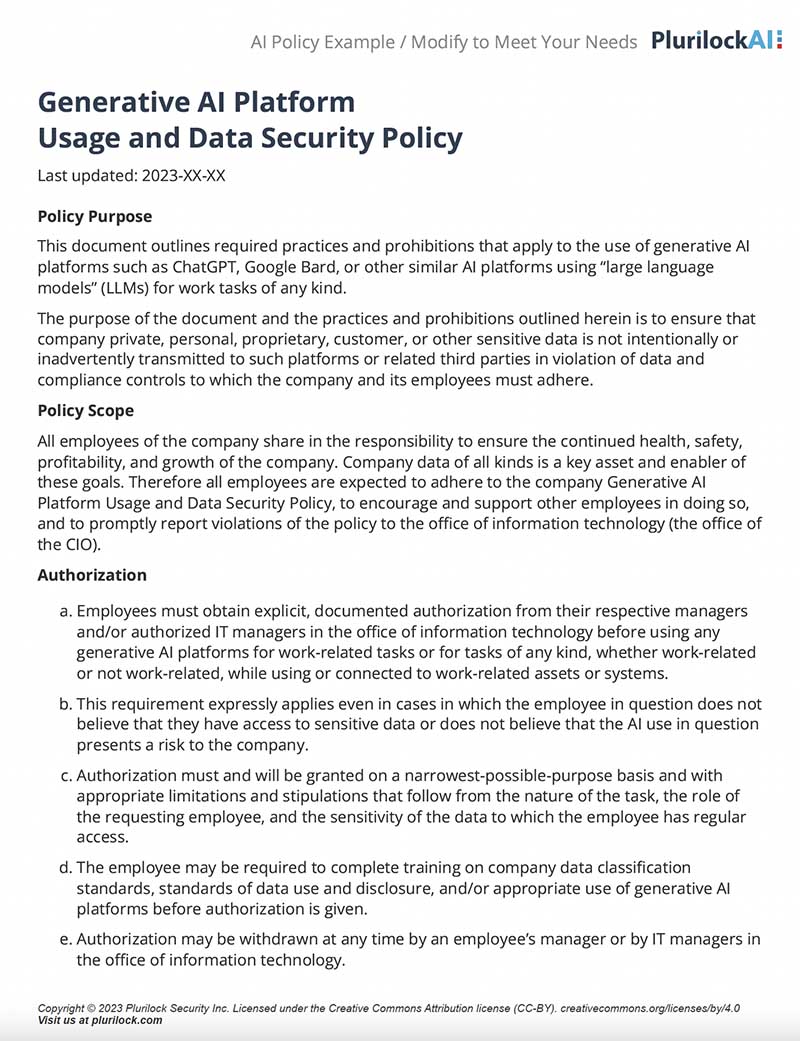
Sample Governance Policy for AI Use

Establishing Guardrails for AI Whitepaper