Cybersecurity Reference > Glossary
What is Single Sign-on (SSO)?




SSO has become more important in recent years as the number of systems requiring login over the course of day-to-day work has rapidly increased for most users.
In work environments without SSO capability, employees spend a growing amount of time embroiled in extended authentication flows and are faced with what has become an insurmountable list of credentials to remember. In that sense, SSO workflows are similar to, but likely both more secure and lower in friction than, password manager applications.
SSO works by enabling applications and systems to trust dedicated authentication servers to verify user identities and to provide authentication tokens confirming that this has occurred. Once the user has authenticated to such a server, any application or system that trusts it will be provided proof that the user has already authenticated and need not be prompted again. This eliminates the "serial sign-on" workday experience that increasingly vexes today's organizations and their employees.
Origin
The approach gained serious momentum in the late 1990s and early 2000s with the rise of web-based applications. Security Assertion Markup Language (SAML) emerged in 2002 as a standardized protocol for exchanging authentication data between identity providers and service providers. This standardization mattered because it meant different vendors could implement SSO in compatible ways.
More recently, protocols like OAuth 2.0 and OpenID Connect have shifted how SSO works in cloud environments. These newer standards better suit mobile applications and API-driven architectures. The fundamental idea hasn't changed much—authenticate once, access many systems—but the technical implementation has evolved considerably to match how people actually work today, particularly as software moved from on-premises servers to cloud services.
Why It Matters
On the security front, forcing users to manage numerous passwords leads to predictable behaviors. People reuse passwords across systems, write them down, or choose weak ones they can easily remember. Each of these workarounds creates attack surface. A compromised password for one low-security system can suddenly grant access to critical infrastructure if that password has been reused. SSO reduces this risk by consolidating authentication into a single, properly secured identity provider that can enforce strong authentication policies uniformly.
The productivity angle is equally compelling. Studies suggest knowledge workers spend hours each month just logging into systems, resetting forgotten passwords, and waiting for IT support to restore access. This time adds up across an organization.
SSO also enables better security monitoring. When authentication happens through a centralized system, security teams can spot anomalies more easily—like impossible travel scenarios where someone logs in from two distant locations within minutes. This visibility gets fragmented when authentication happens independently across dozens of systems.
The Plurilock Advantage
We focus on implementations that balance security with usability, ensuring that SSO improves both your security posture and your employees' daily experience. Our identity and access management services can assess your current authentication landscape and design an SSO strategy that fits your actual environment, not just a textbook scenario.
.
Downloadable References
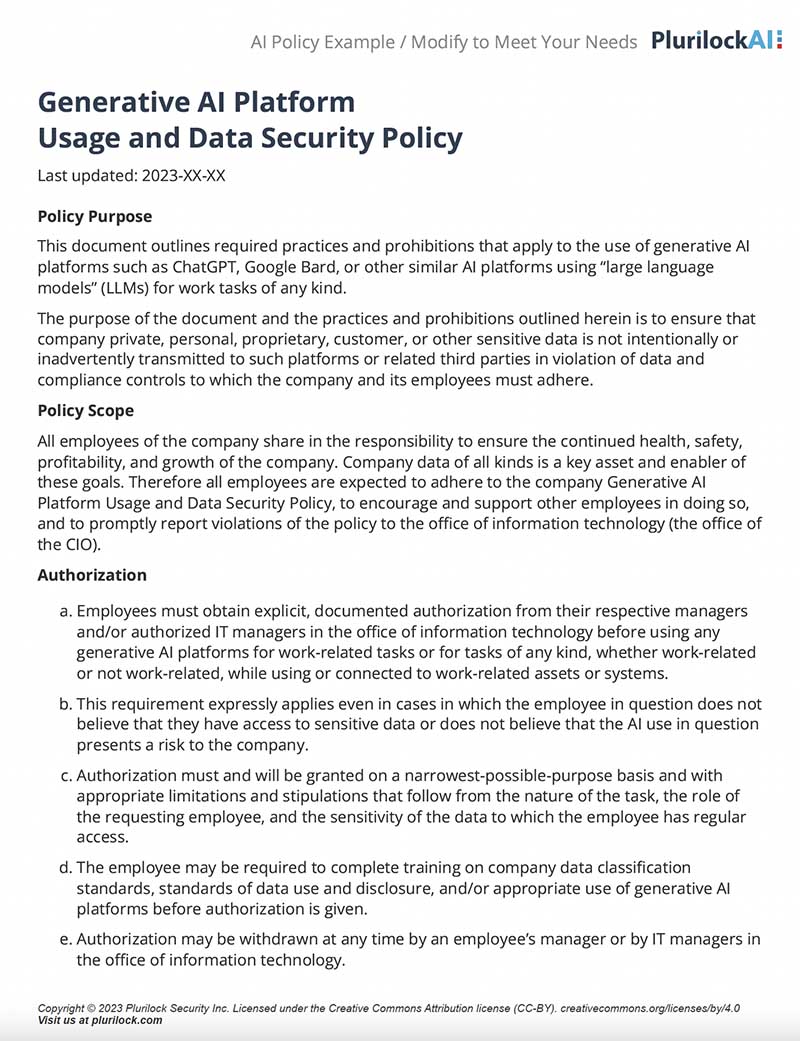
Sample Governance Policy for AI Use
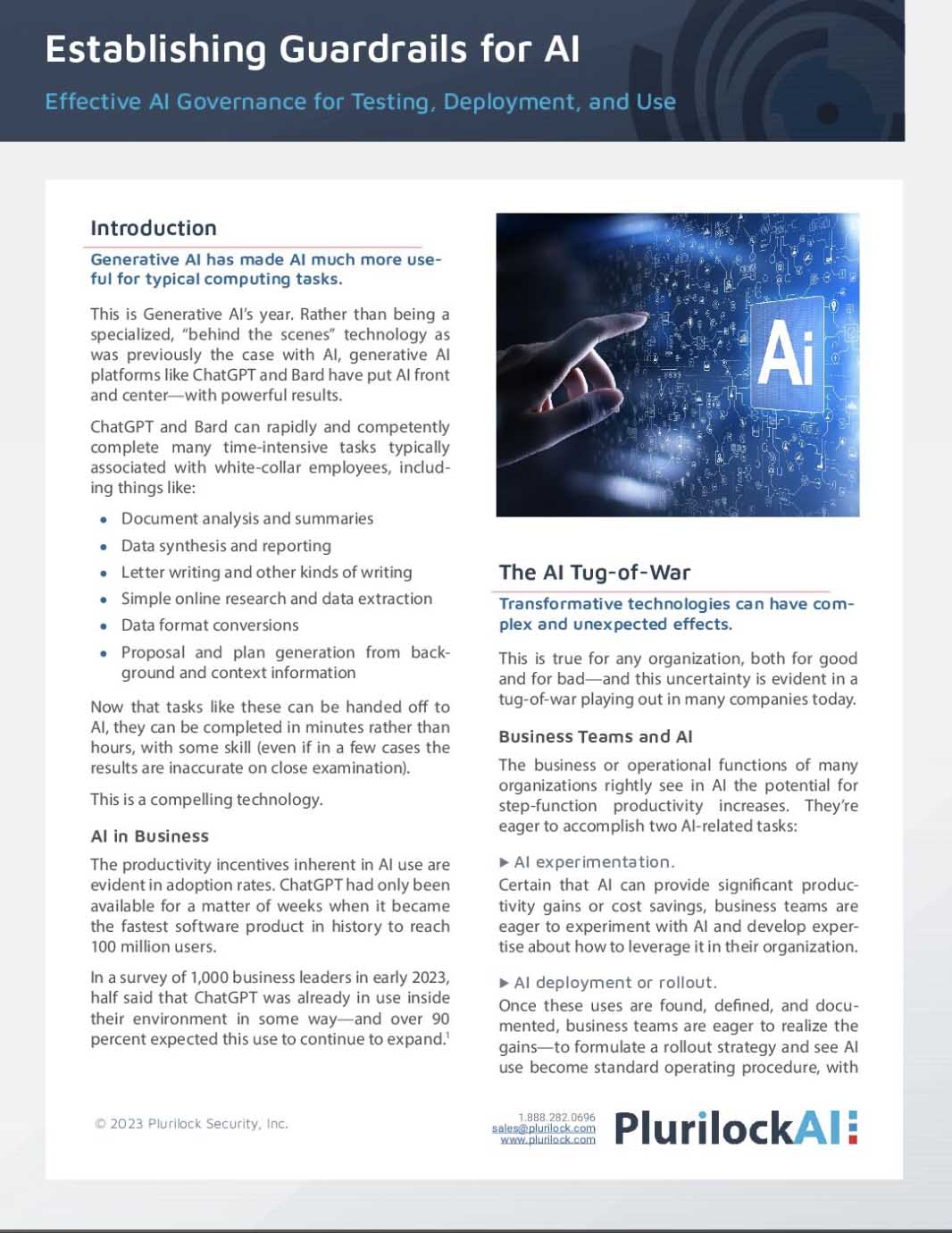
Establishing Guardrails for AI Whitepaper