
Cybersecurity Reference > Glossary
What is Threat Intelligence?

This strategic approach involves gathering data from various sources—including security vendors, government agencies, industry partners, and internal security systems—to understand the tactics, techniques, and procedures used by threat actors.
Effective threat intelligence transforms raw data into actionable insights that help organizations make informed security decisions. It typically includes indicators of compromise (IoCs), threat actor profiles, attack patterns, and contextual information about emerging threats. Organizations use this intelligence to enhance their defensive postures, prioritize security investments, and improve incident response capabilities.
Threat intelligence operates at different levels: strategic intelligence informs high-level business decisions, tactical intelligence supports security operations teams, and operational intelligence provides real-time awareness of immediate threats. The intelligence cycle involves planning, collection, processing, analysis, and dissemination phases.
Many organizations participate in threat intelligence sharing communities to benefit from collective knowledge and contribute their own findings. This collaborative approach strengthens the overall cybersecurity ecosystem by enabling faster threat detection and response across industries.
Origin
The formalization of cyber threat intelligence as a distinct discipline emerged in the early 2000s, driven by increasingly sophisticated attacks against government and corporate networks. The US military's development of the "kill chain" framework influenced how security professionals began analyzing attack stages and indicators. Around this time, security vendors started sharing threat data more systematically, recognizing that isolated organizations struggled to keep pace with evolving threats.
The mid-2010s saw a significant maturation of the field. Standardized frameworks like MITRE ATT&CK provided common language for describing adversary behavior. Information Sharing and Analysis Centers (ISACs) formed across various sectors, creating structured channels for threat data exchange. The shift from simple indicator sharing to contextual, analyzed intelligence marked the evolution from reactive detection to proactive defense. Today, threat intelligence has become an essential component of enterprise security programs, with specialized platforms and dedicated analyst roles standard in mature organizations.
Why It Matters
The volume and sophistication of threats have made threat intelligence practically essential rather than optional. Ransomware groups now operate as professional enterprises with established tactics. Nation-state actors conduct persistent campaigns against specific sectors. Supply chain attacks compromise trusted software used across thousands of organizations. No single company can observe and analyze all these threats alone. Intelligence sharing multiplies organizational awareness, letting smaller teams benefit from insights gathered across the entire security community.
The challenge lies in making intelligence actionable. Many organizations collect feeds that generate thousands of indicators daily but lack the context or processes to use them effectively. Quality matters more than quantity—understanding why a particular threat matters to your environment and what to do about it makes intelligence valuable. Integrating intelligence into security operations, from vulnerability management to incident response, turns information into protection.
The Plurilock Advantage
Our adversary simulation services apply real-world threat intelligence to test your defenses against the tactics actually being used by attackers targeting organizations like yours.
We help organizations move beyond collecting indicators to building intelligence-driven security programs that prioritize threats based on your specific risk profile. With practitioners who've worked at the highest levels of national security, we bring expertise in intelligence analysis that most consultancies simply don't have.
.
Need Advanced Threat Intelligence Solutions?
Plurilock's threat intelligence services provide actionable insights to strengthen your cybersecurity posture.
Get Threat Intelligence Now → Learn more →Downloadable References
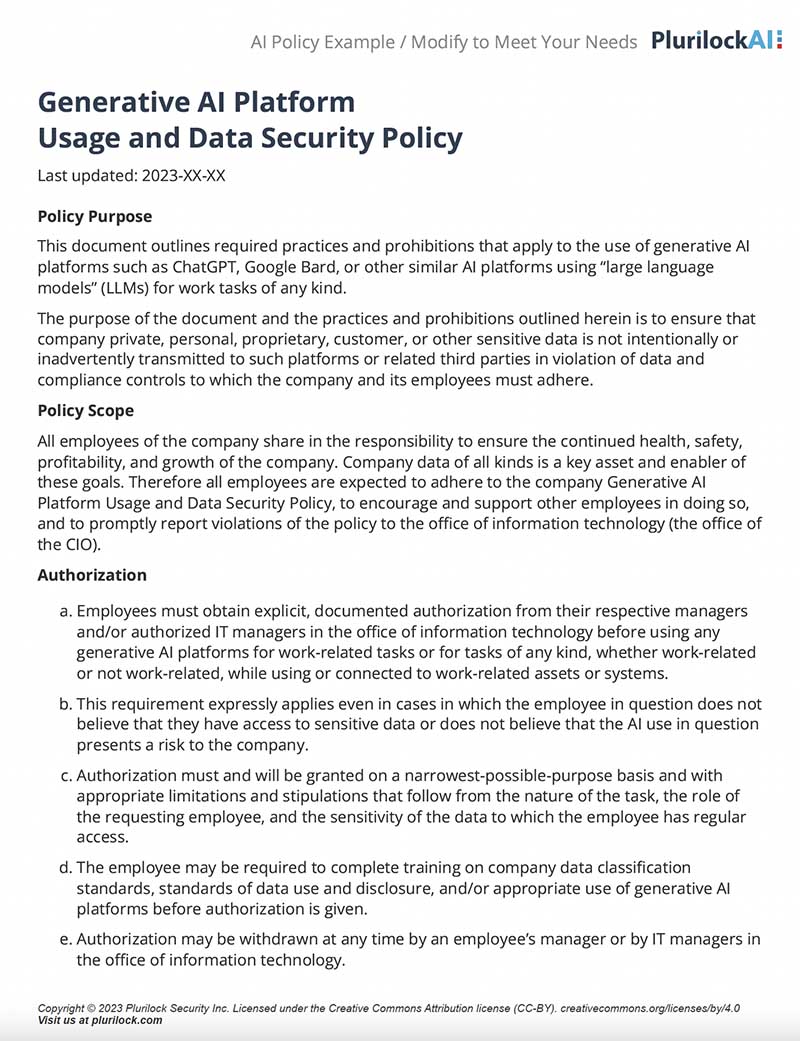
Sample Governance Policy for AI Use
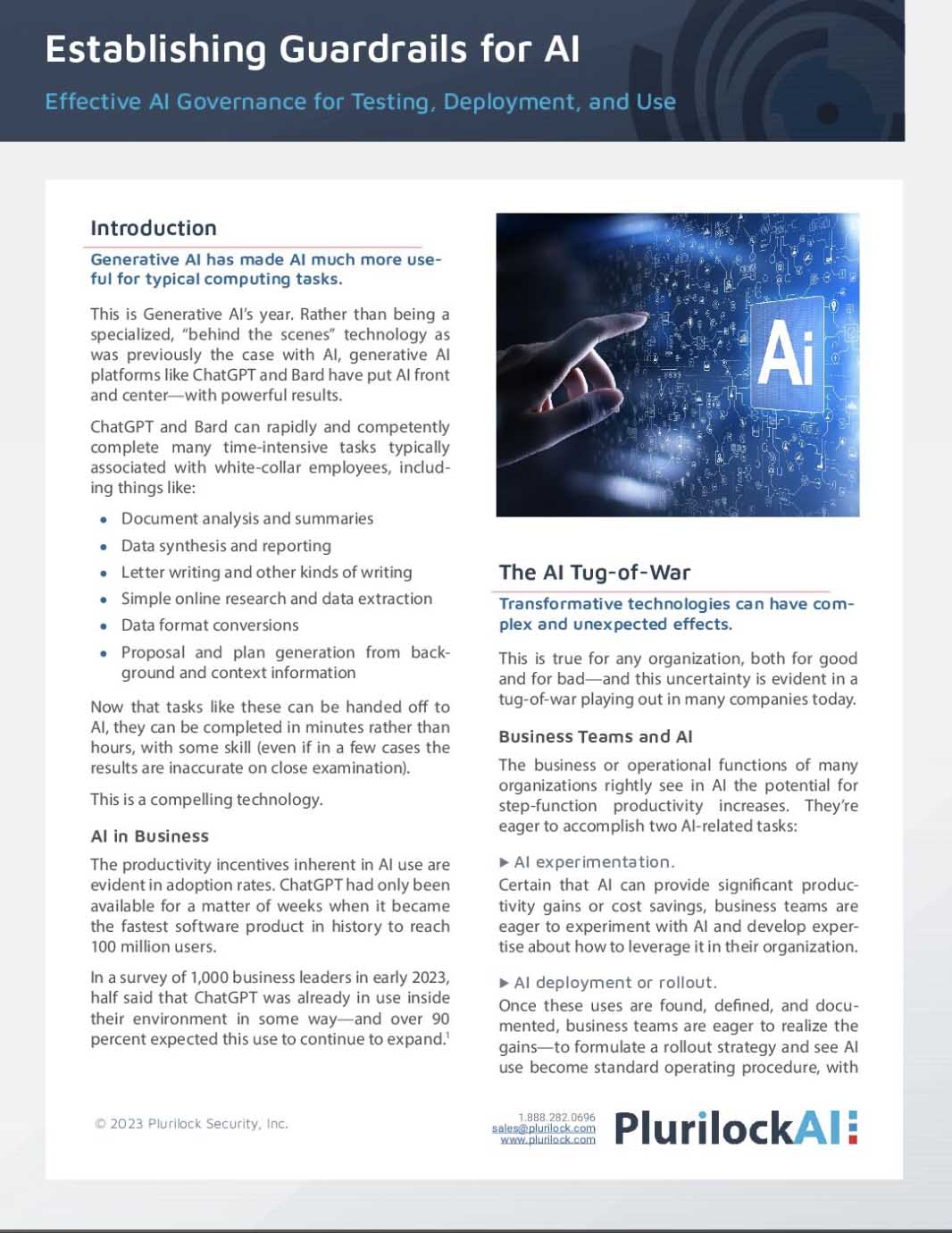
Establishing Guardrails for AI Whitepaper