Cybersecurity Reference > Glossary
What is Threat Signal Enrichment?





When your firewall flags suspicious traffic or your endpoint tool catches unusual behavior, the raw alert usually tells you very little—maybe an IP address, a file hash, or a vague description of what looked wrong. Enrichment layers on additional data from threat intelligence feeds, geolocation services, domain reputation databases, historical attack records, and other sources to turn that skeletal alert into something meaningful.
The difference matters because context separates noise from genuine threats. A basic alert about an unfamiliar IP address becomes far more actionable when enrichment reveals that IP has been linked to a known ransomware group, operates out of a jurisdiction notorious for cybercrime, and was flagged in three recent campaigns against organizations in your sector. That additional intelligence lets analysts prioritize their response, understand what they're dealing with, and act quickly rather than spending hours manually researching each alert. Modern security operations centers handle thousands of alerts daily, and enrichment platforms automate what would otherwise consume most of an analyst's time—pulling WHOIS records, checking sandbox analysis results, correlating indicators of compromise, and assembling a coherent picture of each potential threat.
Origin
As threat intelligence sharing matured—particularly after high-profile breaches demonstrated the value of collective defense—organizations began systematically cataloging indicators of compromise and attack patterns. Commercial threat intelligence feeds appeared, offering structured data about known malicious infrastructure, malware signatures, and threat actor behaviors. Security Information and Event Management (SIEM) systems evolved to correlate events across multiple tools, but the enrichment process remained largely manual until the 2010s.
The real shift came when APIs made it feasible to automatically query dozens of data sources in seconds. Platforms emerged that could ingest a raw alert, extract relevant indicators, query threat intelligence services and contextual databases, then return enriched information—all faster than a human could open a browser. This automation transformed enrichment from a luxury reserved for well-staffed operations into a standard capability that even small security teams could leverage to manage alert volume.
Why It Matters
Enrichment directly addresses the false positive problem that plagues security operations. Many legitimate activities trigger alerts based on behavioral anomalies or pattern matching, but contextual information often reveals these as benign. An employee accessing company resources from an unfamiliar location might trigger geographic anomaly alerts, but enrichment showing that location matches a known business travel destination changes the response entirely. This filtering lets analysts focus attention where it actually matters.
The speed advantage matters as much as the accuracy improvement. Attackers often move quickly once they establish initial access—minutes can separate successful containment from a full breach. Enrichment platforms deliver comprehensive threat context in seconds rather than the hours manual research requires, giving defenders a realistic chance to respond while attacks are still in early stages. In ransomware scenarios particularly, this time compression can determine whether an incident remains a manageable event or becomes an organization-wide catastrophe.
The Plurilock Advantage
We implement enrichment solutions that connect your existing security tools with relevant intelligence sources, then tune them to your specific environment and threat landscape.
Whether you need SOC operations support that includes sophisticated enrichment workflows or want to build internal capabilities, we focus on outcomes—faster response, fewer false positives, and security teams that spend time stopping threats rather than researching alerts.
.
Need Better Threat Context and Intelligence?
Plurilock's threat signal enrichment services provide deeper insights for stronger security decisions.
Enhance Your Threat Intelligence → Learn more →Downloadable References
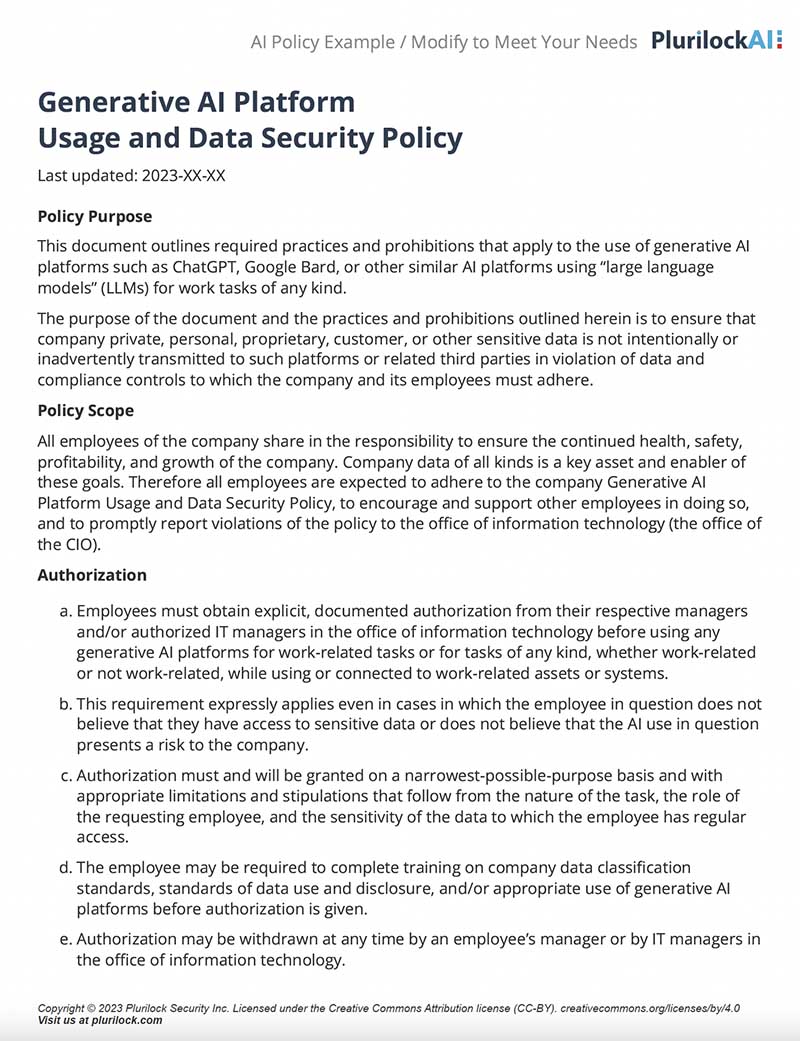
Sample Governance Policy for AI Use
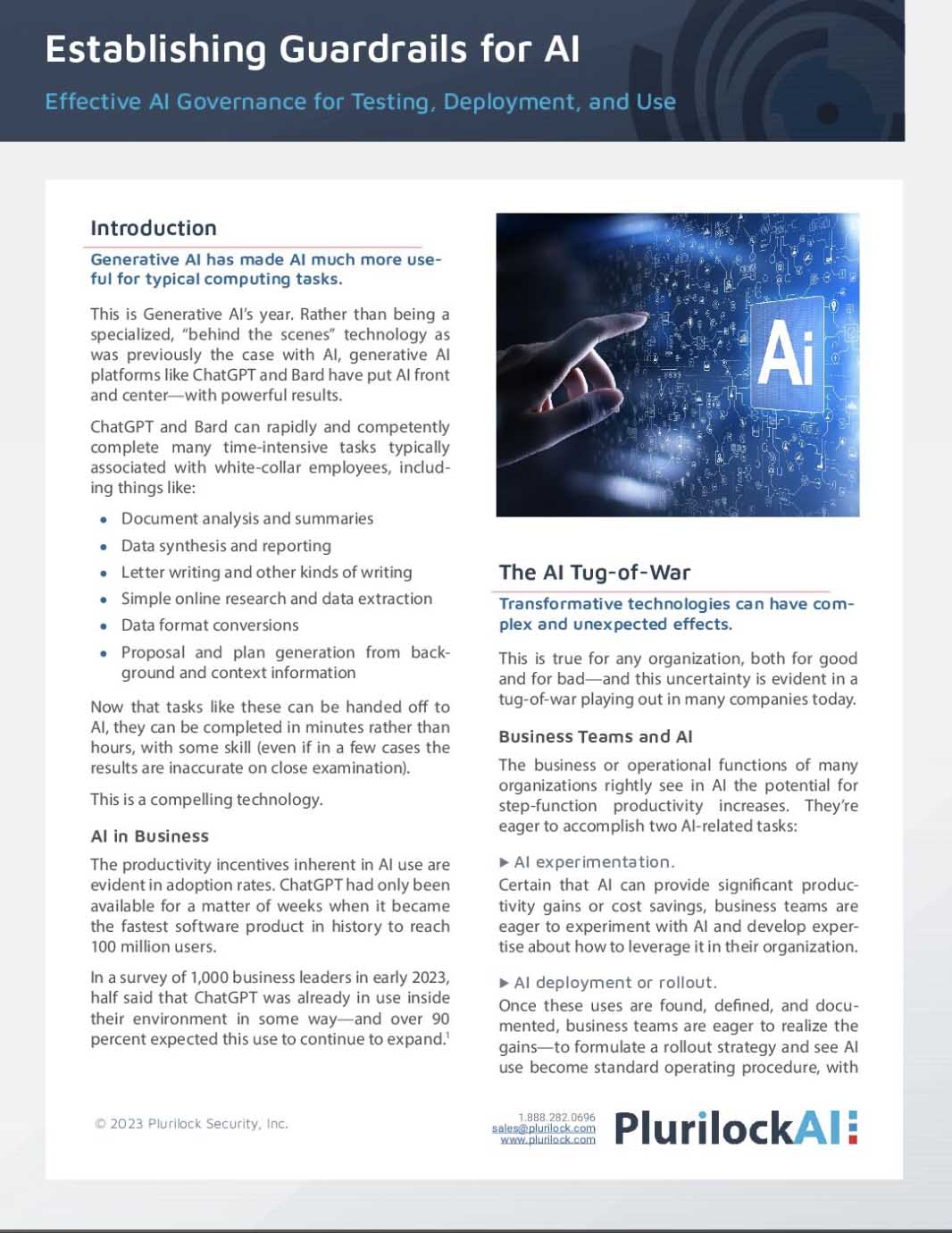
Establishing Guardrails for AI Whitepaper