Cybersecurity Reference > Glossary
What is Web Application Penetration Testing?





Unlike running an automated scanner and calling it done, this work combines tools with human judgment to find vulnerabilities that require context to understand. A skilled tester probes the application systematically—testing authentication mechanisms, session handling, input validation, business logic, and how the application interacts with databases and APIs.
The process typically follows established frameworks like the OWASP Testing Guide, but experienced testers adapt their approach based on what they find. They look for common issues like SQL injection and cross-site scripting, but also hunt for subtle flaws in how the application handles edge cases or implements business rules. Sometimes the most dangerous vulnerabilities come from chaining several minor issues together in ways that automated tools would never consider.
The result is a detailed report showing what's exploitable, how serious each issue is, and what to fix first. This matters because theoretical vulnerability scores don't always reflect real-world risk. An application might have a dozen medium-severity findings that don't matter much, and one low-rated issue that could actually compromise customer data. Good penetration testing reveals the difference.
Origin
The Open Web Application Security Project formed in 2001 and began documenting common vulnerability patterns, giving testers a shared vocabulary and methodology. As web frameworks matured and attack techniques became more sophisticated, the testing approaches evolved too. What started as fairly basic checks for SQL injection and directory traversal grew into comprehensive assessments covering everything from authentication bypass to XML external entity attacks.
The profession gained legitimacy as certifications emerged and companies realized that compliance requirements weren't enough. Automated scanning tools became more capable, which paradoxically made human expertise more valuable—the tools could find the obvious stuff, freeing skilled testers to hunt for complex logic flaws and novel attack chains. The rise of APIs and single-page applications added new dimensions to test, requiring testers to understand modern development patterns alongside traditional security principles.
Why It Matters
Modern applications are also more complex than they used to be. They integrate with third-party APIs, run partially in the browser, and often rely on intricate authentication flows. A payment processing workflow might involve a dozen microservices, and a flaw in how any two of them communicate could be exploitable. Testing needs to account for these architectural realities rather than treating the application as a monolithic block.
Regulatory frameworks increasingly expect organizations to test their applications before deployment and periodically afterward. But beyond compliance, there's a practical reason this matters: web applications are constantly targeted. Automated bots scan for known vulnerabilities within hours of public disclosure, and criminal groups actively hunt for logic flaws in high-value targets. Finding and fixing issues before they're exploited is considerably cheaper than dealing with a breach.
The Plurilock Advantage
We adapt our approach based on your application's architecture and business context, whether you're running a legacy monolith or a modern microservices deployment.
.
Need to Test Your Web App Security?
Plurilock's penetration testing services identify vulnerabilities before attackers exploit them.
Request Pen Testing Quote → Learn more →Downloadable References
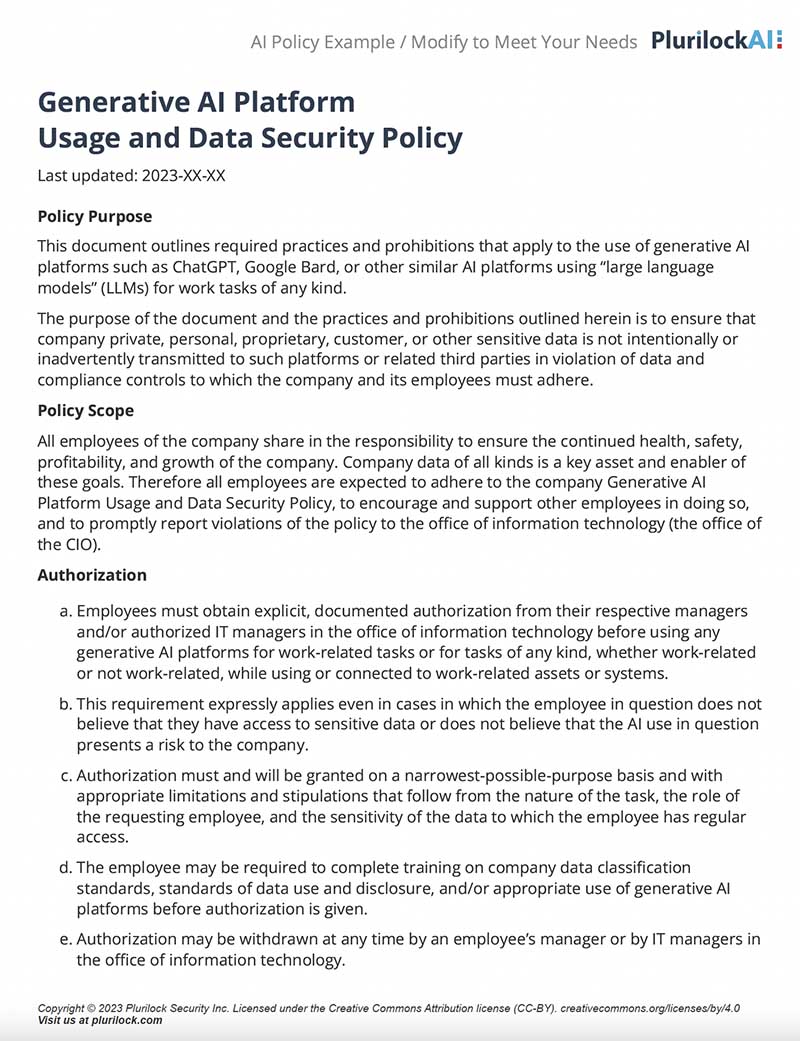
Sample Governance Policy for AI Use
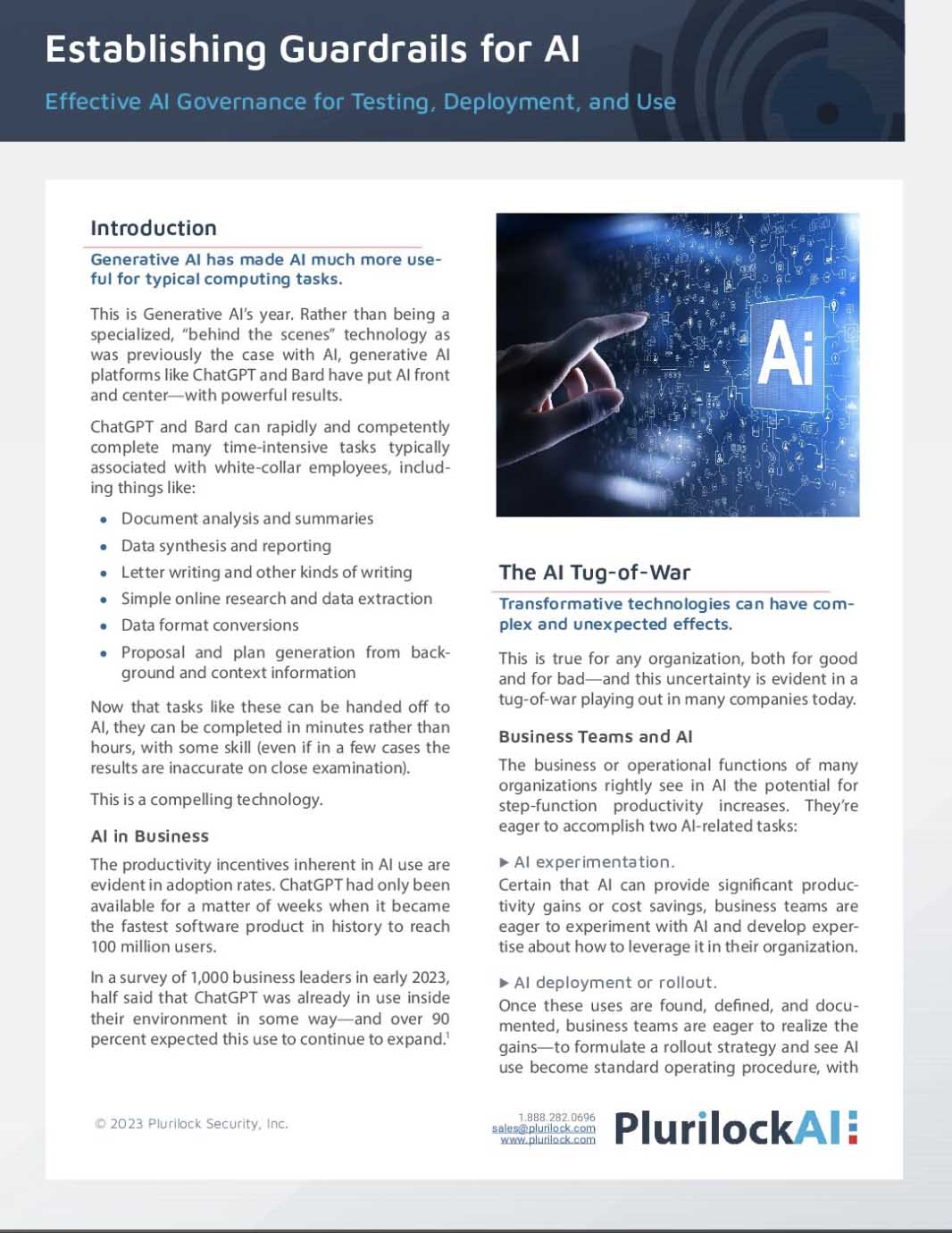
Establishing Guardrails for AI Whitepaper