Cybersecurity Reference > Glossary
What is Enterprise Risk Management (ERM)?





ERM provides a framework for systematically evaluating potential threats that could impact business objectives, operations, reputation, or financial performance, enabling leadership to make informed decisions about risk tolerance and resource allocation.
Unlike traditional risk management approaches that operate in silos, ERM takes a holistic view of risk across all departments, processes, and business units. This integrated perspective helps organizations identify interconnected risks that might otherwise go unnoticed, such as how a cybersecurity incident could simultaneously affect operations, compliance, and customer trust.
In the cybersecurity context, ERM frameworks incorporate information security risks alongside other business risks like market volatility, regulatory changes, and operational disruptions. This ensures that cybersecurity investments and strategies align with broader organizational priorities and that security incidents are evaluated in terms of their total business impact rather than just technical consequences. Effective ERM typically involves establishing risk appetite statements, implementing regular risk assessments, creating risk registers, and developing response strategies that may include risk acceptance, mitigation, transfer, or avoidance.
Origin
The 2004 release of the COSO Enterprise Risk Management framework marked a turning point, providing organizations with a structured methodology for integrated risk oversight. This came on the heels of major corporate scandals and the Sarbanes-Oxley Act, which pushed boards and executives to take a more active role in risk governance. ISO 31000 followed in 2009, offering an alternative international standard.
The evolution of ERM accelerated as organizations recognized that risks don't respect organizational boundaries. A seemingly minor IT security weakness could cascade into regulatory violations, operational failures, and reputational damage. This realization, combined with increasing regulatory pressure and stakeholder expectations, transformed ERM from a nice-to-have framework into a fundamental business discipline. Today's ERM practices have matured to encompass everything from geopolitical instability to climate risk, with cybersecurity playing an increasingly central role.
Why It Matters
Without ERM, cybersecurity often gets treated as a purely technical problem, leading to misaligned priorities and inadequate investment. A CISO might know exactly how vulnerable certain systems are, but struggle to convey why that matters to people who think in terms of revenue, market share, and shareholder value. ERM bridges this gap by quantifying cyber risks alongside other business risks and enabling meaningful comparisons.
The regulatory landscape increasingly demands this integrated approach. Frameworks like the SEC's cybersecurity disclosure rules and various data protection regulations require organizations to demonstrate that they're managing cyber risk at the enterprise level, not just in the IT department. ERM provides the governance structure and documentation to meet these requirements while actually improving an organization's risk posture rather than just checking compliance boxes.
The Plurilock Advantage
With expertise spanning technical testing, compliance frameworks, and executive advisory, we connect the dots between technical vulnerabilities and business consequences. Our rapid mobilization means you get actionable risk intelligence in days, not months of preliminary meetings.
.
Ready to Strengthen Your Risk Management Strategy?
Plurilock's enterprise risk management solutions help organizations identify, assess, and mitigate cybersecurity threats effectively.
Get Risk Management Consultation → Learn more →Downloadable References
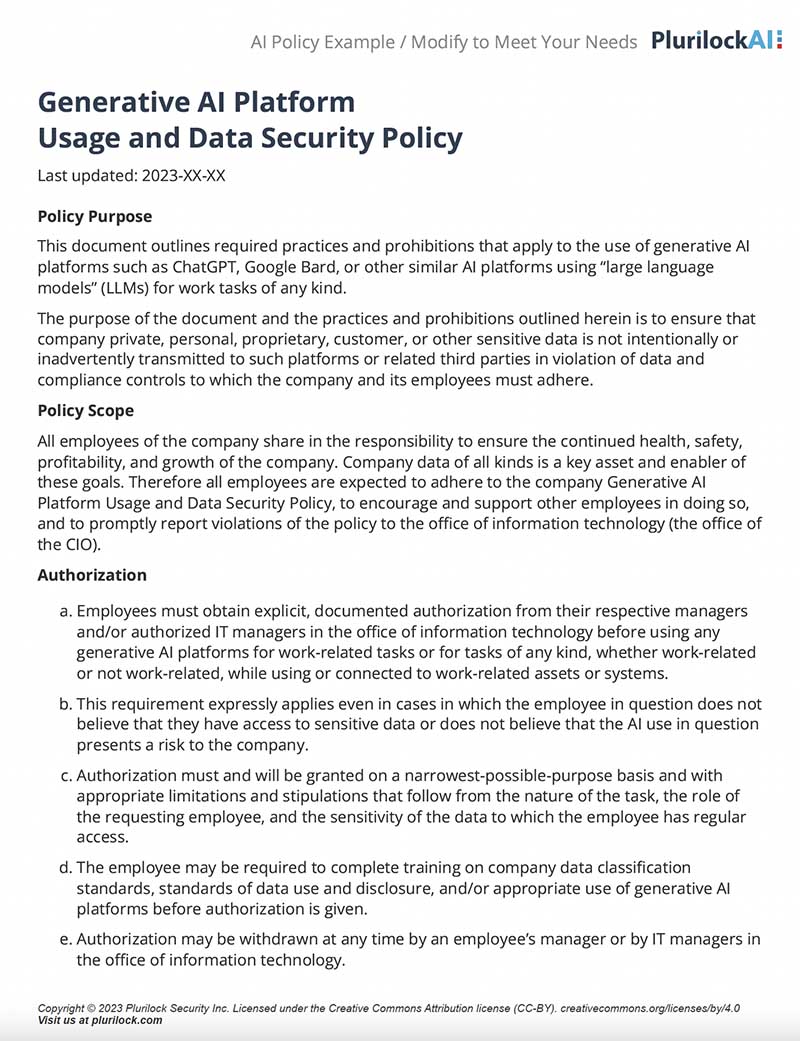
Sample Governance Policy for AI Use
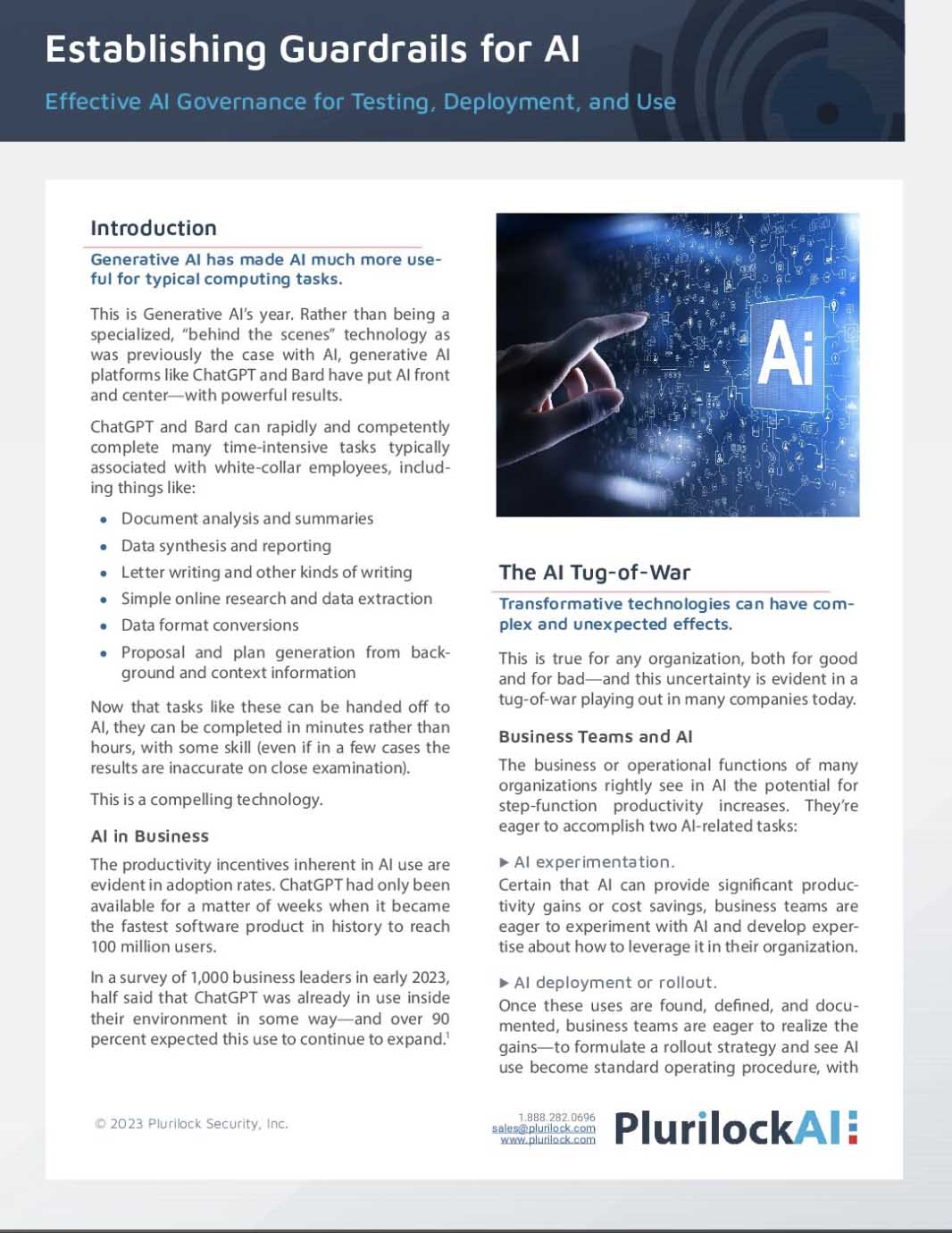
Establishing Guardrails for AI Whitepaper