
Cybersecurity Reference > Glossary
What is Identity Fabric?





Instead of managing identity in disconnected pieces, where each application or environment has its own way of handling who gets in and what they can do, an identity fabric creates a consistent layer across everything. It's the difference between having a dozen different locks with different keys and having a master system that knows which doors each person should be able to open, regardless of whether those doors are in the cloud, on-premises, or somewhere in between.
The architecture matters because modern organizations don't operate in neat, centralized environments anymore. Users access resources from multiple devices, applications span different cloud providers, contractors and partners need limited access to specific systems, and all of this has to work securely without creating friction for legitimate users. An identity fabric provides the connective tissue that makes this possible, applying policies consistently and giving security teams visibility into who's accessing what across the entire environment. It's foundational to zero-trust approaches because it enables the granular control and continuous verification those models require.
Origin
Industry analysts and identity vendors started using "fabric" language around 2015 to describe what organizations actually needed: not just better point solutions, but an architectural approach that could span heterogeneous environments. The term borrowed from network fabric concepts, suggesting interconnected systems that work together intelligently rather than requiring constant manual intervention.
The thinking evolved alongside zero-trust security models, which required more sophisticated identity controls than perimeter-based security ever did. Early implementations often meant trying to force integration between tools that weren't designed to work together. More recently, standards like SAML, OAuth, and SCIM have made it more feasible to actually build fabric-like architectures, though the integration challenges remain substantial for most organizations.
Why It Matters
Without a fabric approach, organizations end up with security gaps where different systems don't talk to each other. Someone might lose access in one system but retain it in another after leaving the company. Privileged accounts might exist in some environments but not show up in governance reviews. Access policies that work in the cloud might not apply on-premises. These gaps are exactly what attackers look for—places where visibility is poor and controls are inconsistent.
The practical challenge is that building an identity fabric requires integrating systems that were never designed to work together, often from vendors who see each other as competitors. It's not just a technology problem but an architectural one that requires making hard decisions about standards, accepting some limitations, and maintaining the integrations as everything changes.
The Plurilock Advantage
Our team includes practitioners who've built these environments at scale, not just consultants who deliver presentations about best practices.
We focus on implementations that provide genuine visibility and consistent control without requiring you to replace everything at once. Learn more about our identity and access management services.
.
Ready to Build Your Identity Fabric?
Plurilock's identity solutions create seamless, secure access across your entire infrastructure.
Get Started Today → Learn more →Downloadable References
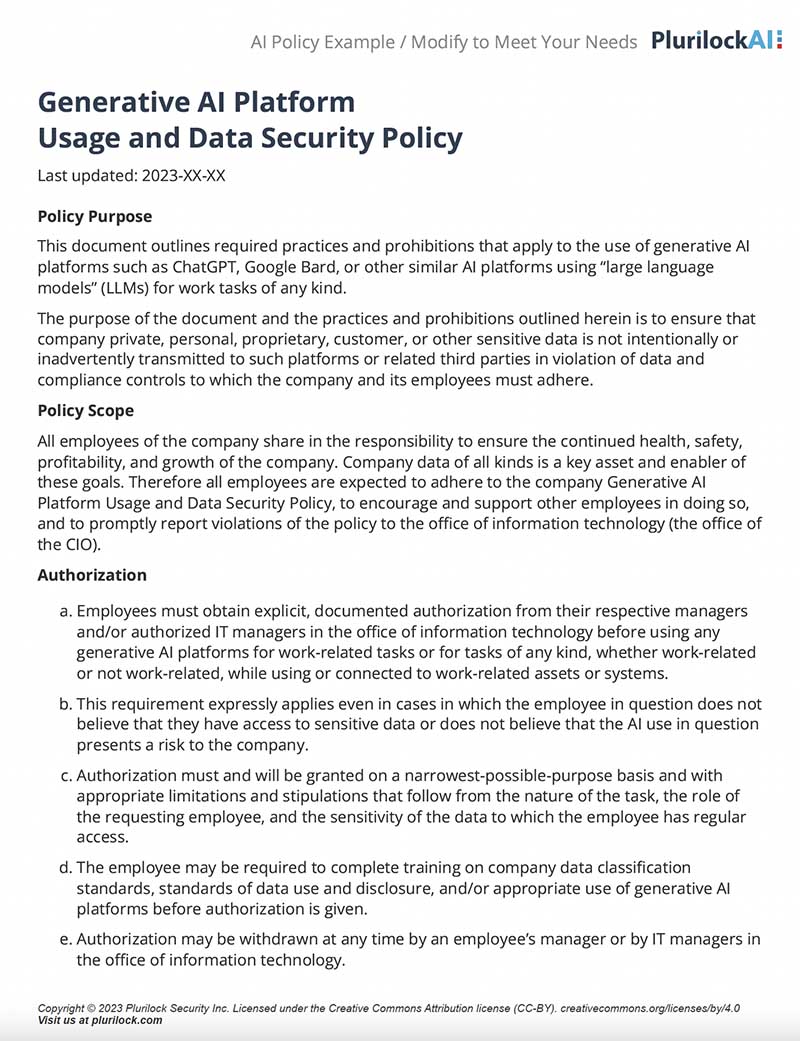
Sample Governance Policy for AI Use
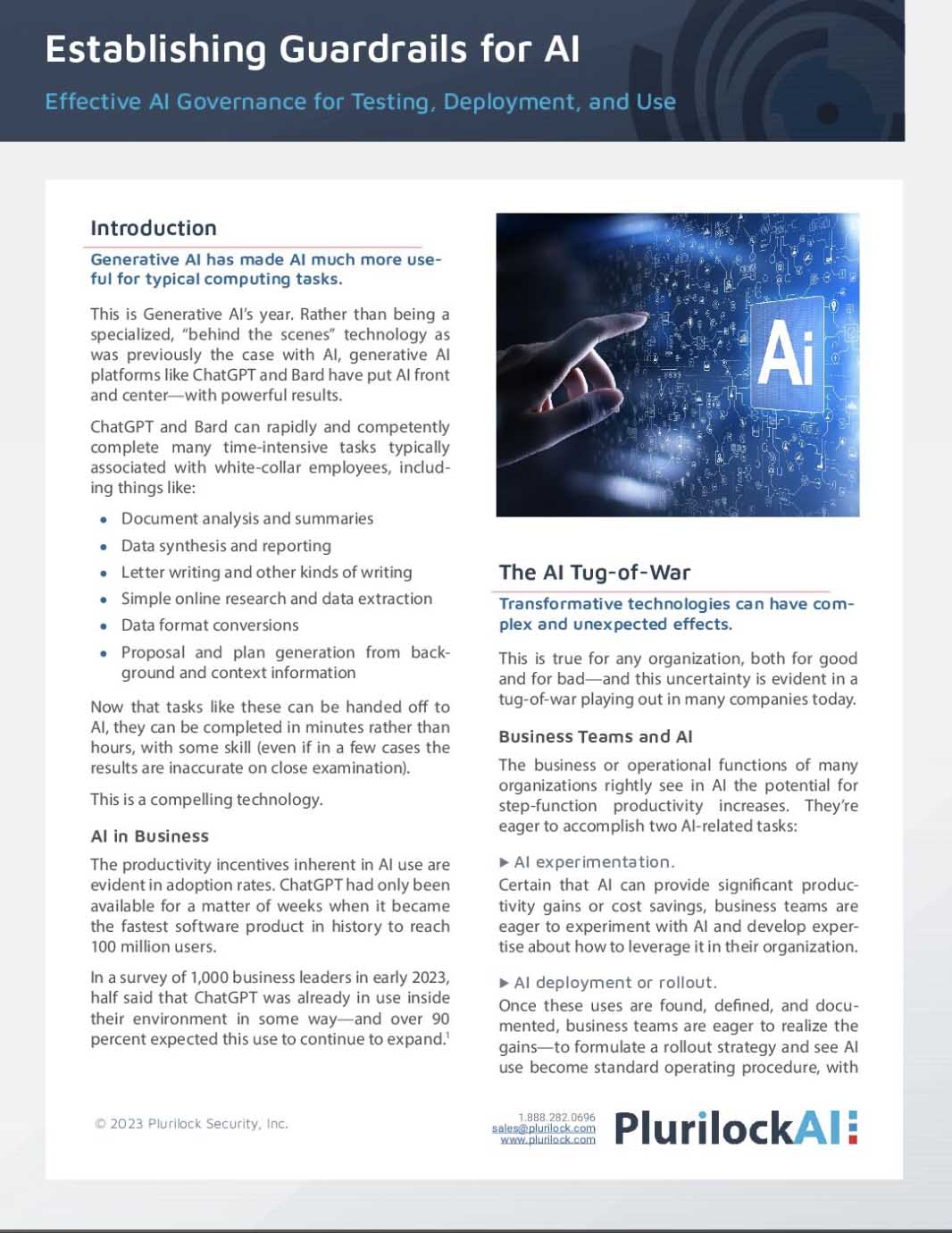
Establishing Guardrails for AI Whitepaper