Cybersecurity Reference > Glossary
What is Threat Contextualization?





It answers a straightforward question: given who we are, what we do, and how we operate, should we care about this particular threat right now?
The process draws on multiple information streams. Security teams consider their organization's industry sector, geographic footprint, technology stack, and current security controls. They map these against threat intelligence about active attack campaigns, adversary motivations, and exploit availability. A healthcare provider processing patient records faces different realistic threats than a logistics company managing supply chains, even when the same malware variant appears in feeds affecting both industries.
Good contextualization prevents two common failures. First, it stops teams from chasing every threat mentioned in intelligence reports, which burns resources on risks that don't apply to them. Second, it highlights dangers that generic threat assessments might downplay but that pose serious risks given the organization's specific circumstances. A vulnerability in an obscure protocol might be critical for a company that depends on that protocol daily while remaining irrelevant to most others.
The result is security decision-making based on actual organizational risk rather than headline severity scores. Teams can focus their limited time and budget on threats that could genuinely harm their specific operations.
Origin
The intelligence community had long practiced contextual analysis, assessing threats against specific assets and missions. As cybersecurity matured through the 2010s, this thinking migrated into commercial security. The concept gained momentum after several high-profile breaches where organizations had received relevant threat intelligence but failed to recognize its applicability to their situation.
Security frameworks began emphasizing context around 2015. The shift from purely technical indicators toward understanding adversary behavior and campaign objectives made contextualization more feasible. Threat intelligence platforms started incorporating asset management data, allowing automated correlation between external threats and internal systems.
By the late 2010s, contextualization became recognized as essential rather than optional. The explosion of threat data from cloud environments, IoT devices, and increasingly sophisticated attacks made it impossible to investigate every alert. Organizations needed systematic approaches to separate signal from noise based on their particular risk profile.
Why It Matters
Contextualization changes this dynamic. When a new ransomware variant appears, contextualized analysis reveals whether it targets the organization's industry, exploits software the organization actually uses, or employs tactics the current defenses would catch. This transforms vague warnings into clear decisions about whether immediate action is needed.
The approach also improves communication between security teams and business leadership. Rather than presenting technical threat catalogs, security professionals can explain risks in terms of business impact. They can show how specific threats might disrupt operations, compromise customer data, or violate regulatory requirements relevant to their industry.
Modern attack complexity makes contextualization increasingly critical. Advanced persistent threat groups tailor campaigns to specific targets. Supply chain attacks exploit relationships unique to particular organizations. Generic threat assessments miss these nuances. Effective defense requires understanding not just what threats exist in the abstract, but which adversaries might target your organization specifically and through what methods they'd most likely succeed given your particular environment and controls.
The Plurilock Advantage
We integrate threat contextualization throughout our offensive security work, helping organizations understand which attack vectors pose genuine risks to their specific environment. Our adversary simulation services test defenses against threats actually targeting your industry and operations, revealing gaps that matter rather than theoretical vulnerabilities. This approach delivers actionable intelligence focused on risks you genuinely face, allowing security investments to address real threats rather than chasing every alert.
.
Need Better Threat Intelligence Context?
Plurilock's threat contextualization services provide actionable insights for informed security decisions.
Get Contextualized Intelligence → Learn more →Downloadable References
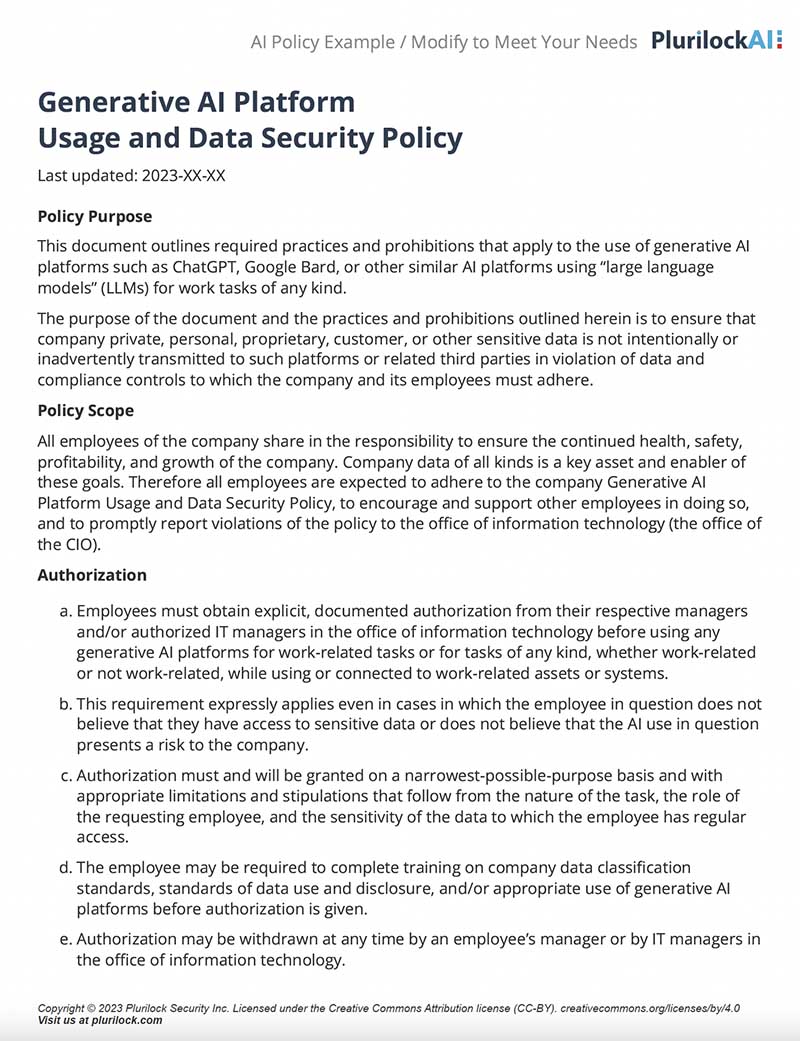
Sample Governance Policy for AI Use
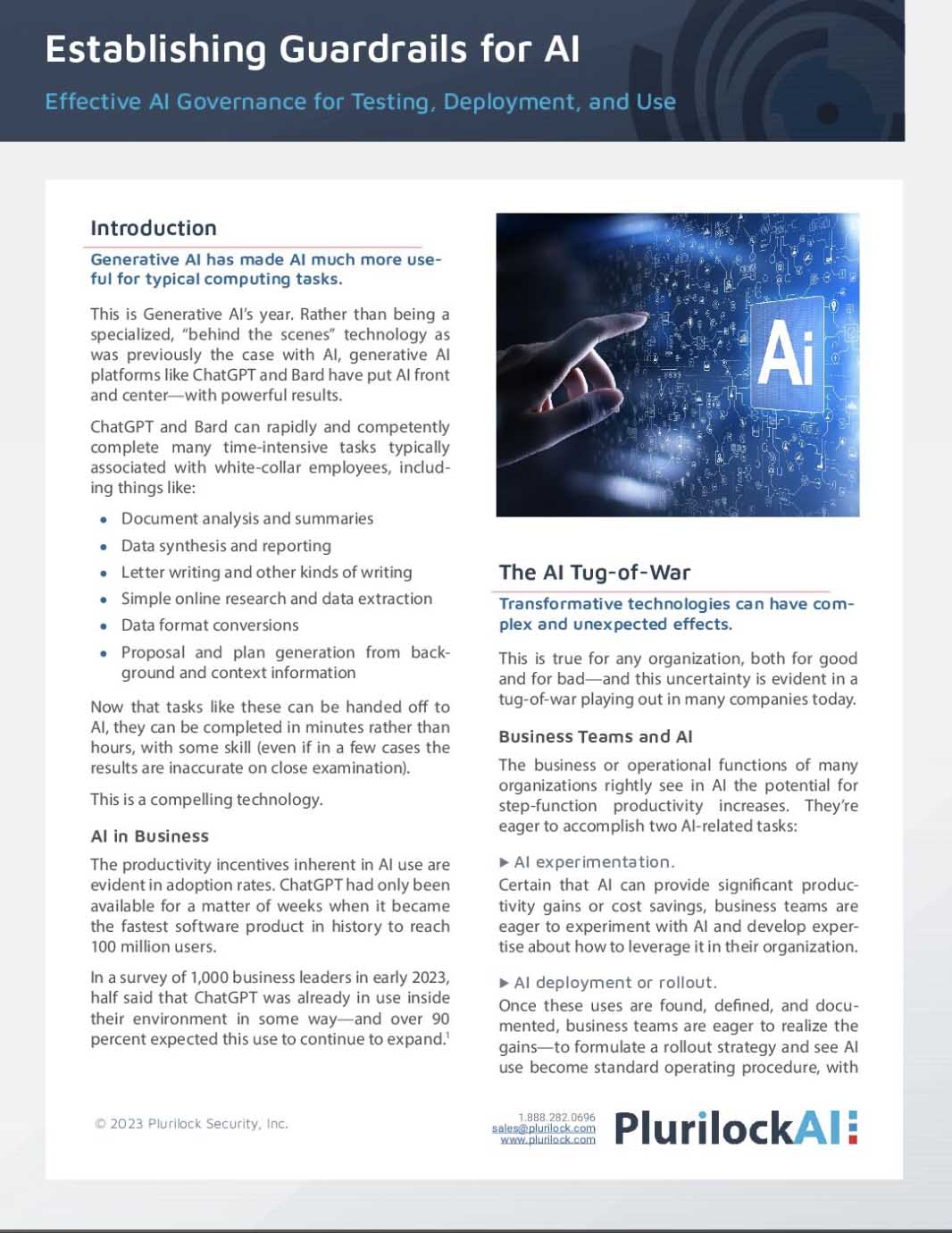
Establishing Guardrails for AI Whitepaper